
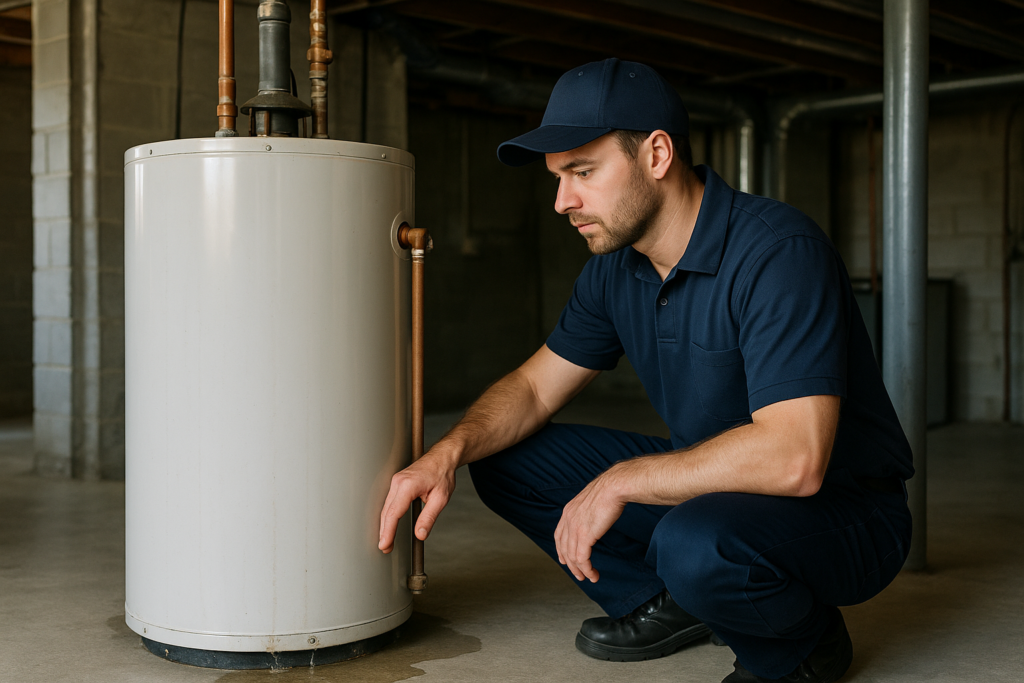
What Should I Do If My Water Heater Breaks in Columbus?
If your water heater breaks in Columbus, Ohio, you should immediately turn off the water supply at the cold-water shutoff valve above the unit, shut off the power source (gas valve to pilot or electrical breaker), and call a professional plumbing team for emergency assessment. Avoid attempting any gas line or internal component repairs yourself. For same-day water heater repair in Columbus OH, call Transit & Flow at 614-333-8092.
Introduction: When Your Hot Water Disappears in Columbus
Few household disruptions are as jarring as stepping into a cold shower or discovering a puddle spreading across your basement floor. For Columbus homeowners, water heater emergencies are especially common during summer months when units that worked overtime through harsh Ohio winters finally show signs of fatigue. Whether you are dealing with no hot water, a leaking tank, strange noises, or rusty discharge, the problem rarely resolves on its own and almost always worsens with delay.
Columbus sits in a region with moderately hard water, and the mineral buildup inside your water heater accelerates wear on anode rods, heating elements, and tank linings. That means what starts as lukewarm output this week could turn into a full tank failure next week. The good news is that fast, professional water heater repair in Columbus OH is just a phone call away. Contact Transit & Flow at 614-333-8092 to speak with a trained technician who can diagnose the issue and schedule a repair or replacement promptly.
Key Takeaways
- Turn off the water supply and power source immediately when a water heater fails.
- Never attempt to repair gas lines, gas valves, or internal combustion components yourself.
- Columbus hard water accelerates sediment buildup and shortens water heater lifespan.
- Cost varies based on the type of repair, unit age, fuel source, and tank size.
- Transit & Flow provides professional water heater repair and replacement throughout Columbus OH.
Water Heater Repair in Columbus OH: The Complete Service Guide
Water heater repair encompasses a broad range of services, from replacing a faulty thermostat or heating element to addressing a corroded tank or malfunctioning pressure relief valve. In Columbus OH, homeowners most commonly encounter issues related to sediment accumulation, aging anode rods, electrical faults, and gas control valve failures.
Tank vs. Tankless Repair Considerations
Traditional tank-style water heaters, which remain the most common type in Columbus-area homes, store and continuously heat 40 to 80 gallons of water. Over time, minerals from Central Ohio’s water supply settle at the bottom of the tank, insulating the water from the burner or heating element and causing the unit to work harder. Tankless (on-demand) units avoid this specific problem but can develop their own issues, including flow sensor failures, heat exchanger scaling, and error codes triggered by mineral deposits in the lines.
Gas vs. Electric Repair Differences
Gas water heaters introduce combustion components such as burner assemblies, thermocouples, gas control valves, and flue venting. Electric units rely on upper and lower heating elements, thermostats, and wiring connections. The repair approach, parts required, and safety considerations differ significantly between the two, which is why professional diagnosis matters. A trained technician from Transit & Flow will identify your system type, evaluate the failure point, and recommend the most cost-effective path forward.
Regardless of type, any water heater repair in Columbus OH should be handled by a professional team that understands local building codes, water conditions, and manufacturer specifications. Transit & Flow technicians arrive equipped with the diagnostic tools, replacement parts, and expertise to resolve the issue efficiently.
Warning Signs and Symptoms of Water Heater Failure
Recognizing the early warning signs of a failing water heater can save you from a full emergency. Here are the most common symptoms Columbus homeowners report before a breakdown:
- No hot water or insufficient hot water — The most obvious sign, indicating a failed heating element, tripped breaker, faulty thermostat, or depleted gas supply.
- Rusty or discolored water — Brown or reddish water from hot taps suggests internal tank corrosion or a deteriorated anode rod.
- Rumbling, popping, or banging noises — Sediment buildup at the bottom of the tank hardens and causes these sounds as water heats beneath it.
- Water pooling around the base — A leaking water heater may have a cracked tank, loose fitting, or failed temperature and pressure relief valve.
- Fluctuating water temperature — Inconsistent output often points to thermostat issues or a partially failed heating element.
- Higher-than-normal energy bills — A struggling water heater consumes more energy trying to maintain set temperature.
- Age over 8 to 12 years — Tank water heaters in Columbus typically last 8 to 12 years. Units past this range are at elevated risk of failure.
Root Causes of Water Heater Problems in Columbus
Understanding why your water heater fails helps you make informed decisions about repair versus replacement.
Sediment Accumulation
Columbus water contains dissolved minerals, including calcium and magnesium, that settle inside the tank over time. This sediment layer acts as an insulator between the heating source and the water, forcing the unit to run longer and hotter, which accelerates tank deterioration.
Anode Rod Depletion
The sacrificial anode rod inside your tank attracts corrosive elements to protect the tank lining. Once the rod is fully consumed, usually within three to five years, the tank itself begins to corrode from the inside out. This is the most common reason for rust-colored water and eventual tank leaks.
Thermostat and Element Failure
Electric water heaters use upper and lower thermostats paired with heating elements. When either component fails, you may experience no hot water, partial heating, or water that is dangerously hot. Power surges during Columbus summer storms can also damage these components.
Gas Control Valve and Thermocouple Issues
Gas water heaters depend on the thermocouple to verify that the pilot light is lit. A faulty thermocouple shuts down gas flow as a safety measure, resulting in no hot water. Gas control valve failures present similar symptoms. These are components that must only be serviced by a trained professional due to the risks associated with gas lines.
Pressure Relief Valve Malfunction
The temperature and pressure (T&P) relief valve is a critical safety device. If it leaks or fails to operate, the tank can build dangerous pressure levels. A leaking T&P valve requires immediate professional attention.
What a Professional Water Heater Repair Looks Like
When you call Transit & Flow for water heater repair in Columbus OH, here is what to expect from the professional process:
- Initial Assessment — The technician inspects the unit, checks for visible leaks, tests water temperature output, and reviews error codes on tankless models.
- Diagnostic Testing — Using multimeters, combustion analyzers, or thermal cameras as needed, the technician identifies the specific failure point.
- Transparent Recommendation — You receive a clear explanation of the problem, recommended repair or replacement options, and associated cost variables before any work begins.
- Repair Execution — Approved repairs are completed using manufacturer-specified parts. Common repairs include element replacement, thermostat calibration, anode rod replacement, T&P valve replacement, and gas component service.
- Safety Verification — After repair, the technician verifies proper operation, checks for gas leaks (on gas units), confirms correct temperature output, and ensures all safety devices are functioning.
- Cleanup and Documentation — The work area is left clean, and you receive documentation of the service performed.
Cost Variables for Water Heater Repair in Columbus OH
The cost of water heater repair in Columbus OH depends on several variables. Transit & Flow does not quote fixed prices without a proper on-site diagnosis, because every situation is different. Here are the primary factors that influence your final cost:
- Type of repair — A simple thermostat replacement costs significantly less than a full element swap or gas valve replacement.
- Unit type — Tankless water heater repairs often involve specialized parts and longer diagnostic time compared to standard tank units.
- Fuel source — Gas water heater repairs may require additional safety testing and components compared to electric models.
- Tank size — Larger units (50 to 80 gallons) may require more labor and heavier-duty parts.
- Age and condition — Older units may need multiple component replacements, pushing the cost closer to full replacement territory.
- Accessibility — Water heaters in tight crawl spaces or finished basements may require additional labor time.
- Emergency timing — After-hours or weekend emergency calls may carry different service rates.
For a personalized estimate, call Transit & Flow at 614-333-8092 or book an estimate online.
When to Call a Professional
Not every water heater issue is a full emergency, but many require prompt professional attention. Call a professional immediately if you experience any of the following:
- You smell gas near the water heater — evacuate and call your gas utility, then call Transit & Flow.
- Water is actively flooding from the unit or surrounding pipes.
- The T&P relief valve is discharging continuously.
- You hear hissing, sizzling, or high-pitched sounds from a gas unit.
- There is scorching or burn marks on or near the unit.
- The unit is more than 10 years old and showing multiple symptoms.
- You have no hot water and cannot identify the cause from safe visual checks.
Do not attempt to repair gas lines, relight pilot lights on unfamiliar systems, or open sealed combustion chambers. These tasks carry serious safety risks and require trained technicians with proper equipment. Call Transit & Flow at 614-333-8092 for fast, professional water heater service in Columbus OH.
Safe Homeowner Checks
Before your technician arrives, there are a few safe checks you can perform. These do not involve opening the unit, touching gas components, or handling electrical wiring:
- Check the breaker panel — For electric units, look for a tripped breaker and reset it once. If it trips again, stop and wait for a professional.
- Verify the thermostat setting — Some units have an external temperature dial. Confirm it has not been accidentally turned down. The recommended setting is typically 120 degrees Fahrenheit.
- Inspect for visible leaks — Look around the base of the unit and at all visible pipe connections for dripping water. Place towels to contain minor leaks.
- Turn off the water supply — Locate the cold-water shutoff valve on top of or near the water heater and turn it clockwise to stop incoming water.
- Check the hot water at multiple fixtures — If only one faucet lacks hot water, the issue may be with that fixture rather than the water heater.
Stop here. Any further troubleshooting should be handled by a professional to avoid injury or further damage to the system.
Repair vs. Replace: Making the Right Decision
One of the most important decisions Columbus homeowners face during a water heater emergency is whether to repair the existing unit or invest in a full replacement. Here are the key considerations:
When Repair Makes Sense
- The unit is less than 8 years old.
- The issue is isolated to a single component such as a thermostat, element, or anode rod.
- The tank shows no signs of internal corrosion (no rust-colored water).
- Repair cost is significantly less than 50 percent of a new unit.
When Replacement Is the Better Investment
- The unit is 10 years old or older.
- The tank itself is leaking from the bottom, indicating internal corrosion.
- You have needed multiple repairs within the past two years.
- The unit no longer meets your household hot water demand.
- You want to upgrade to a more energy-efficient model for long-term savings.
Transit & Flow technicians will always present both options with honest cost comparisons so you can make the best decision for your home and budget.
Local Columbus Context: Why Location Matters for Water Heater Service
Columbus OH presents unique conditions that affect water heater performance and longevity. Here is why local context matters for your repair or replacement decision:
- Water hardness — Columbus water, sourced primarily from the Scioto River and Hoover Reservoir, contains moderate mineral content. This accelerates sediment buildup and anode rod depletion compared to regions with softer water.
- Seasonal demand shifts — During summer, incoming water temperatures are warmer, which means less energy is needed to heat water. However, summer is also when units stressed during winter finally break down. Many Columbus homeowners experience water heater failure between May and August.
- Basement installations — The majority of Columbus homes feature basement water heater installations. While basements provide adequate space, they also mean that leaks can go unnoticed longer, increasing the risk of water damage.
- Local building codes — Franklin County and the City of Columbus enforce specific plumbing codes for water heater installation, including venting requirements for gas units and expansion tank requirements. Professional service ensures compliance.
Frequently Asked Questions
What should I do first if my water heater breaks?
Turn off the water supply using the cold-water shutoff valve and disconnect the power source. For electric units, flip the breaker. For gas units, turn the gas valve to the pilot or off position. Do not attempt further repairs. Call Transit & Flow at 614-333-8092 for professional diagnosis and repair.
What should I avoid doing with a broken water heater?
Never attempt to repair gas lines, relight pilot lights on systems you are unfamiliar with, or disassemble electrical components inside the unit. Avoid using hot water fixtures until the unit has been inspected. If you smell gas, evacuate immediately and contact your utility provider before calling a plumber.
What affects the cost of water heater repair in Columbus OH?
Cost depends on the type of repair needed, whether the unit is gas or electric, the size and age of the tank, accessibility of the installation, and whether the service call is during regular or emergency hours. Transit & Flow provides transparent estimates before any work begins.
When is a water heater issue considered an emergency?
Active flooding, gas odor near the unit, continuous T&P valve discharge, and burn marks or scorching around the unit all constitute emergencies. These situations require immediate professional attention. Do not wait for a scheduled appointment if safety is at risk.
When should I call a professional instead of troubleshooting?
If safe visual checks such as resetting the breaker and confirming the thermostat setting do not resolve the issue, call a professional. Any issue involving gas, active leaks, unusual odors, or electrical faults should be handled by a trained technician immediately.
How can Transit & Flow help with my water heater emergency?
Transit & Flow provides comprehensive water heater repair and replacement services throughout Columbus OH. Our trained technicians diagnose the problem on-site, present transparent repair and replacement options, and complete the work efficiently. Call 614-333-8092 or visit transitflowplumbing.com/estimate to get started.
Maintenance Tips to Extend Water Heater Life
Preventive maintenance helps Columbus homeowners avoid unexpected water heater emergencies. Here are professional recommendations:
- Schedule annual professional inspections — A trained technician can check the anode rod, flush sediment, test the T&P valve, and verify safe operation.
- Flush the tank annually — Sediment flushing is especially important in Columbus due to local water hardness. This should be done by a professional to avoid burns or improper draining.
- Test the T&P valve — Your technician should test this valve during each annual service visit to confirm it opens and reseats properly.
- Monitor water temperature — Keep the thermostat at 120 degrees Fahrenheit to balance comfort, efficiency, and safety.
- Inspect the area around the unit — Keep the space around your water heater clear of storage and flammable materials. Check periodically for signs of leaks or corrosion.
Glossary of Key Terms
Water Heater
A plumbing appliance that heats and stores or delivers hot water for residential use. Common types include tank-style (storage) and tankless (on-demand) models powered by gas or electricity.
Shutoff Valve
A valve that controls the flow of water into a fixture or appliance. The cold-water shutoff valve on a water heater allows you to stop water flow during an emergency or repair.
Anode Rod
A sacrificial metal rod installed inside a tank water heater to attract corrosive elements and protect the tank lining from rust. Anode rods require periodic replacement to maintain tank integrity.
T&P Relief Valve
The temperature and pressure relief valve is a safety device that releases water if the internal temperature or pressure inside the tank exceeds safe limits. A malfunctioning T&P valve is a serious safety concern.
Flat-Rate Pricing
A pricing model in which the customer is quoted a fixed cost for a defined scope of work before the job begins, rather than being billed by the hour. This provides cost certainty for homeowners.
Schedule Your Water Heater Repair in Columbus OH Today
A broken water heater does not improve with time. Whether you are dealing with no hot water, a leaking tank, strange sounds, or rusty water, the safest and most cost-effective move is to call a professional for prompt diagnosis and repair.
Transit & Flow serves homeowners throughout Columbus OH with fast, transparent, and professional water heater repair and replacement services. Our trained technicians arrive equipped to handle tank and tankless systems, gas and electric units, and both standard repairs and emergency situations.
Call Transit & Flow today at 614-333-8092 to schedule your water heater repair. You can also request an estimate online at your convenience. Do not wait for a small problem to become a costly emergency. Let the professionals at Transit & Flow restore your hot water and your peace of mind.
When a repair is not the right answer, the next step is sizing and installing the correct replacement. See the full range of water heater services Transit & Flow provides in Columbus, covering tank and tankless systems, or call (614) 333-8092 to schedule a diagnosis.
