
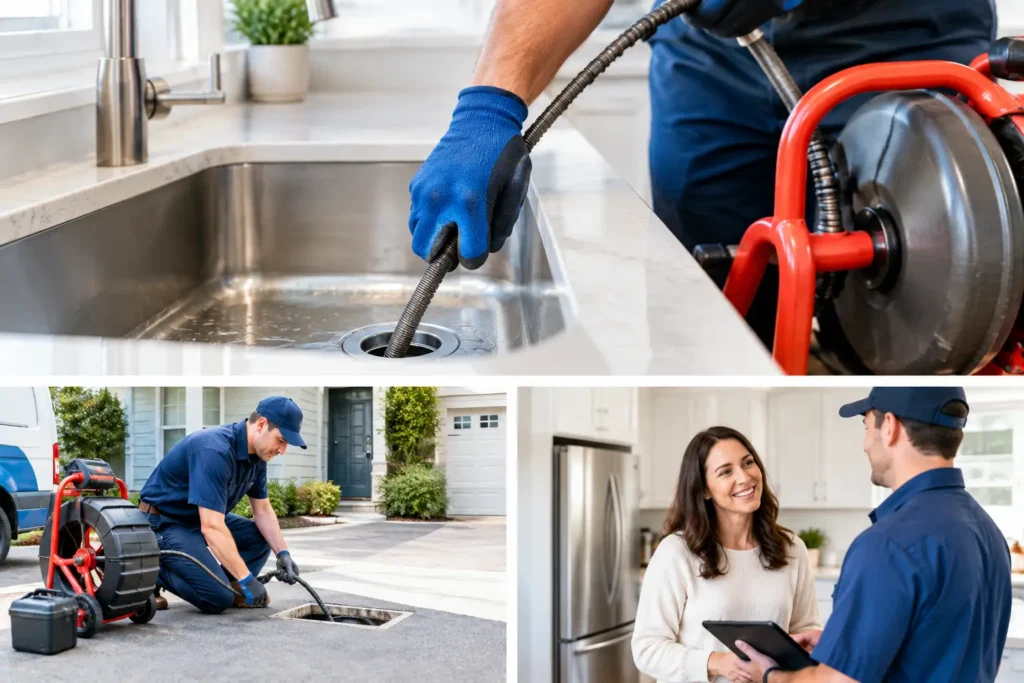
A slow kitchen sink is frustrating. A shower that leaves standing water or a toilet that gurgles when the washer drains is a different kind of warning. Professional drain cleaning addresses the buildup or blockage inside the line, but the right response depends on what the drain is doing, where the problem is occurring, and whether water is beginning to back up.
For homeowners, the goal is not simply to make water disappear for a few days. It is to identify whether the issue is a routine clog near one fixture or a larger drainage concern that could affect other parts of the home. Knowing the difference can prevent a messy backup, unnecessary damage, and repeated service calls for the same problem.
A slow drain is not always a simple clog
One slow sink or tub often points to a local blockage. Soap residue, hair, food debris, grease, and everyday buildup can narrow a drain over time. Water may still go down, just more slowly than it should.
When several fixtures act up at once, the situation deserves more attention. For example, a toilet that bubbles while a nearby sink drains, or water appearing in a basement floor drain when the laundry runs, can indicate a blockage farther along in the home’s drainage system. Clearing the visible fixture alone may not resolve the underlying restriction.
The pattern matters. Think about which fixture has trouble, how long the problem has been present, and whether the issue is getting worse. Those details help a technician choose the appropriate next step instead of treating every clog the same way.
When to call for drain cleaning right away
Some drain problems can wait for a convenient appointment. Others should be addressed promptly, especially when wastewater could enter the home. Stop using water in the affected area when a backup is occurring. Running a dishwasher, washing machine, shower, or another toilet can add more water to a blocked line.
Call for professional help when you notice any of these signs:
- Water backs up into a sink, tub, shower, or floor drain instead of draining away.
- Multiple drains are slow, gurgling, or producing unpleasant odors at the same time.
- A toilet overflows or rises unusually high after flushing.
- You have cleared a drain before, but the same clog returns within days or weeks.
A recurring clog is especially worth investigating. It can mean the obstruction was only partially removed, or that there is a condition farther down the line that a quick surface-level fix cannot reach.
What professional drain cleaning should include
A proper service visit starts with questions, not assumptions. A technician should ask which drains are affected, when the issue began, whether a backup has happened before, and what changes you have noticed. That information helps narrow down whether the problem is likely in a fixture drain, a branch line, or a larger drain line serving the home.
Clearing the blockage without guessing
The method used should match the location and type of clog. A sink blocked by food residue is different from a shower drain affected by hair and soap buildup. A line with a recurring obstruction may require a more thorough approach than a routine drain opening.
The objective is to restore flow while avoiding unnecessary work. A professional should explain what they found, what they recommend, and why that recommendation fits the condition of the drain. If additional work is needed beyond the initial diagnosis, you should have clear information and an opportunity to approve the work before it begins.
Verifying that the drain is working properly
A drain that moves a small amount of water is not necessarily fully clear. After cleaning, the technician should test the fixture and confirm that water is draining as expected. If the symptoms suggest a larger issue, further inspection may be recommended to determine whether there is buildup, a damaged section of pipe, or another restriction that cleaning alone may not solve.
That distinction matters because drain cleaning is often the right first service, but it is not a universal answer. The honest recommendation depends on what is found on site.
Why repeat clogs need a closer look
Many homeowners first notice a clog after a busy weekend, holiday meal, or a houseful of guests. That can be a one-time buildup problem. But when the same drain clogs repeatedly, there is usually a reason.
In kitchen drains, grease and food particles may be collecting farther down the pipe than expected. In bathroom drains, hair, soap residue, and personal care products can create dense buildup over time. Older plumbing systems can also have interior surfaces that catch debris more easily. Outside the home, roots and other conditions can affect underground drain or sewer lines.
The trade-off is straightforward: a simple cleaning may restore flow quickly, while an inspection can provide more clarity if the issue keeps returning. Neither option should be pushed automatically. The right choice depends on the symptoms, the age and condition of the plumbing, and the history of the problem.
Drain cleaning habits that help prevent trouble
You cannot prevent every clog, but small changes can reduce the buildup that leads to common drain calls. Keep grease, cooking oil, coffee grounds, and fibrous food scraps out of the kitchen sink. Even if hot water seems to carry grease away, it can cool and collect farther along the pipe.
In bathrooms, use drain screens where practical and remove visible hair before it works its way into the drain. Avoid treating toilets as a disposal for wipes, paper towels, hygiene products, or other materials that are not meant to be flushed. Products labeled as flushable can still create problems in household plumbing.
Be cautious with harsh chemical drain cleaners. They may offer a short-term result in some situations, but they can also be ineffective against a solid blockage and may create complications when a technician needs to work on the line. If a drain is fully blocked, backing up, or repeatedly slow, professional diagnosis is usually the safer path.
What to expect when scheduling service
When you call about a drain problem, share the symptoms clearly. Mention whether the clog affects one fixture or several, whether water has backed up, and whether you have tried anything already. If there is standing wastewater, let the service team know before the appointment is scheduled.
For Columbus-area homeowners, fast availability can make a major difference when a backup interrupts the household. Transit & Flow focuses on clear communication, up-front pricing information, and customer approval before work begins. Exact recommendations and final pricing depend on the condition found, access to the affected plumbing, and the work required on site.
Before the technician arrives, clear personal items from under the sink or around the affected fixture if it is safe to do so. Do not take apart pipes or keep running water to test a suspected backup. A few simple details – which drains are affected, when the problem started, and whether it has happened before – can help the visit move more efficiently.
A drain problem rarely improves by being ignored. If water is draining slowly, pay attention to the pattern. If it is backing up, stop adding water to the system and arrange service promptly. Acting early gives you more options and helps protect the home from a small blockage turning into a much larger cleanup.
