
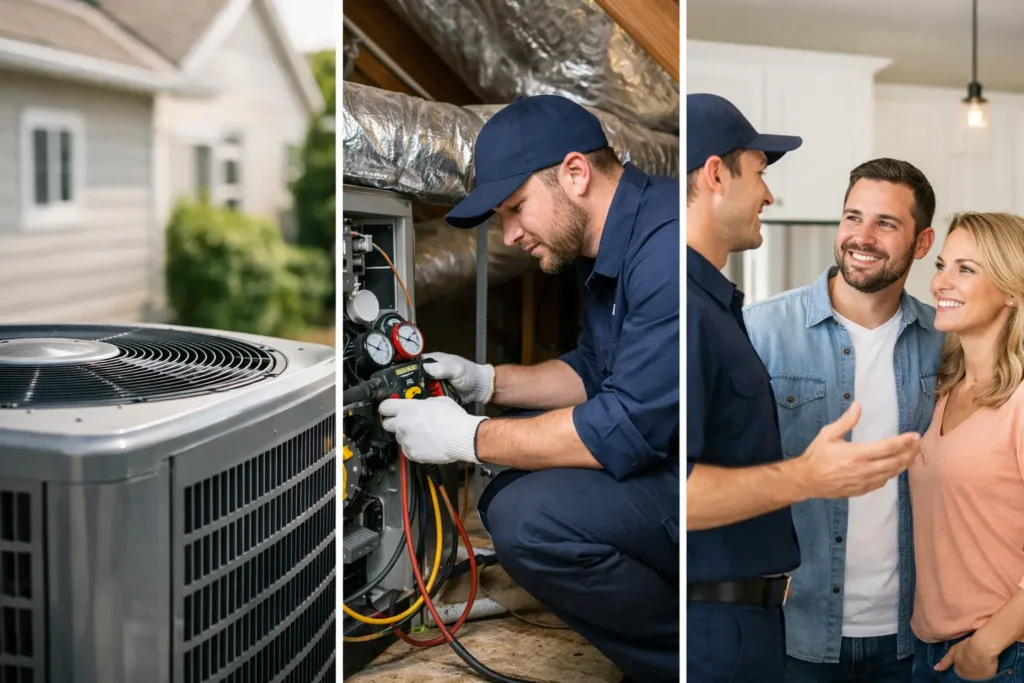
A central air conditioner rarely fails at a convenient time. It may start blowing warm air during a humid Columbus afternoon, make a new noise overnight, or stop keeping upstairs rooms comfortable. If you are asking when should AC be replaced, the answer is usually not based on one symptom alone. Age, repair history, efficiency, refrigerant type, and your home’s comfort all matter.
A repair can be the right move, especially when the system is newer and the problem is isolated. But continuing to repair an aging unit can turn one manageable service call into a cycle of surprise breakdowns and rising utility bills. A clear evaluation helps you choose the option that makes the most sense before the hottest stretch of the season.
When Should AC Be Replaced Instead of Repaired?
Replacement is often worth serious consideration when an AC unit is around 12 to 15 years old, needs a major repair, and is no longer cooling consistently. That does not mean every system at that age must be replaced. A well-maintained unit can sometimes run longer, while a neglected or undersized system may have problems much sooner.
The practical question is whether the repair will restore dependable cooling for a reasonable amount of time. If the unit has needed several repairs recently, uses outdated refrigerant, or struggles to cool the home even after service, putting more money into it may not be the best long-term decision.
A technician should inspect the equipment, identify the source of the problem, and explain the repair and replacement paths in plain terms. The decision should be yours after you understand the condition of the system, the expected work, and the up-front price.
7 Signs Your Air Conditioner May Need Replacement
1. Your AC is near or past its expected service life
Most central air conditioners last roughly 12 to 15 years, though installation quality, maintenance, usage, and local weather all affect that timeline. A 14-year-old system that has been reliable may still be worth repairing for a minor issue. A 14-year-old system with a failing compressor, repeated leaks, and uneven cooling is a different situation.
Age matters because larger components become more likely to fail over time. It also affects parts availability and efficiency. Planning a replacement before a complete failure gives you more control over timing and equipment choices.
2. Repairs are becoming frequent or expensive
One repair does not automatically justify replacement. Capacitors, contactors, electrical components, and drain issues can often be repaired without replacing the entire system. The concern is a pattern of calls for different problems within a short period.
Consider replacement when the system needs a costly major component repair and is already late in its expected lifespan. A useful rule of thumb is to compare the repair cost with the age and overall condition of the unit, not just the immediate inconvenience. Spending heavily on an older system may only postpone the next failure.
3. Your home has hot spots or weak airflow
If bedrooms upstairs stay warm, certain rooms never catch up, or the system runs for long periods without reaching the thermostat setting, the issue deserves attention. Sometimes the cause is repairable: a dirty coil, restricted filter, failing blower component, thermostat issue, or ductwork problem can affect comfort.
However, persistent uneven cooling can also point to an AC system that is losing capacity or was not properly matched to the home. Replacing equipment without checking airflow and system sizing can leave the underlying comfort problem unresolved. A proper assessment should look beyond the outdoor unit.
4. Energy bills are climbing without a clear reason
Summer electric bills rise when temperatures and humidity rise, but a noticeable increase compared with similar weather from past years may signal declining performance. Older systems can lose efficiency as components wear, coils get dirty, or refrigerant issues develop.
A new air conditioner may use less energy, but savings depend on the condition of the existing system, the new equipment selected, insulation, thermostat settings, and how the home is used. Efficiency is a valid reason to consider replacement, but it should not be presented as a promise of a specific bill reduction.
5. The unit uses R-22 refrigerant
Many older systems use R-22, a refrigerant that is no longer produced or imported for new use in the United States. Existing supplies may still be available, but repairs involving a refrigerant leak can become more expensive and less practical over time.
If an R-22 system has a leak, ask for a clear explanation of the repair, its expected cost, and whether replacement would be a better investment. Simply adding refrigerant without addressing a leak is not a lasting solution.
6. You hear unusual noises or notice recurring moisture issues
Rattling, grinding, squealing, buzzing, or loud banging should not be ignored. Some noises have straightforward fixes, while others can indicate wear in a motor, compressor, or other major component. Water around the indoor equipment can also come from a blocked condensate drain, but repeated moisture problems require prompt evaluation to help prevent damage.
These signs do not always mean replacement is necessary. They do mean the system should be checked before a minor problem becomes a larger one.
7. Your AC no longer fits your home or needs
Homes change. An addition, finished basement, new insulation, window upgrades, or a growing household can all change cooling needs. If your system has always struggled, it may be incorrectly sized or paired with ductwork that cannot deliver conditioned air effectively.
An oversized system can cool too quickly without managing humidity well. An undersized system may run constantly during peak heat. The right replacement decision includes evaluating the home, not just choosing a larger unit.
Repair or Replace: What to Ask Before You Decide
Before authorizing a major repair or moving ahead with a replacement quote, ask a few direct questions. What failed, and why did it fail? Is this likely to be an isolated repair or part of a broader pattern? How much useful life may remain in the current system? Are there airflow, duct, drainage, or thermostat concerns that should be addressed at the same time?
Also ask what is included in the proposed work. Replacement quotes can vary based on equipment capacity, efficiency level, installation requirements, electrical needs, drainage updates, and access to the equipment. A clear proposal should explain the scope rather than leaving you to compare a single number without context.
Financing can make a planned replacement easier to manage, but it should support a sound decision, not rush one. If the AC is still repairable and dependable, a repair may be reasonable. If you are facing repeated breakdowns during each cooling season, planned replacement can reduce uncertainty.
Do Not Wait for a Mid-Summer Breakdown
The best time to evaluate an aging air conditioner is when it is still operating, not when the house is already hot. Scheduling an inspection in spring or early summer can reveal developing issues and give you time to consider options without an emergency deadline.
If your AC stops cooling, turn the thermostat to off if you notice burning smells, electrical concerns, or loud mechanical noise, then arrange professional service. For less urgent concerns, start by checking that the thermostat is set correctly and the air filter is clean. Avoid opening electrical panels or trying to recharge refrigerant yourself.
For homeowners in Columbus and nearby communities, Transit & Flow can assess your cooling system, explain what is causing the problem, and provide straightforward repair or replacement recommendations with customer approval before work begins. The goal is not to replace equipment that can be reasonably repaired. It is to help you make a confident choice that keeps your home comfortable when Central Ohio heat and humidity return.
