
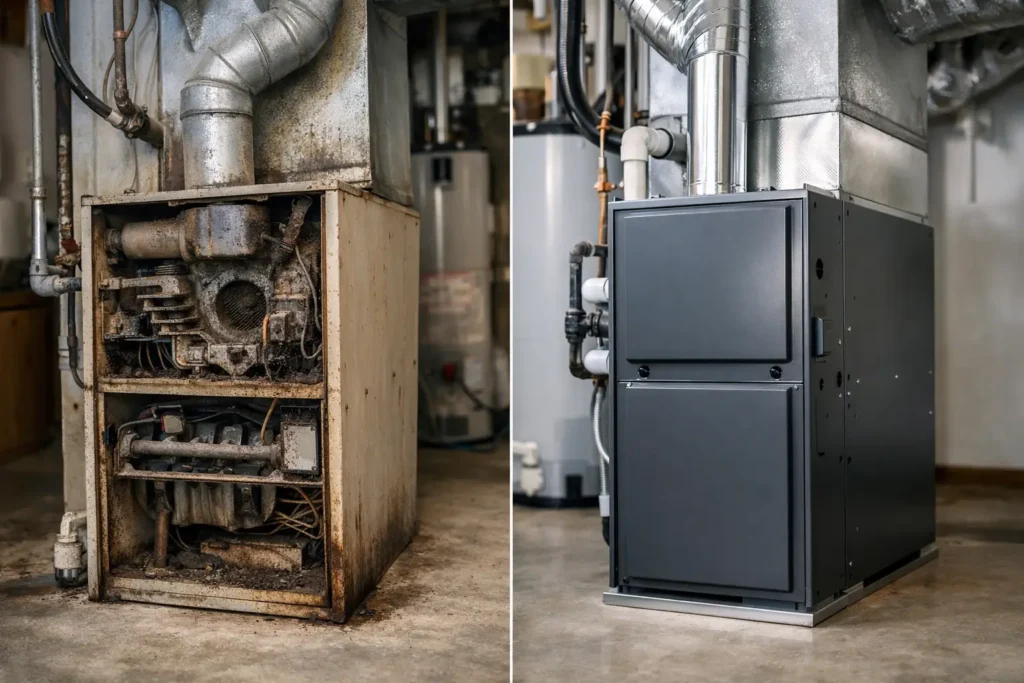
A furnace rarely fails at a convenient time. It usually starts with uneven heat, higher utility bills, strange noises, or a service call that feels bigger than the last one. If you are asking when should furnace be replaced, you are probably already dealing with warning signs that deserve a closer look.
For homeowners in Columbus, that question matters most when winter temperatures drop and heating problems go from annoying to urgent. The right answer is not always “replace it now,” but it is also not wise to keep putting money into a system that is becoming unreliable. A good decision comes down to age, repair history, efficiency, safety, and how well the furnace is keeping up with your home.
When should furnace be replaced instead of repaired?
In many cases, a furnace can and should be repaired. A failed igniter, faulty thermostat, dirty flame sensor, or worn part does not automatically mean you need a full system replacement. If the unit is otherwise in solid condition and the repair is straightforward, fixing it may be the practical move.
Replacement becomes more likely when the furnace is older, repair costs are climbing, or the system can no longer heat the home consistently. If you are paying for service every season and still dealing with cold rooms or short cycling, the issue is often bigger than one part. At that point, replacing the furnace may be the more dependable and cost-conscious decision over time.
A common benchmark is age. Many furnaces last around 15 to 20 years with regular maintenance, but lifespan varies based on usage, installation quality, filter changes, and how hard the system has had to work. A 17-year-old furnace that has needed multiple repairs is in a very different position than a 10-year-old system with one isolated issue.
The clearest signs your furnace may need replacement
Age is only part of the picture. The more useful question is how the furnace is performing right now.
If your heat is uneven, your system runs longer than it used to, or your energy bills keep climbing without another obvious cause, your furnace may be losing efficiency. Older systems often have to work harder to produce the same comfort, especially during colder stretches in Central Ohio.
Frequent repairs are another sign. One repair does not mean much. Two or three larger repairs in a short period, especially on an aging unit, usually signal a furnace that is wearing out. Homeowners and property managers often reach the same point – they are tired of approving another fix without feeling confident the problem is actually solved for the long term.
Strange sounds can also point to trouble. Banging, rattling, squealing, or rumbling may come from loose components, airflow issues, motor problems, or wear inside the heat exchanger area. Some noises can be repaired. Others are a sign the unit is nearing the end of its service life.
Then there is reliability. If the furnace struggles to start, shuts off unexpectedly, or cannot maintain the thermostat setting, replacement may be worth serious consideration. Heating equipment should not leave you guessing whether it will make it through the next cold snap.
Safety issues change the conversation quickly
Performance matters, but safety matters more. If a furnace has signs of a cracked heat exchanger, combustion issues, or other conditions that make operation unsafe, replacement may become the responsible next step.
This is one reason professional diagnosis matters. A furnace problem can look like a routine repair on the surface but turn out to involve larger concerns once the system is inspected. Clear communication is especially important here. You want to understand what is wrong, what can be repaired, and whether continued operation is reasonable.
Older gas furnaces should never be judged on age alone, but they also should not be kept running out of habit if safety concerns are present. A good service recommendation should be based on actual system condition, not pressure.
How furnace age affects the decision
If your furnace is under 10 years old, repair is often the first option unless there is major damage or a serious safety issue. Many newer systems still have useful life left and can be restored with the right repair.
If the system is between 10 and 15 years old, the answer depends more on repair cost, efficiency, and overall condition. This is often the range where homeowners start noticing performance decline, especially if maintenance has been inconsistent.
Once a furnace is 15 to 20 years old, replacement becomes a more common recommendation. Even if the unit still runs, it may not run efficiently or reliably. Parts may become harder to source, repairs can add up, and the system may not deliver the comfort you expect during an Ohio winter.
That does not mean every 15-year-old furnace has to be replaced today. It means the cost-benefit balance starts shifting. Spending money on an older unit may make less sense if a replacement will reduce breakdown risk and improve heating performance.
Repair cost versus replacement cost
A helpful rule of thumb is to compare the repair cost with the furnace’s age and expected remaining life. If a major repair is needed on an older system, it may not be wise to keep investing in equipment that is likely to need more work soon.
For example, replacing a small component on a 9-year-old furnace can make sense. Paying for a major repair on an 18-year-old unit that has already needed multiple service calls may not. The lower upfront cost of repair can feel attractive, but repeated repairs often become the more expensive path.
This is where honest recommendations matter. A trustworthy technician should explain both options clearly, give you the repair scope, and help you understand whether replacement is likely to save stress and money over the next few seasons. Final pricing should always depend on inspection, equipment selection, and job conditions, with customer approval before work begins.
Efficiency and comfort matter more than many people realize
Homeowners often think about furnace replacement only in terms of “does it still turn on?” That is too narrow. A furnace that technically works can still be costing you more than it should.
Older systems are generally less efficient than newer models, and that difference shows up in utility bills over time. But comfort is just as important. If some rooms stay cold, the system runs constantly, or the home feels dry and drafty even with the heat on, the furnace may no longer be doing its job well.
A properly sized, properly installed replacement can improve temperature consistency and reduce the strain of heating your home during peak winter demand. For many households, that day-to-day comfort is one of the biggest reasons replacement feels worthwhile.
What Columbus homeowners should keep in mind
Columbus winters put real demand on heating systems. A furnace that limps through a mild fall can fail quickly once temperatures drop and the unit starts cycling harder. That is why timing matters.
If your furnace is showing signs of decline, it is usually better to evaluate replacement before a complete breakdown. Planning ahead gives you more time to review options, ask questions, and make a decision without the pressure of a freezing house.
For households managing older systems in places like Dublin, Westerville, Hilliard, Grove City, or other Central Ohio communities, preseason inspections can be especially valuable. They help identify whether you are looking at a manageable repair, a short-term patch, or a system that should be replaced before winter gets tougher.
When should furnace be replaced if it still runs?
This is one of the most common questions, and the answer is simple: a furnace does not have to be completely dead to justify replacement.
If it is old, inefficient, unreliable, and increasingly expensive to maintain, replacing it before failure can be the smarter move. Waiting until it quits entirely may leave you making a rushed decision during the busiest and coldest part of the season.
That said, replacement should not be based on fear alone. If the furnace is safe, repairable, and still delivering dependable performance, there may be no reason to replace it immediately. The goal is not to push a unit past its limits or replace it too early. The goal is to make a clear, informed decision based on how the system is actually performing.
If you are unsure where your furnace stands, a professional evaluation gives you the clearest next step. A good heating visit should leave you with straightforward answers, realistic options, and enough information to decide what makes sense for your home. When the heat matters most, confidence in that decision matters just as much.
