
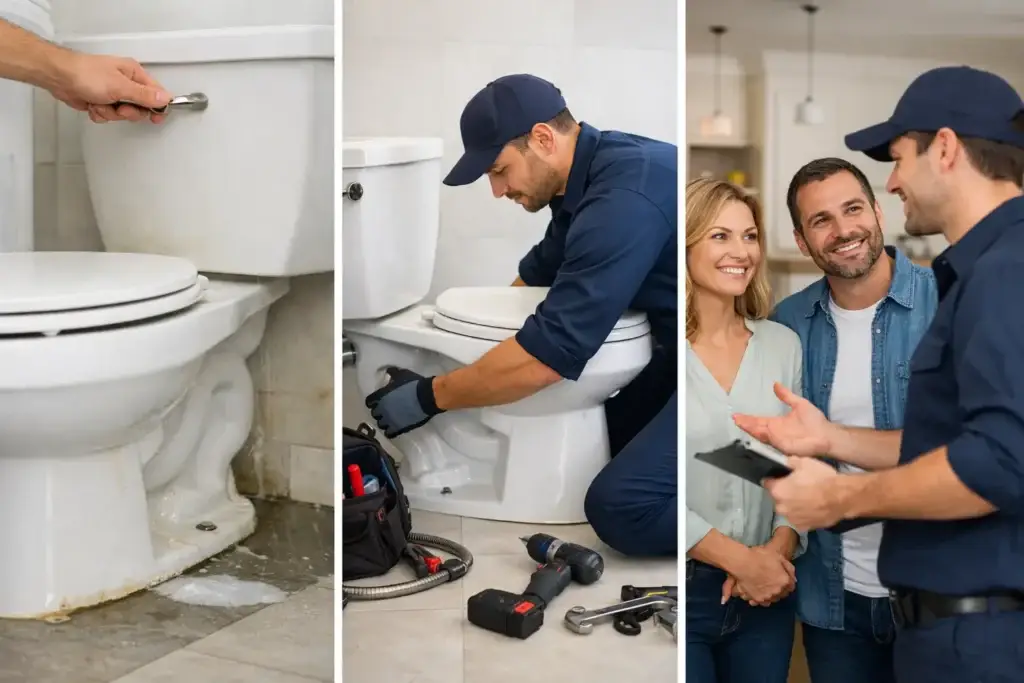
A toilet that needs a second flush every morning or leaves water near the base can turn a routine fixture into a daily concern. The question of when to replace toilet fixtures is not always answered by age alone. Many toilet problems have a straightforward repair, while others point to a fixture that is no longer dependable, efficient, or worth putting more money into.
For Columbus homeowners, the right choice comes down to the condition of the toilet, the cause of the problem, and the expected cost of a lasting repair. Here are the signs that replacement deserves serious consideration.
1. It Cracks, Rocks, or Leaks From the Bowl or Tank
A visible crack in the porcelain is one of the clearest reasons to replace a toilet. A crack in the tank may cause a slow leak or, in more serious cases, a sudden release of water. A crack in the bowl can also allow water to escape where it should not, creating a risk of floor damage and hidden moisture below the fixture.
Not every mark is a crack. Surface staining, mineral buildup, and small scratches can look concerning but may be cosmetic. A plumbing professional can help identify whether the porcelain itself is damaged and whether replacement is the safer option.
A toilet that rocks when someone sits down also needs prompt attention. Sometimes the issue is an uneven floor or loose mounting hardware. But movement can break the seal at the base, allowing water or sewer gas to escape. If the toilet has been loose long enough to damage its base or the surrounding flooring, replacement may make more sense than another adjustment.
2. Clogs Keep Coming Back
One isolated clog does not mean the toilet has reached the end of its service life. Paper buildup, a dropped object, or a temporary drain issue can often be cleared without replacing anything.
Repeated clogs are different, especially when they happen with normal use. Older toilets may have narrower trapways or weaker flush performance than current models. Mineral buildup can also affect how well water moves through the rim holes and internal passages. If plunging has become part of the weekly routine and drain clearing has not solved the issue, a newer toilet can provide a more reliable flush.
It is still worth having the drain line evaluated first. A recurring blockage may originate farther down the bathroom drain or sewer line, and installing a new toilet will not correct that underlying problem.
3. Repairs Are Adding Up
Flappers, fill valves, handles, and supply lines are common wear items. Replacing one of these parts is usually a practical repair when the toilet is otherwise in good condition. The decision changes when several components fail in a short period, the porcelain is worn or damaged, or a previous repair has not held.
A useful rule is to look beyond the immediate repair. Ask what else is likely to need attention soon and whether the toilet meets your household’s needs. Continuing to repair a dependable, well-functioning fixture can be sensible. Putting money into an older toilet with weak flushing, recurring leaks, and hard-to-find parts may not be.
Before work begins, request a clear explanation of the issue, repair options, and the replacement alternative. A flat-rate quote should reflect the actual site conditions and receive your approval before the work starts.
4. The Toilet Runs Constantly or Wastes Water
A toilet that runs after flushing can waste a surprising amount of water. Often, the fix is as simple as a worn flapper or a fill valve that no longer shuts off correctly. Those are repairs worth making on many toilets.
However, if running water returns after multiple repairs, or the toilet has an older high-volume flush design, replacement may reduce both water use and frustration. Modern toilets are designed to use less water per flush while still moving waste effectively. Performance varies by model, so the lowest water-use number is not the only factor to consider. A toilet should flush reliably for the people using it.
You may also notice a higher water bill before you hear the running water. A quiet leak from the tank into the bowl can continue around the clock. A quick diagnosis can determine whether a repair is appropriate or whether replacement is the better long-term value.
5. Stains, Odors, and Surface Wear Will Not Clean Up
Porcelain is durable, but it does not stay perfect forever. Deep stains, worn glazing, and rough surfaces can make a toilet harder to keep clean. Once the glazed finish wears down, mineral deposits and residue can cling more easily, even with regular cleaning.
Persistent odors deserve attention as well. The source may be residue under the rim, a failing wax seal, a drain issue, or moisture around the base. Replacing the toilet is not automatically the answer, but an inspection can separate a fixture problem from a plumbing problem. If the bowl is badly worn and the seal or mounting also needs work, a new toilet may be the cleaner, more dependable solution.
6. It Is the Wrong Height, Shape, or Fit for Your Household
Replacement is not always driven by failure. A toilet that is too low, cramped, difficult to clean around, or poorly matched to the bathroom layout can be worth updating during a planned improvement.
Comfort-height models can be easier for many adults to use, while elongated bowls often provide more room than round-front bowls. In a tight powder room, though, an elongated bowl may extend too far into the walking space. The rough-in measurement, bowl shape, height, available clearance, and door swing all matter before selecting a new fixture.
This is where professional guidance helps prevent a frustrating purchase. A toilet may look right online yet not fit the existing plumbing location or bathroom dimensions. Confirming those details before installation helps avoid delays and unexpected changes.
7. The Base Has Caused Floor Damage
Water around the base should never be ignored. Condensation can sometimes be the explanation, but a failed seal, cracked toilet, or leak from another nearby connection may be involved. Over time, moisture can damage flooring and the subfloor underneath.
If a toilet has leaked repeatedly or moved on a soft floor, the fixture may need to come out so the full condition of the area can be assessed. The right repair could include resealing and resetting the existing toilet. If the toilet is old, damaged, or difficult to reinstall securely, replacement is often the more practical choice.
8. You Are Remodeling or Preparing to Sell
A bathroom update is a good time to replace an outdated toilet, particularly if the existing fixture is discolored, inefficient, or mismatched with the rest of the room. A clean, properly installed toilet improves the finished appearance without making the project more complicated later.
For homeowners preparing to sell, replacement should be based on condition rather than chasing trends. A toilet that works well, is clean, and is securely installed may not need to be changed. But visible damage, chronic running, staining, or an unstable base can raise questions during a buyer walkthrough and should be addressed.
When a Repair Still Makes Sense
Replacing a toilet is not always necessary. If the bowl and tank are intact, the toilet is stable, it flushes properly, and the problem is limited to a replaceable part, repair is usually the sensible first move. A leaking flapper, faulty fill valve, loose handle, or minor connection issue can often be corrected without replacing the fixture.
The best decision is based on the full picture, not a single symptom. A professional diagnosis can identify whether the problem is in the toilet, the drain, the seal, or the water supply. That matters because a new toilet cannot solve a clogged main drain or a damaged bathroom floor on its own.
What to Expect From Toilet Replacement
A proper replacement starts with confirming the source of the problem and checking the existing installation. The old toilet is removed, the connection point and surrounding floor are inspected, and the new fixture is selected for fit and function. The final scope can vary if hidden damage, unusual dimensions, or needed floor repairs are discovered after removal.
For a planned replacement or a toilet issue that cannot wait, Transit & Flow can explain the condition of your fixture in plain language and provide clear options before work begins. The goal is not to replace a toilet that can be repaired. It is to help you choose a solution that keeps your bathroom dependable, clean, and ready for normal daily use.
