
Emergency Steps To Take When Your Water Heater Starts Leaking
When a water heater starts leaking, it can go from “small puddle” to “flooded basement” fast. In Columbus, Ohio, that can mean ruined flooring, damaged drywall, and a big cleanup bill. The good news is you can take a few quick steps right away to limit damage and keep your home safe. You will learn how to shut off water and power, what warning signs to check, and when you should call a pro. If you act early, you can often prevent a small leak from turning into a full water heater failure.
Emergency Steps To Take When Your Water Heater Starts Leaking
A leaking water heater usually means one of two things, a simple part failed, or the tank started to break down. Either way, you need to treat it like an emergency until you know the cause. Water spreads quickly, and it can damage wood, drywall, insulation, and even electrical systems.
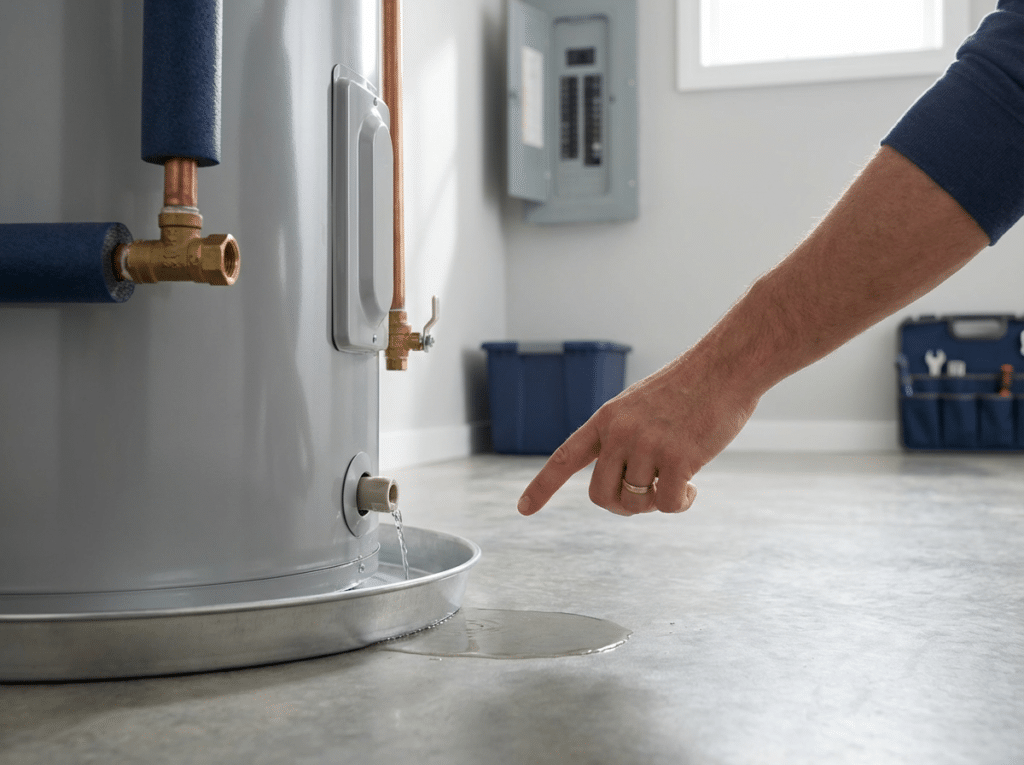
Start by looking at where the water comes from. If you see water dripping from a pipe connection at the top, you may have a loose fitting or a worn valve. If you see water coming from the bottom of the tank, the tank itself may have corrosion inside. A tank leak often means you need a replacement soon.
You also need to think about the type of water heater you have. Electric units have power running to heating elements. Gas units have a burner and a vent system. Both types can create safety risks if water reaches electrical parts or if a gas unit has a venting problem.
Here is a real-world example. A homeowner in Columbus notices a small puddle near the water heater after doing laundry. They wipe it up and move on. Two days later, the leak grows, the drain pan overflows, and water runs into a finished area. That small leak now causes a big repair.
If your water heater stops heating while it leaks, you may also want to review these guides:
- “What to do when your water heater stops working” – https://transitflowplumbing.com/when-your-water-heater-stops-working/
- “No hot water at home, quick troubleshooting steps” – https://transitflowplumbing.com/no-hot-water-at-home/
Why This Matters
A leaking water heater can cost you money in more than one way. First, it can damage your home. Water can warp floors, stain ceilings, and grow mold behind walls. Second, it can raise your utility bills. A water heater that leaks or runs nonstop wastes water and energy. Third, it can create safety issues if water reaches electrical wiring or if a gas unit has a burner area problem.
If you plan to sell your home, water damage can also hurt your home value. Buyers notice stains, musty smells, and patched drywall. Home inspectors also flag active leaks and corrosion. Fixing the problem fast helps protect your home and your budget.
Here are three big reasons you should act right away:
- Cost control: You limit water damage and avoid bigger repairs.
- Safety: You reduce the risk of electrical hazards and other problems.
- Peace of mind: You stop the leak and get a clear plan for repair or replacement.
If you need help with repair or replacement options, start here:
If you want a simple overview of how water heaters work and why leaks can get expensive fast, the Department of Energy water heating guide is a good reference: https://www.energy.gov/energysaver/water-heating
What to Look For
Use these steps to figure out what you face and what you should do next. Move in order and stay calm. These checks help you stay safe and protect your home.
- Find the leak source. Look at the top connections, the temperature and pressure relief valve, and the drain valve near the bottom. Check the area around the base of the tank.
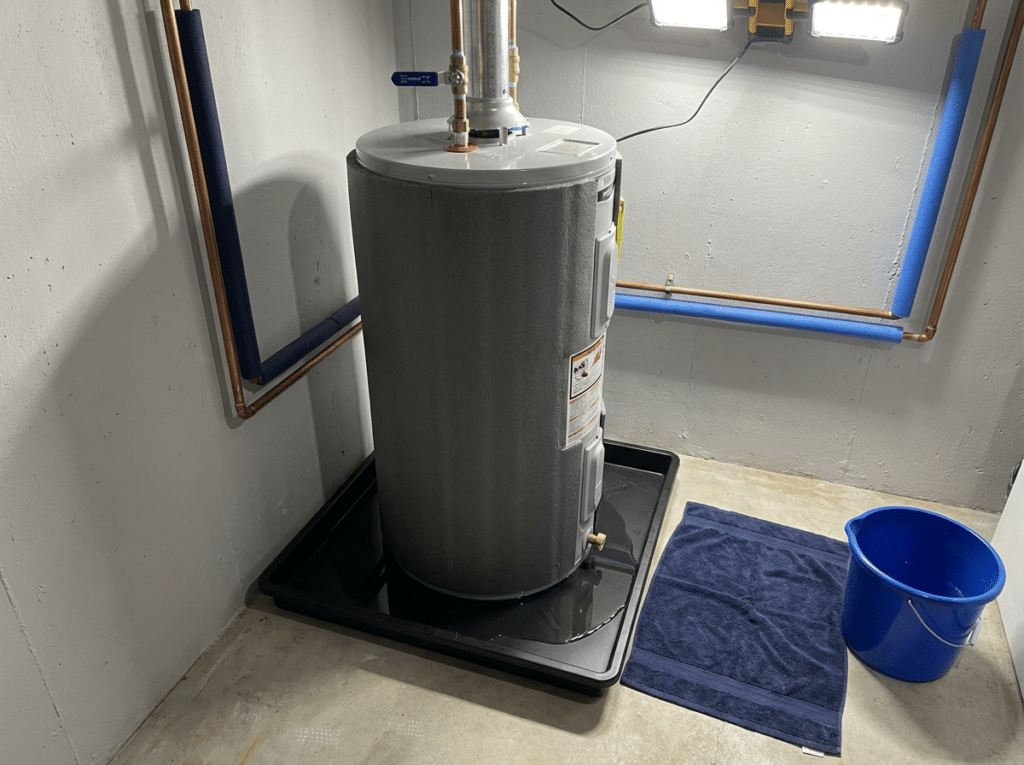
- Check the drain pan. If your unit sits in a pan, see if the pan holds water. A full pan means the leak has lasted a while or the leak rate increased.
- Listen for sounds. Hissing, popping, or rumbling can point to sediment buildup and overheating. That can stress the tank and fittings.
- Look for rust and corrosion. Rust streaks, flaking metal, and wet insulation around pipes often signal long-term wear.
- Check nearby items. Water can travel. Look at walls, baseboards, and stored boxes near the heater.
- Note the water temperature. Hot water leaking can cause burns. Keep kids and pets away from the area.
- Smell for gas if you have a gas unit. If you smell gas, leave the area and call your gas provider right away. Do not flip switches or use open flames.
If this sounds like something you are dealing with, do not wait. Transit & Flow® serves Columbus, Ohio and the surrounding area. Call us today or book online. No surprises. No guesswork. Just results.
What You Should Do
Take action right away. These steps help you control the situation and reduce damage.
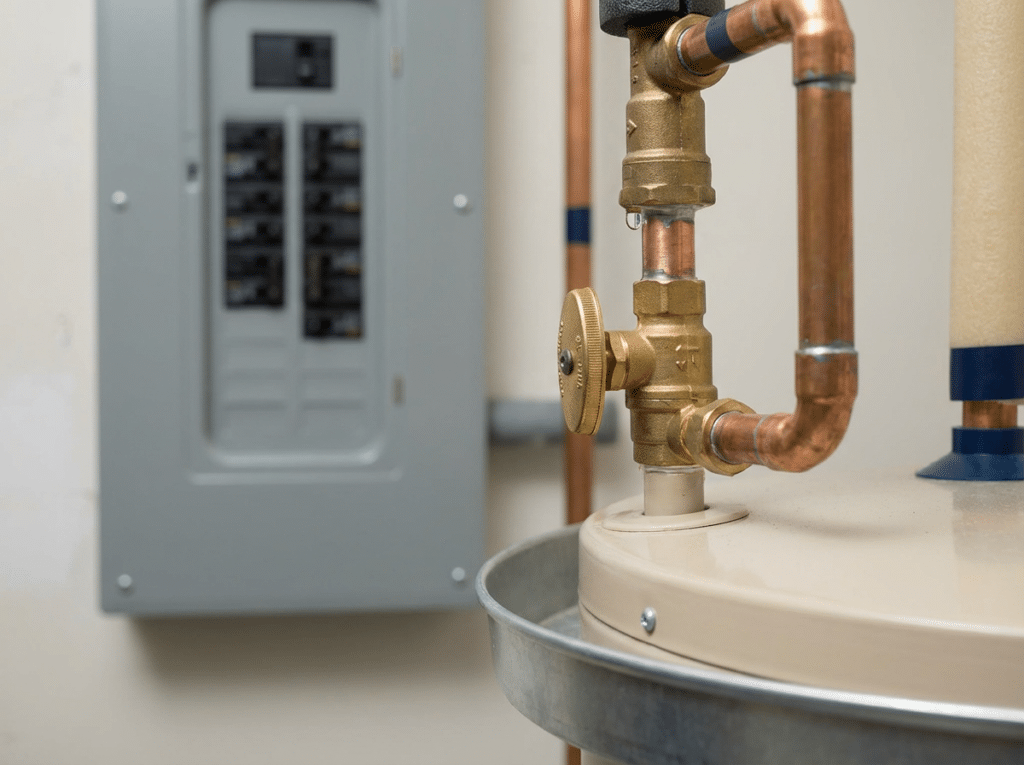
First, shut off the water supply to the water heater. Most units have a cold-water shutoff valve above the tank. Turn it clockwise until it stops. If the valve fails or you cannot reach it, shut off the main water supply to the home.
Next, shut off the power or gas. For an electric water heater, turn off the correct breaker at the electrical panel. For a gas water heater, turn the gas control valve to the off position. Do not keep running a leaking unit. You can damage the system and increase risk.
Then, contain the water. Use towels, a wet vac, or a mop. If you have a floor drain, guide water toward it. If the leak looks steady, place a bucket under the drip point.
Finally, call a experienced, insured plumber if you see water coming from the tank body, if the leak keeps growing, or if you cannot safely shut things down. A fast inspection can confirm if you need a simple repair, like a valve replacement, or a full tank replacement.
How Transit & Flow® Handles This
Transit & Flow® treats a leaking water heater like a priority service call. We start with a clear diagnosis, then we explain your options in plain language. We use flat-rate pricing, so you see the price and approve it before we start work. We protect your home while we work, and we clean up the area when we finish. If the tank failed, we guide you to the right replacement for your home, not an upsell.
Your home deserves professional plumbing from people who care. Transit & Flow® is the premium choice for homeowners in Columbus, Ohio. We are bonded, insured, and ready when you need us. Book your service today. Call us at 614-333-8092 or schedule online.
