
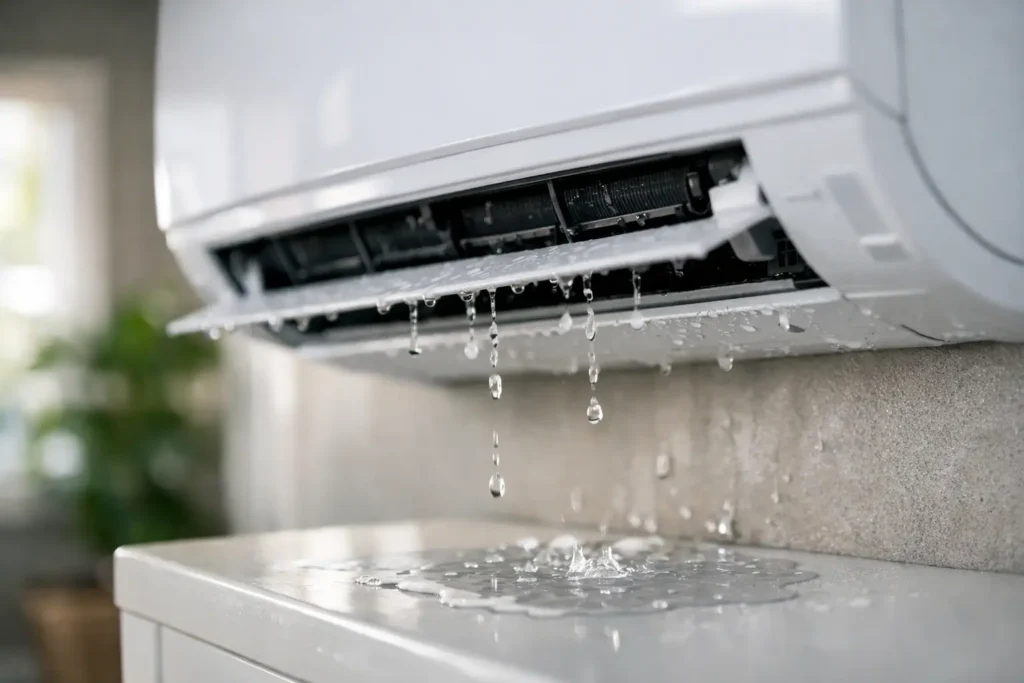
You walk past the indoor unit, notice water on the floor, and the question hits fast – why is my AC leaking, and how serious is it? In many Columbus homes, an AC leak starts as a small drip and turns into drywall damage, stained ceilings, wet insulation, or a system shutdown if it is ignored. The good news is that water around an air conditioner usually points to a handful of common issues, and most of them can be diagnosed quickly.
Air conditioners naturally produce condensation while they cool your home. That moisture is supposed to collect in a drain pan and move out through a condensate drain line. When that process gets interrupted, water shows up where it should not. Sometimes the cause is simple, like a clogged drain line. Other times, the leak is a sign of restricted airflow, a damaged component, or a bigger repair need.
Why is my AC leaking inside the house?
If the leak is indoors, the most common reason is a condensate drainage problem. Your AC removes humidity from the air as it runs, especially during hot, sticky Ohio summers. That water has to go somewhere. If the drain line clogs with algae, dust, or debris, the water backs up and spills out around the unit.
A cracked or rusted drain pan can cause the same result. In older systems, the pan may simply wear out over time. In newer systems, improper installation or shifting equipment can sometimes affect drainage and cause overflow. The symptom looks similar either way – water near the indoor air handler, furnace, or ceiling area if the system is installed above living space.
Another common cause is a dirty air filter. That might seem unrelated, but restricted airflow can make the evaporator coil get too cold and freeze. When the ice melts, it can create more water than the drain system can handle at once. A homeowner may only notice the leak after the unit cycles off and the frozen coil starts thawing.
Low refrigerant can also lead to a frozen evaporator coil and water leakage. This is where it helps to avoid guesswork. A dirty filter is a simple fix. Refrigerant issues, coil problems, and component failures need a proper HVAC inspection so the repair addresses the real cause, not just the puddle on the floor.
The most common reasons an AC starts leaking
In day-to-day service calls, a few problems come up again and again. A clogged condensate drain line is near the top of the list because it is so common during heavy cooling season. Dust, mold-like buildup, and sludge can collect in the line until water has nowhere to go.
A dirty filter is another frequent issue, especially in homes where filters have been skipped for a few months or the system is running hard. Restricted airflow stresses the system and can create ice on the coil. Once that ice melts, water can overflow the pan.
A damaged drain pan is more common in aging systems. Metal pans can corrode. Plastic pans can crack. If the pan can no longer hold water properly, leakage becomes unavoidable.
Sometimes the condensate pump is the problem. In homes where gravity drainage is not enough, a pump moves condensation out of the system. If that pump fails, the water stays put and eventually overflows.
There are also installation and maintenance issues. If the system is not level, drainage may not flow as designed. If regular maintenance has been deferred, small warning signs can build into a larger mess. That does not mean every leak requires a major repair, but it does mean water around an AC unit should never be treated as normal.
What you can check first
Start with the thermostat and the filter. If the system is still cooling but you see water, turn the AC off to limit further leakage and give any frozen coil time to thaw. Then check the air filter. If it is dirty, replace it with the correct size and type for your system.
Look around the indoor unit for obvious signs of blockage or overflow. If the drain pan is full, the drain line may be clogged. If you can see ice on the refrigerant line or evaporator area, airflow restriction or refrigerant issues may be involved. If the leak is coming from the ceiling, attic, or a closet-mounted air handler, it is smart to act quickly before water spreads into building materials.
What you should not do is open up sealed components, force tools into the system, or keep running the AC in hopes the problem clears up on its own. Water damage gets more expensive the longer it continues, and a frozen coil can point to a problem that needs professional diagnosis.
When a leaking AC is more than a minor issue
Some leaks are straightforward. Others are a warning sign that the system is under strain. If your AC is leaking repeatedly, not cooling evenly, freezing up, or shutting down, the water may be only part of the problem.
For example, low refrigerant can cause poor cooling, coil freezing, and ongoing moisture issues. A failing blower motor can reduce airflow and create similar symptoms. In older equipment, multiple small failures can show up at once – a dirty coil, a weak pump, and a corroded pan. In those cases, fixing one part may stop the immediate leak but not solve the long-term reliability issue.
That is where a clear diagnosis matters. A good service visit should explain what caused the leak, what needs to be repaired now, and whether there are any related issues that should be addressed before they turn into another service call. Customers usually do not need every technical detail. They need a practical explanation, honest recommendations, and approval before work begins.
Why is my AC leaking after it was working fine?
This is common, especially during the first major heat wave or after the system has been running hard for several days. A drain line may have been slowly collecting buildup without causing a visible problem until demand increased. A filter that was only moderately dirty in spring can become restrictive by midsummer. High humidity can also push a borderline drainage issue into an obvious leak.
Weather plays a role too. In Central Ohio, humid stretches can increase condensation output significantly. If the drainage system is already partially blocked, that extra moisture can expose the weakness quickly. That is why a system may seem fine one week and start leaking the next.
There is also a timing issue with frozen coils. A unit may run, struggle quietly in the background, and then leak later when accumulated ice melts. Homeowners often assume the water leak itself is the whole problem, when in reality the leak is the aftereffect of something else.
Preventing AC leaks before they start
The best prevention is regular maintenance and basic filter discipline. A clean filter helps airflow stay where it should be. Routine AC service helps catch drainage issues, coil problems, and worn parts before water ends up on the floor.
It also helps to pay attention to early warning signs. Musty odors near the unit, reduced cooling, higher indoor humidity, unusual cycling, or occasional drips should not be brushed off. An AC system usually gives clues before a larger leak develops.
For homes with finished basements, attic equipment, or units installed near drywall, flooring, or storage areas, a small leak can create bigger property damage than many people expect. Acting early is often the difference between a focused repair and a cleanup project.
If you are in Columbus or a nearby suburb and your AC is leaking, the fastest path is usually a professional inspection that confirms the source, explains the repair clearly, and gives you approval options before work starts. Transit & Flow approaches AC issues the same way homeowners want them handled – with clear communication, practical recommendations, and up-front pricing based on the actual condition of the system.
A leaking AC does not always mean a major repair is coming, but it does mean your system needs attention. If you catch it early, you usually have more options, less mess, and a better chance of keeping a small problem from turning into water damage on the hottest week of the year.
