
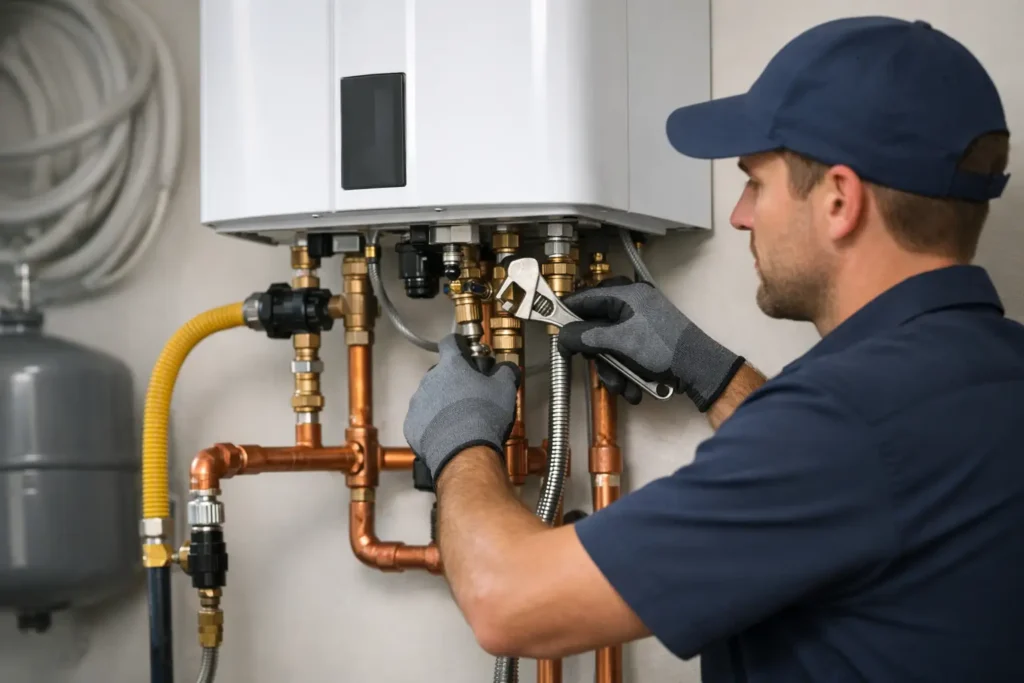
Running out of hot water halfway through a shower gets old fast. For many Columbus-area property owners, tankless water heater installation comes up when the current system is unreliable, taking up too much space, or driving up utility costs. The right setup can deliver steady hot water and a cleaner mechanical area, but only if the unit is sized correctly and the installation matches the building.
This is one of those upgrades that sounds simple from the outside and turns out to depend on several job-site details. Fuel type, venting, water demand, gas line capacity, electrical needs, and the condition of the existing plumbing all affect the final scope. That is why a clear on-site evaluation matters before anyone talks about final pricing or a timeline.
When tankless water heater installation makes sense
Tankless systems are a strong fit for properties where hot water demand is predictable and the goal is better efficiency, more usable space, or longer-term performance. Homeowners often choose them during a planned replacement, especially when an older tank water heater is nearing the end of its service life. Property managers and small commercial owners may also look at tankless units when they want to reduce downtime risk or modernize mechanical systems.
The biggest advantage is simple: water is heated as needed instead of stored in a tank. That can mean less standby energy loss and a longer stream of hot water for daily use. In the right home, that is a real upgrade.
But it is not automatically the right answer for every building. A large family with several simultaneous showers, laundry, and dishwashing may need more than one unit or a carefully selected high-capacity model. In some older properties, the utility connections needed for a tankless system can make the project more involved than a straightforward tank replacement.
What affects the installation scope
Every tankless water heater installation starts with one basic question: how much hot water does the property actually need at peak use? That answer helps determine size, recovery expectations, and whether one unit is enough.
After that, the next major factor is the existing setup. If the property already has a gas water heater, that does not always mean the current gas line is large enough for a tankless model. Many tankless systems require more gas input than a standard storage tank. Venting can also change, especially if the new unit uses a different vent material or route.
Electric tankless units come with their own requirements. In some buildings, the electrical service may need upgrades to support the load. That can affect both cost and scheduling.
Location matters too. Wall-mounted tankless units save floor space, which is attractive in utility rooms, basements, and smaller commercial areas. Still, access, clearances, drainage, freeze protection, and vent routing all need to be checked. What looks like a quick swap can become a larger project if the unit has to be relocated or if code-related updates are needed.
Tankless water heater installation vs. tank replacement
For some properties, replacing a failed tank with another tank is the fastest and most practical option. If the goal is to restore hot water quickly with minimal changes, a like-for-like replacement may be the better fit.
Tankless installation is usually a more considered upgrade. It may involve modifying gas piping, venting, water lines, or electrical connections. That additional work can be worth it, but it should be evaluated honestly. The best recommendation is not about selling the most advanced system. It is about matching the equipment to the property, usage pattern, and budget.
That is especially important for landlords, HOAs, and apartment operators. In a rental or multi-unit setting, consistency and serviceability matter just as much as efficiency. A system that works well on paper still has to make sense for turnover, maintenance access, and long-term operating costs.
What to expect during tankless water heater installation
A professional installation process should feel organized from the start. First comes the inspection and estimate. That visit helps confirm the type of unit the property can support, what modifications may be needed, and whether the installation can be scheduled within the preferred window.
Once the scope is approved, the old water heater is disconnected and removed if this is a replacement. The installer then prepares the wall location, utility connections, and venting path. Depending on the building, this may include gas line work, electrical adjustments, shutoff valve updates, and connection changes for the hot and cold water lines.
After the new unit is mounted and connected, the system is tested for safe operation and proper performance. Temperature settings, ignition, flow response, venting, and leak checks all need to be verified before the job is considered complete. A good service team should also explain the basic operation of the new unit so the customer knows what to expect.
The length of the appointment depends on the job conditions. Some installations are straightforward. Others take longer because of access limits, utility upgrades, or code-related corrections discovered on site. Clear communication matters here. Customers should know what is included, what may change after inspection, and what requires approval before work continues.
Costs, savings, and realistic expectations
Most customers ask the same question first: is a tankless unit worth the cost? The honest answer is that it depends on how the property uses hot water and what changes are needed to install the system properly.
A tankless unit can offer energy savings over time, especially in homes where standby losses from a traditional tank are a concern. It can also free up space and reduce the frustration of running out of hot water during normal use. Those are meaningful benefits.
At the same time, installation costs are often higher than a standard tank replacement because the system may require venting updates, gas line changes, or electrical work. Maintenance also matters. Tankless systems should be serviced regularly, particularly in areas where mineral buildup can affect performance. Skipping maintenance can shorten equipment life and reduce efficiency.
For property owners looking at the full picture, the right question is not just what the unit costs today. It is how well the system will serve the building over the next several years with normal use and proper care.
Common mistakes to avoid
The most common problem is choosing a unit based on price or marketing claims instead of actual demand. An undersized tankless heater can struggle during peak use, which leads to frustration right away. An oversized setup may add cost without delivering meaningful value.
Another issue is treating tankless installation like a simple swap. Even when the old and new systems both use gas, the utility requirements may be very different. Venting, line sizing, and installation location should never be guessed.
It is also a mistake to overlook future maintenance. Tankless systems are not set-it-and-forget-it equipment. They need periodic service to stay reliable. That is not a reason to avoid them. It is just part of owning one.
Choosing the right installer in Columbus
If you are comparing options for tankless water heater installation, look for a company that explains the job clearly, checks the full system, and gives you a defined scope before work starts. Fast response matters, especially when you have no hot water, but speed should not come at the expense of proper evaluation.
It also helps to work with a team that is used to a range of property types, from single-family homes to apartment buildings and small commercial spaces. The demands are different, and the recommendation should reflect that. A good installer will walk you through what fits your property, what changes are needed, and what the next step looks like without making the process feel complicated.
For Columbus-area customers, Transit & Flow focuses on practical recommendations, clear communication, and up-front approval before work begins. That matters on a project like this because the best outcome is not just a new unit on the wall. It is a system that fits the property and performs the way you expect.
If you are thinking about making the switch, the smartest first move is a professional evaluation. Once the building, demand, and utility connections are confirmed, the decision gets much easier – and a lot more predictable.
Tankless units are less forgiving of poor installation than tank systems, particularly around gas supply, venting, and descaling access. Transit & Flow handles tankless water heater installation in Columbus along with ongoing maintenance. Call (614) 333-8092.
