
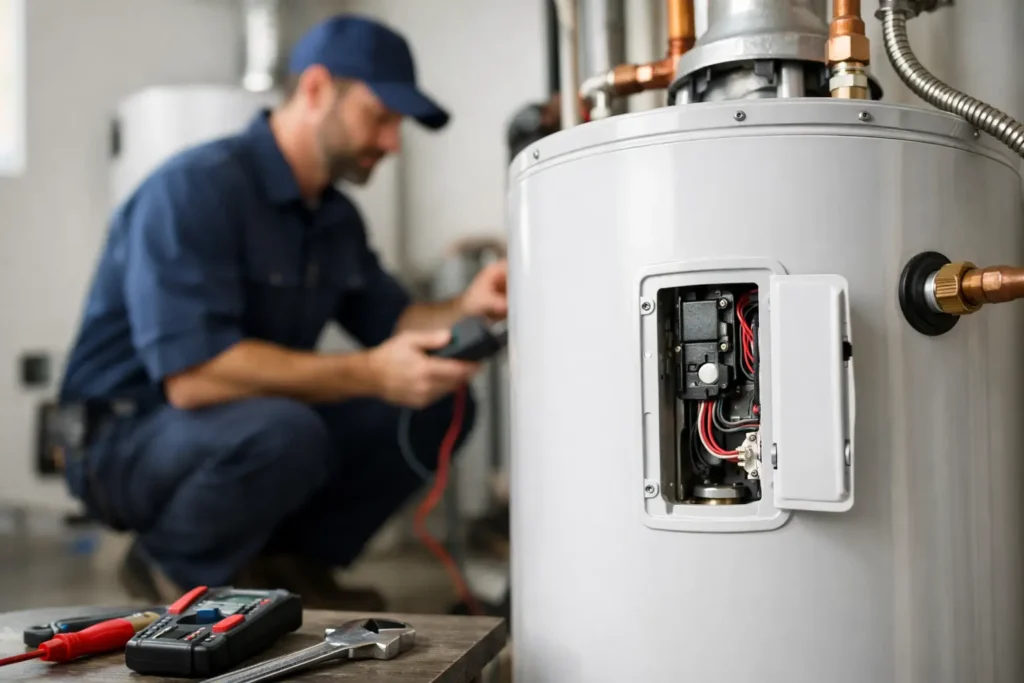
A cold shower usually tells you something is wrong before you ever see the water heater. If your water heater not heating is the problem, the next step is not guessing – it is narrowing down whether you have a simple power, gas, or settings issue, or a repair that needs professional service.
For homeowners and property managers in Columbus, this problem tends to show up at the worst time: early mornings, tenant turnover, busy workdays, or right before guests arrive. The good news is that a loss of hot water often follows a short list of common causes. Some are minor. Others point to a failing part or a tank that is reaching the end of its service life.
Why a water heater is not heating
A water heater only needs a few things to work properly: power or gas, a heat source that turns on when needed, and enough water inside the tank to heat safely. When any one of those is interrupted, hot water disappears fast.
On electric units, the issue is often tied to a tripped breaker, a failed heating element, or a bad thermostat. On gas models, the problem may be a pilot light that has gone out, a control issue, or trouble with the burner. In some cases, the heater is technically working, but not producing enough hot water because of sediment buildup, an undersized unit, or unusually heavy demand.
That distinction matters. A tank that produces no hot water at all points to a different kind of failure than one that starts hot and turns cold after a few minutes.
What to check first when your water heater is not heating
Start with the basics. If the unit is electric, check your electrical panel for a tripped breaker. Resetting it once may restore power, but if it trips again, that usually means there is a larger electrical or component issue. Repeated resets are not a fix.
If you have a gas water heater, confirm whether the pilot is lit, if your model uses one. Some newer systems use electronic ignition, so there may not be a standing pilot to inspect. If you smell gas, leave the area and arrange for immediate professional help instead of trying to troubleshoot further.
Next, look at the thermostat setting. Sometimes the problem is as simple as a setting that was lowered too far, especially in rental units, utility rooms, or commercial spaces where multiple people have access. If the temperature looks normal and the unit still is not heating, the cause is likely deeper than a quick adjustment.
Also pay attention to whether the problem is isolated to one fixture or affects the whole building. If one shower is cold but sinks still get hot water, the issue may be with that fixture or a mixing valve, not the heater itself.
Common reasons a water heater stops making hot water
One of the most common causes is a failed heating element in an electric tank. Many electric water heaters use two elements. If one goes bad, you may still get some hot water, just not enough. If both fail, the tank may stop producing hot water completely.
Thermostat problems can create similar symptoms. A thermostat that does not signal properly may prevent the unit from heating even when the tank is full of cold water. This is not always visible from the outside, which is why proper testing matters.
Gas units often run into burner or ignition issues. A dirty burner, faulty thermocouple, or failed gas control valve can interrupt heating. Sediment buildup can also reduce efficiency and make it harder for the burner to heat water evenly.
Then there is the age factor. If the tank is older, internal wear may be catching up with it. Corrosion, mineral buildup, and repeated part failures can turn what looks like a one-time repair into a pattern. At that point, replacement may be the more practical recommendation.
When the water heater not heating problem is really a capacity problem
Not every hot water complaint means the unit has stopped working. Sometimes the heater is heating, but it cannot keep up.
This happens often in larger households, apartment units with back-to-back usage, or commercial spaces with restrooms, kitchens, and employee demand all drawing from one tank. If the water starts hot and runs cold quickly, your system may be undersized, partially failing, or packed with sediment that reduces usable hot water volume.
A tank that is too small for the property can look like a repair issue when it is really a sizing issue. The right answer depends on the pattern. If the heater has always struggled during high-demand times, a repair may not change much. If it just started happening recently, the unit may have developed a performance problem.
Signs you should stop troubleshooting and schedule service
There is a point where checking basic settings is reasonable, and then there is a point where continued guessing wastes time. If your breaker keeps tripping, the pilot will not stay lit, the burner is not igniting, or the unit is making unusual noises, it makes sense to have the system diagnosed.
Leaks are another clear sign to stop. Water around the base of the tank can come from fittings, the temperature and pressure relief valve, or the tank itself. A leaking connection may be repairable. A leaking tank usually means replacement is closer than repair.
Discolored hot water, rumbling sounds, or long heat-up times also point to bigger internal problems. These are not always emergencies, but they are signs the system is no longer operating normally.
For property managers and business owners, the threshold for action is usually even lower. A single failed water heater can affect tenants, customer-facing operations, turnovers, and maintenance scheduling. Fast diagnosis matters because delay tends to create more disruption than the repair itself.
Repair or replacement?
This is where context matters. If the water heater is fairly new and the issue is isolated to a thermostat, element, igniter, or valve, repair is often the sensible option. It restores hot water without the cost of replacing the whole system.
If the unit is older, has visible corrosion, has needed multiple repairs, or is leaking from the tank body, replacement may be the more cost-effective path. The lowest immediate bill is not always the lowest total cost over the next year or two.
A good service visit should not push you in one direction without explanation. You should know what failed, what the repair would address, whether any related concerns were found, and what replacement makes sense if repair is no longer a strong long-term value. Clear communication matters as much as the diagnosis.
What to expect from a professional diagnosis
When a technician evaluates a water heater that is not heating, the goal is to confirm the actual failure point instead of replacing parts by trial and error. That usually means checking power or gas supply, testing controls, reviewing safety components, and looking at the tank condition as a whole.
From there, the recommendation should be straightforward. You should understand whether the issue is repairable, whether replacement is advised, and what the next step would be before work begins. For many Columbus-area customers, that level of clarity is the difference between a stressful service call and a manageable one.
Transit & Flow approaches these calls with the same priorities customers ask for every day: clear communication, flat-rate pricing, and approval before work starts. That matters when you are already dealing with no hot water and need a practical answer, not more uncertainty.
Preventing the next no-hot-water surprise
No water heater lasts forever, but routine maintenance can help you avoid sudden failures. Periodic inspection, flushing when appropriate, and early attention to small performance changes can extend service life and improve reliability.
It also helps to pay attention to subtle warning signs. Hot water that runs out faster than it used to, odd tank noises, minor rust tint, or inconsistent water temperature are often early indicators. Catching those issues before a full breakdown gives you more options and more control over timing.
That is especially true for landlords, HOAs, and commercial properties where one equipment failure can affect multiple people at once. Planned service is usually easier than emergency response, even though both have their place.
If your water heater is not heating, the right next move is simple: rule out the obvious, avoid risky guesswork, and get a clear diagnosis so you can restore hot water with confidence.
A water heater that runs but will not heat usually points to a failed element, thermostat, or gas control, none of which are safe DIY repairs. Have a licensed Columbus plumber assess your water heater before the problem escalates. Call Transit & Flow at (614) 333-8092.
