
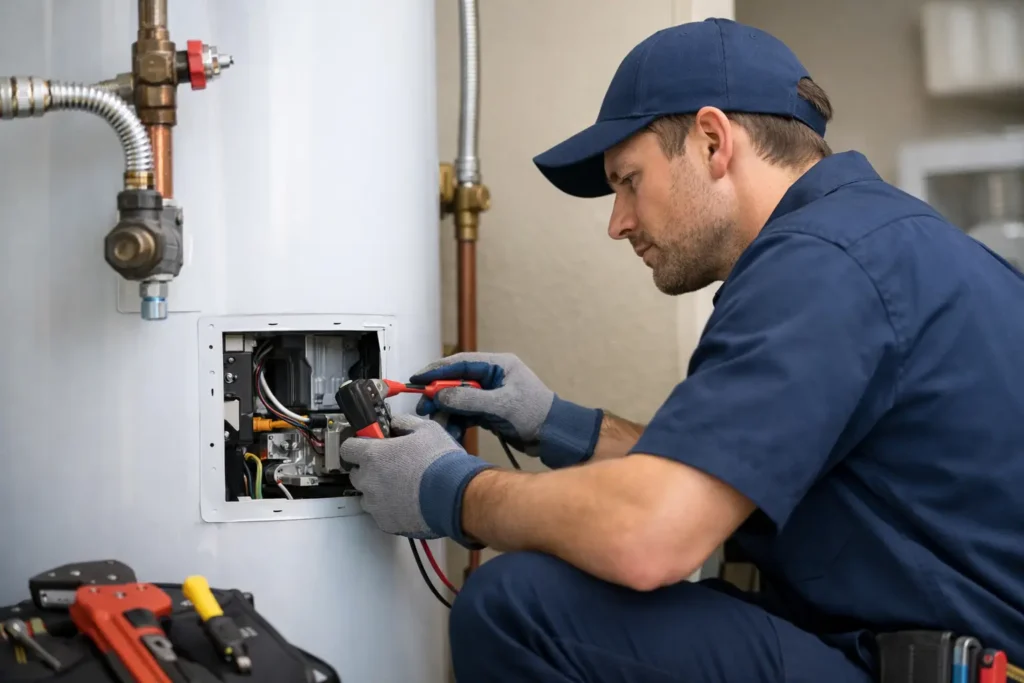
A cold shower usually gets your attention fast. But most water heater repair calls start before the water turns completely cold. You might notice the hot water runs out too quickly, the tank makes a popping sound, or the water looks rusty for a few seconds. Those small changes matter because they often point to a problem that is easier to diagnose early than after a full breakdown.
For homeowners and property managers in Columbus, a failing water heater creates more than inconvenience. It disrupts morning routines, cleaning, laundry, and day-to-day comfort. In some cases, it can also lead to water damage if the issue is ignored too long. The good news is that not every problem means replacement. In many situations, a focused repair can restore reliable hot water without turning the job into something bigger than it needs to be.
When water heater repair makes sense
A lot depends on the age of the unit, the condition of the tank, and the specific part that failed. If the issue is tied to a heating element, thermostat, ignition component, or pressure-related part, repair is often the practical next step. If the tank itself is leaking from the body or badly corroded, replacement is usually the more sensible recommendation.
That is where a clear inspection matters. The right approach is not to guess from one symptom. Two homes can have the same complaint – no hot water – and need completely different solutions. One may need a relatively simple part replacement. Another may have a tank that has reached the end of its service life. A professional diagnosis helps separate those situations quickly so you can make an informed decision.
Common signs you need water heater repair
Most water heaters give some warning before they stop working altogether. If your hot water changes suddenly or gets inconsistent, that is usually the first sign. Water that starts hot and turns lukewarm faster than usual can point to a failing element in an electric unit or a burner issue in a gas model.
Unusual noises matter too. Rumbling, banging, or popping often means sediment has built up in the tank. That buildup forces the system to work harder and can shorten the life of components. It does not always mean the water heater is beyond repair, but it does mean the unit needs attention.
Discolored water is another signal to take seriously. Rusty or brown-tinted hot water may come from corrosion inside the tank or from connected plumbing. If the discoloration appears mainly when using hot water, the water heater becomes a likely suspect.
Leaks around the unit should never be brushed off as normal. Sometimes water is coming from a loose connection or a relief valve issue. Other times, it is coming from the tank itself. That distinction is critical because one may be repairable while the other may not.
What causes water heaters to fail
Wear and tear is the simple answer, but the real cause is often gradual. Over time, minerals in the water settle at the bottom of the tank. Columbus-area homes can see mineral-related buildup, and that sediment reduces efficiency while increasing strain on the system. The heater has to work longer to produce the same result, which affects performance and can speed up part failure.
Age is another factor. Even a well-maintained water heater will not last forever. As components wear down, problems become more frequent and repairs may stop making financial sense. That does not mean every older unit should be replaced immediately, but age should be part of the conversation.
Sometimes the problem is more straightforward. A tripped breaker, a failed thermostat, a pilot or ignition issue, or a bad heating element can all interrupt hot water production. These are the kinds of issues that should be checked systematically instead of treated as one-size-fits-all failures.
What to do before you call for service
If your water heater stops working, start with the basics without taking on anything unsafe. Check whether the issue affects only hot water or if there is a broader plumbing problem. Look around the base of the unit for pooling water. If you see active leaking, shut off the water supply to the unit if you can do so safely.
If you have an electric water heater, checking the breaker can be useful. If you have a gas unit, pay attention to whether the pilot appears to be out, but avoid trying to force a fix if you are unsure what you are looking at. The goal is not to troubleshoot every internal part. It is to gather enough information to describe the issue clearly when scheduling service.
If water is leaking heavily, if you smell gas, or if the unit is making severe noises, treat it as urgent. Fast service matters in those situations because the longer the issue continues, the greater the chance of property damage or a full equipment failure.
What to expect during a water heater repair visit
A good service visit should feel organized, not confusing. The technician should inspect the unit, confirm the symptoms, and identify the likely cause before any work begins. From there, you should get a clear explanation of the problem, what repair is recommended, and what approval is needed before moving forward.
That process matters because water heater issues can look similar from the outside. No hot water might be caused by a thermostat, a valve, a burner problem, electrical failure, or tank deterioration. Clear communication keeps the visit efficient and helps avoid unnecessary work.
For many Columbus households, speed matters just as much as the repair itself. Same-day availability can be especially helpful when the water heater affects a busy home, a rental property, or a schedule that cannot wait several days for answers. Just keep in mind that final timing depends on technician availability, site conditions, and whether needed materials are on hand.
Repair or replace? It depends on the condition
This is usually the biggest question, and the honest answer is that it depends. If the water heater is relatively newer and the issue is isolated to a serviceable part, repair is often the better value. If the tank is older, corroded, or leaking from the body, putting money into it may only delay the inevitable.
Frequency matters too. One repair on an otherwise dependable system is different from repeated breakdowns over a short period. At some point, ongoing repairs become more disruptive than helpful. The right recommendation should take into account age, condition, reliability, and the cost of continued upkeep.
That is why straightforward guidance matters. Customers should not feel pushed toward replacement when repair is reasonable, and they should not be sold a short-term fix when the tank is already failing. The best service approach is practical and based on what the equipment is actually doing.
How to reduce future water heater repair calls
Maintenance will not prevent every problem, but it can reduce surprises. Water heaters work quietly in the background, so they are easy to ignore until performance drops. Periodic inspection helps catch wear before it turns into a no-hot-water situation.
Pay attention to smaller changes in recovery time, water temperature, noise, and any moisture around the unit. Those details often show up before a complete shutdown. If your water heater is older, being proactive matters even more because age-related issues tend to build rather than appear all at once.
For households that want fewer emergencies and clearer planning, regular service can be a smart move. It helps you understand the condition of the system now instead of making decisions in the middle of an urgent breakdown.
Choosing a water heater repair company in Columbus
When hot water is out, most people are not looking for a long sales pitch. They want a company that answers quickly, explains the problem clearly, and gives approval-based recommendations with up-front pricing before work starts. That is especially true when the issue shows up after hours or disrupts a busy household.
Look for a provider that offers clear communication from scheduling through diagnosis, keeps the process organized, and respects your time at the property. Flat-rate pricing and visible starting prices can help reduce uncertainty, but the final scope should still be confirmed after inspection. That balance matters because no two water heater problems are exactly the same.
In Columbus and surrounding suburbs, Transit & Flow focuses on that practical service experience – responsive scheduling, honest recommendations, and clear next steps when a water heater stops doing its job.
Hot water problems rarely improve by waiting. If your system is getting noisy, inconsistent, or completely cold, the smartest next step is a proper diagnosis while the problem is still manageable.
If those first steps do not restore hot water, stop there and bring in a professional rather than opening the unit. You can schedule water heater service with Transit & Flow or call (614) 333-8092 for same-day help in Columbus.
