
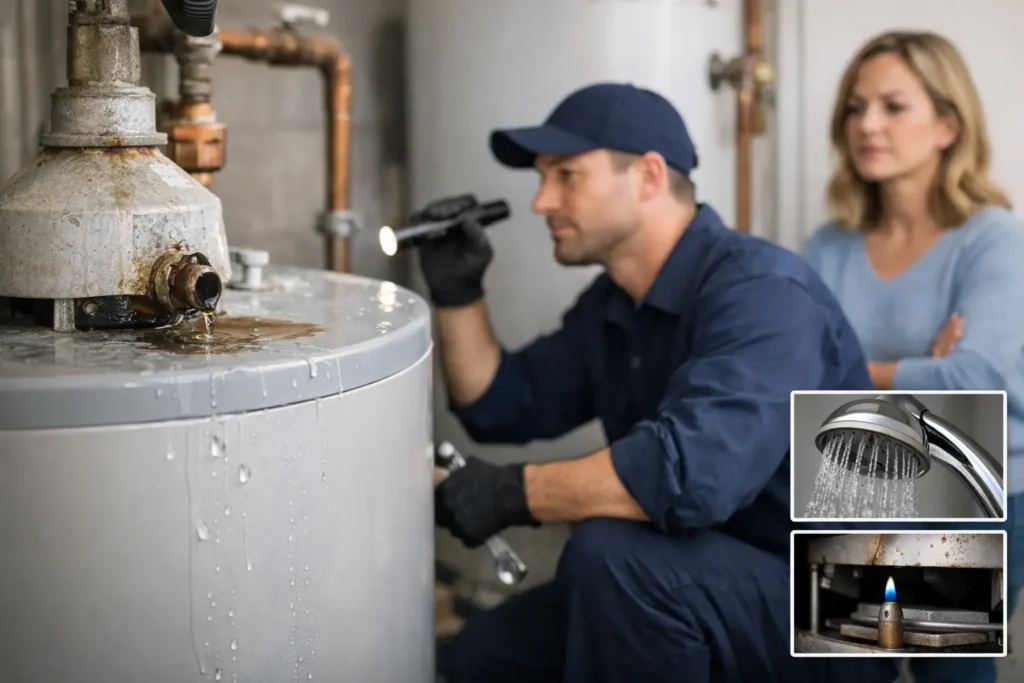
Nobody plans their day around a failing water heater. Usually, the first clue is a lukewarm shower, rusty water at the tap, or a puddle forming where it should not be. Knowing the right water heater replacement signs can help you act before the problem turns into water damage, downtime, or an emergency call.
For homeowners and property managers in Columbus, timing matters. Replace too early, and you may spend money before you need to. Wait too long, and a small issue can turn into a tank leak, tenant complaint, or no-hot-water situation that disrupts the whole property. The goal is not to panic at every symptom. It is to recognize when repair still makes sense and when replacement is the more reliable call.
The most common water heater replacement signs
Age is one of the clearest indicators. A traditional tank water heater often lasts around 8 to 12 years, though maintenance, water quality, and usage can move that range in either direction. If your unit is pushing past that window and performance is slipping, replacement usually deserves serious consideration. An older water heater can still run, but it often does so less efficiently and with a higher risk of sudden failure.
Rust-colored hot water is another warning sign, especially if the discoloration shows up mainly when you run hot water rather than cold. That can point to corrosion inside the tank. In some cases, the issue may come from plumbing elsewhere, so this is not an automatic replacement verdict. But if the tank itself is deteriorating, repairs are usually limited and temporary.
Leaks around the base of the unit should never be ignored. Sometimes the source is a loose connection, valve, or fitting that can be repaired. But when the tank body itself starts leaking, replacement is generally the practical next step. Tank leaks tend to get worse, not better, and waiting can mean floor damage, wall damage, or a much larger cleanup.
Strange noises also matter more than many people realize. Popping, rumbling, or banging can happen when sediment builds up inside the tank and hardens. That buildup forces the system to work harder and can shorten the life of the unit. A flush may help in some situations, especially if the heater is not too old. If the unit is already nearing the end of its expected life, though, those noises may be one of the last water heater replacement signs before failure.
Inconsistent hot water is another common clue. If your water turns cold faster than it used to, struggles during back-to-back showers, or never gets fully hot, the system may be wearing out. Heating elements, thermostats, and other components can sometimes be repaired. The decision depends on the age of the unit, the cost of the repair, and whether the rest of the system is still in solid condition.
When repair makes sense and when it does not
Not every water heater problem means you need a new one. A newer unit with a failed heating element, pilot issue, thermostat problem, or pressure relief valve issue may be a good repair candidate. If the tank is structurally sound and the repair is straightforward, it often makes sense to fix the problem and keep the unit in service.
The calculation changes when the system is older, repairs are stacking up, or the tank shows signs of internal corrosion. At that point, replacing a part may restore hot water for the moment, but it may not restore confidence in the system. Property owners usually want a clear answer to one question: will this solve the problem for a reasonable amount of time, or are we buying a little more time on a unit that is already on the way out?
That is where an honest inspection matters. A good recommendation should consider the age of the unit, visible condition, performance issues, installation setup, and whether the repair cost makes sense compared with replacement. It is not just about what can be fixed. It is about what is worth fixing.
Water heater replacement signs property managers should not overlook
For rental properties and commercial spaces, the stakes are different. One failing water heater can affect multiple tenants, interrupt business operations, and create a rush decision under pressure. In these settings, replacement planning is often more cost-effective than waiting for complete failure.
Recurring complaints about limited hot water, unusual utility cost increases, moisture around the unit, or repeated service calls are all signs to take seriously. The same applies if the unit is aging and serving a high-demand property. Even if it is still operating, an older system may be one busy weekend away from becoming an urgent problem.
For HOAs, apartment operators, and small business owners, replacement timing should also account for access, tenant communication, building schedules, and equipment availability. A planned replacement is almost always easier than an emergency one. It gives you more control over scheduling, approval, and site coordination.
Efficiency matters, but reliability comes first
Many customers ask whether higher energy bills are one of the water heater replacement signs. They can be. As water heaters age, sediment buildup and worn components can make them less efficient. That means longer heating times and more energy used to deliver the same result.
Still, efficiency should be part of the conversation, not the whole conversation. A small increase in utility costs does not automatically justify replacement if the unit is relatively new and otherwise healthy. On the other hand, if you have an older heater with performance issues and rising operating costs, replacement may improve both reliability and monthly expense.
For some properties, it may also be worth discussing whether a different size or type of water heater better matches actual usage. A unit that is too small will always feel like it is struggling. A unit that is oversized may waste energy. The right recommendation should fit the building, not just the old equipment footprint.
What to expect during an evaluation
A proper evaluation should be straightforward. The technician should check the age of the unit, inspect for leaks or corrosion, review performance symptoms, and confirm whether the issue is isolated to a repairable part or points to broader failure. They should also explain replacement options clearly, including what work is needed to complete the installation based on site conditions and code requirements.
This is also the right time to ask practical questions. How urgent is the issue? Is the tank actively leaking or just showing wear? Is there a safe window to plan replacement, or is waiting likely to increase the risk of damage or loss of hot water? Clear communication matters as much as the diagnosis.
For Columbus-area customers, that often means wanting a quote process that does not feel vague. You should understand the recommended next step, the reason behind it, and the cost before work begins. If replacement is recommended, the conversation should stay focused on your property needs, not unnecessary add-ons.
Don’t wait for a complete failure
The hardest part of water heater decisions is that many units do not fail gracefully. They may give a few warnings, or they may go from “mostly working” to “actively leaking” very quickly. That is why paying attention to age, water quality changes, leaking, noise, and inconsistent performance matters.
If your water heater is showing several of these signs at once, it is usually time to move from monitoring to action. A simple inspection can tell you whether repair is still reasonable or whether replacement is the smarter long-term choice. For homeowners and property managers across Columbus, Ohio, that kind of clarity helps you avoid bigger disruptions and make the decision on your schedule instead of the water heater’s.
If your hot water has become unpredictable, the best next step is a professional assessment before a minor warning turns into a soaked utility room or a morning without hot water.
When enough of these signs appear together, replacement usually costs less than another round of repairs. Transit & Flow provides water heater replacement service in Columbus, including correct sizing, code-compliant installation, and haul-away of the old unit. Call (614) 333-8092.
