
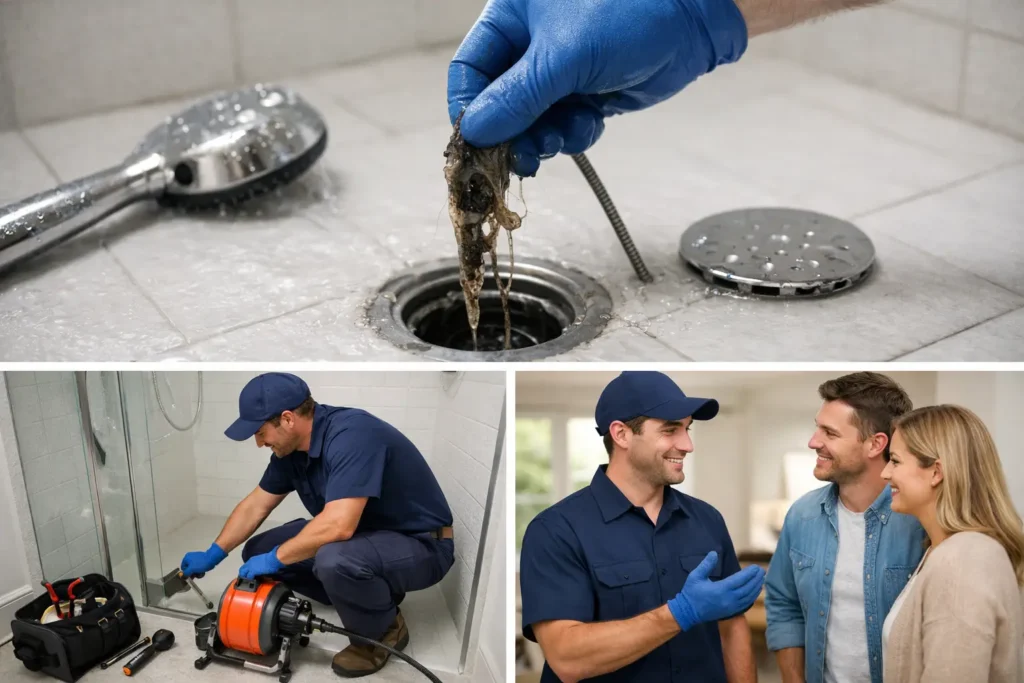
When the shower starts pooling around your feet, it usually gets worse fast. If you are searching for how to unclog shower drain problems without making a bigger mess, the key is knowing what is safe to try at home and what should be left to a professional.
Most shower drain clogs start with a simple mix of hair, soap residue, and buildup sitting just below the drain cover. Sometimes that is all it is. Other times, the shower is the first warning sign of a deeper drain line issue. The right approach depends on how quickly the water is draining, how often the clog comes back, and whether other fixtures in the home are acting up too.
How to unclog shower drain safely
Start with the least aggressive method first. Many homeowners make the clog worse by reaching for harsh chemical drain cleaners right away. Those products can damage some piping, create fumes in a small bathroom, and leave standing chemical water behind if the clog does not clear. That makes the next step harder and less safe.
Begin by removing visible hair and debris from around the drain opening. In many showers, the stopper or drain cover can be lifted or unscrewed with a basic screwdriver. Once the cover is off, use gloves and a simple plastic drain tool or hair removal tool to pull out buildup near the top of the drain. This is often enough to restore normal flow if the blockage is shallow.
After that, flush the drain with hot water – not boiling water. Very hot tap water can help soften soap residue and move loosened material through the trap. If the shower starts draining normally again, the clog was likely close to the surface.
If the water is still draining slowly, try a plunger made for sinks or tubs. Add a small amount of water to the shower floor so the plunger can seal, then give a few steady plunges. This can help break up a soft blockage without introducing chemicals or damaging the line. The goal is pressure, not force. Aggressive plunging on old or fragile plumbing is not always a good idea.
A simple home method that can help
If the clog seems mild, a baking soda and vinegar rinse can help loosen light buildup. Pour baking soda into the drain, follow with vinegar, and let it sit briefly before rinsing with hot tap water. This is not a fix for a heavy clog, but it can help with soap film and minor residue.
There is a trade-off here. Home remedies can be useful when the blockage is light and close to the drain opening. They are much less effective when hair has packed tightly in the trap or when the problem is farther down the line. If you have already tried two safe methods and nothing changes, it is usually time to stop experimenting.
When a shower clog is more than a shower clog
A slow shower drain does not always mean the problem is in the shower itself. If you notice bubbling in the toilet, slow draining in more than one bathroom fixture, sewer odor, or water backing up elsewhere, the blockage may be deeper in the branch line or main drain system.
That matters because the fix changes completely. A shallow hair clog near the drain cover is one thing. A line restriction farther inside the system may need professional drain cleaning equipment to clear properly. In some homes, especially older homes around Columbus neighborhoods with aging plumbing, buildup and line conditions can create repeat problems that no plastic hair tool will solve.
Frequent clogs are another sign to pay attention to. If the shower drains slowly every few weeks, there may be a partial blockage still sitting in the line. Removing the top layer each time does not address the full obstruction. It only buys time.
What not to do when your shower backs up
The biggest mistake is using chemical drain cleaners repeatedly. They are marketed as quick fixes, but they often do not remove dense hair clogs well. Instead, they can sit in the pipe, heat up, and create a harsher environment for anyone who has to open the drain later.
It is also smart to avoid jamming makeshift tools deep into the drain. Wire hangers and improvised metal tools can scratch finishes, damage parts inside the drain assembly, or push the clog farther down. A small hand snake can sometimes help, but only if you know the trap layout and can use it carefully.
Another common issue is ignoring the problem because the shower still drains eventually. Slow drainage rarely fixes itself. The buildup usually gets thicker, and the next shower becomes the one that turns into standing water.
How to unclog shower drain with a hand snake
A small hand auger or drain snake can work when the clog is just beyond the trap. Feed it in slowly, turn gently, and avoid forcing it if you hit resistance that feels solid or sharp. If you pull back hair and soap buildup, you may clear the problem. Flush with hot tap water afterward and test the drain.
This is one of those it-depends situations. A hand snake is more effective than home remedies, but it is not risk-free. Used incorrectly, it can scratch certain drain parts or get tangled in the blockage. If you live in an older home, or if the clog feels deep and stubborn, professional service is often the cleaner and faster option.
Signs it is time to call a drain professional
If the shower is fully backed up, if water comes up in another fixture, or if multiple drains are slow at the same time, professional help is the safer move. The same goes for repeat clogs, sewer smells, or gurgling sounds after water use.
A professional can identify whether the issue is hair and soap near the drain, grease and buildup farther in the line, or a larger drainage problem that needs more than a basic snake. The benefit is clarity. Instead of guessing through three store-bought products and losing a weekend, you get a direct answer and a recommended fix before work begins.
For homeowners who want speed and cost clarity, that matters. A service company like Transit & Flow focuses on straightforward communication, visible starting prices, and customer approval before work starts, which helps remove some of the stress when a simple shower clog turns out to be more involved.
Preventing the next clog
The easiest way to avoid another shower backup is to stop hair before it enters the drain. A simple drain screen can make a noticeable difference, especially in households where multiple people use the same bathroom. Clean it regularly so buildup does not move around the edges.
It also helps to flush the shower drain with hot tap water occasionally and clear visible debris before it compacts. If your shower has a history of slow drainage, paying attention early is better than waiting until the water stops moving altogether.
Prevention is rarely perfect. Soap residue, long hair, and daily use add up over time. But small habits can reduce how often you deal with a full blockage and make it easier to catch a problem while it is still manageable.
The real question is how often this happens
One clogged shower drain is usually a routine maintenance issue. A shower that clogs again and again is different. That pattern often points to buildup deeper in the line, an incomplete past repair, or a drainage problem affecting more than one fixture.
If your shower only started slowing this week, there is a good chance a careful cleaning near the drain opening will help. If it has been sluggish for months, or if your bathroom plumbing has a history of backups, the better move may be to stop trying one more DIY fix and get the line checked properly.
That is usually the difference between a short-term workaround and a real solution. When water is where it should not be, fast action helps – but so does choosing the right next step the first time.
If DIY methods don’t clear the clog, our professional drain cleaning service in Columbus uses hydro-jetting and camera inspection to clear the blockage for good.
