
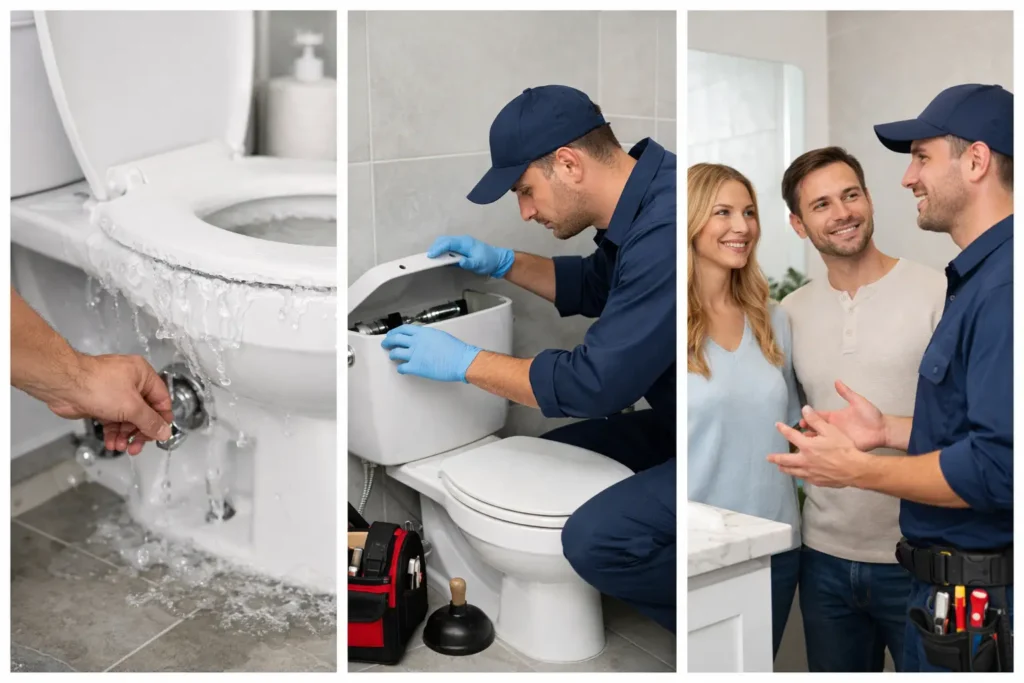
A toilet that keeps rising after a flush gives you very little time to think. Knowing how to stop an overflowing toilet starts with stopping the water source, not reaching for a plunger. Move quickly, avoid another flush, and focus on containing the water before trying to clear the clog.
Stop the Water Before It Reaches the Floor
Lift the toilet tank lid and set it somewhere safe. Inside the tank, find the rubber flapper at the bottom. Push it closed if it is open and water is still flowing from the tank into the bowl. This can stop the immediate surge while you take the next step.
Then turn off the toilet’s water supply valve. It is usually on the wall or floor behind the toilet, connected to the supply line. Turn the valve clockwise until it stops. Do not force a stuck or corroded valve. If it will not move, close the flapper and call for help rather than risking a broken supply line.
If water has already reached the floor, use towels to block it from spreading into nearby rooms. Keep water away from electrical cords, outlets, and powered devices. If the overflow is substantial, smells like sewage, or is coming from more than one drain, treat it as a possible sewer issue instead of a simple toilet clog.
Do Not Flush Again
A second flush is one of the most common ways a manageable clog becomes a cleanup emergency. The bowl may look as if the water level has dropped, but that does not mean the blockage is gone. Give it several minutes to settle before doing anything else.
Do not use chemical drain cleaners in an overflowing toilet. These products may not clear the obstruction, can damage certain plumbing components, and create a hazard if a plumber later needs to work on the fixture. Avoid mixing cleaners or trying improvised combinations of household chemicals.
If the toilet is the only fixture affected and the bowl water has dropped to a normal level, you can cautiously try a manual clearing method. If a shower, tub, sink, or another toilet is draining slowly or backing up too, stop there. The problem may be farther down the drain or sewer line.
How to Stop an Overflowing Toilet With a Plunger
For a typical toilet clog, a flange plunger is the right tool. It has a fold-out rubber sleeve beneath the cup that creates a better seal in a toilet bowl than a flat sink plunger.
Wait until the bowl is no longer close to overflowing. If the water level is too high, let it recede on its own or carefully remove a small amount with a container you can sanitize afterward. The plunger needs enough water in the bowl to cover its rubber cup, but it should not be so full that plunging splashes contaminated water onto the floor.
Place the plunger over the drain opening and make sure the rubber creates a seal. Start with one or two gentle pushes to remove trapped air, then use steady, firm strokes for about 15 to 20 seconds. Pull the plunger away slowly. If the water drains normally, wait a moment and perform one cautious test flush.
If the bowl begins to rise again, close the flapper or shut off the supply valve if you have not already done so. Repeated hard plunging can make a mess, and it will not solve a clog caused by a lodged object, a blocked drain line, or a sewer problem.
When a Toilet Auger May Help
A toilet auger, also called a closet auger, can reach blockages that sit just beyond the toilet trap. It is designed to protect the porcelain when used correctly. This tool can help when a small object, excessive paper, or a stubborn clog is close to the fixture.
There is a trade-off: using an auger without care can scratch the bowl or push an object farther into the line. If you suspect a toy, hygiene product, wipe, or other solid item was flushed, professional removal is often the safer choice. Wipes labeled “flushable” can still cause serious clogs because they do not break apart like toilet paper.
Signs the Problem Is More Than a Toilet Clog
An overflowing toilet is sometimes the first visible sign of a larger drain or sewer issue. A plunger only works on a localized blockage. It cannot correct a damaged pipe, root intrusion, a main sewer blockage, or a problem with the home’s drain system.
Call for plumbing service promptly if you notice any of the following:
- Water backs up into a tub or shower when the toilet is flushed.
- More than one toilet, sink, or drain is slow, gurgling, or backing up.
- Sewage or dirty water is coming up through a floor drain.
- The toilet overflows repeatedly even after it appears to clear.
- There is a persistent sewage odor, wet area near the base of the toilet, or visible leaking.
Homes in Columbus and surrounding Central Ohio communities can experience drain and sewer problems for several reasons, including aging lines, shifting ground, and roots entering damaged pipes. The right repair depends on the actual cause, which is why a clear diagnosis matters before anyone recommends major work.
If the Toilet Is Not Clogged but Keeps Filling
Sometimes the bowl overflows because the tank will not stop filling, even when there is no blockage in the drain. In that case, the issue may be a worn flapper, a malfunctioning fill valve, or a float set too high.
With the water supply turned off, look inside the tank. If water is running continuously into the overflow tube, the fill valve or float may be the issue. If tank water leaks slowly into the bowl after flushing, the flapper may not be sealing properly. These parts are common repair items, but the correct replacement and adjustment depend on the toilet model and the condition of its components.
Do not ignore a toilet that runs intermittently or refills by itself. Even if it is not overflowing today, it can waste a significant amount of water and may eventually fail at an inconvenient time.
Clean Up Carefully After an Overflow
Water from a clean toilet tank is different from water that has come back through the bowl or drain. Once toilet bowl water reaches the floor, it should be treated as contaminated. Keep children and pets away from the area, wear gloves, and avoid tracking water through the home.
Remove standing water with disposable materials when possible, then clean and disinfect affected hard surfaces according to the product directions. Wash towels, clothing, or washable items separately using the hottest appropriate setting. Carpet, padding, drywall, and other absorbent materials may need professional assessment if they were soaked, especially when sewage was involved.
Take photos of significant water damage before cleanup if you may need to document the incident for insurance purposes. Quick action limits damage, but do not delay calling for help when the water is spreading or sewage is present.
When to Call a Plumber for an Overflowing Toilet
A plumber is the practical next step when the toilet will not clear with careful plunging, the water supply valve is stuck or leaking, or you see signs of a wider drainage problem. Professional service is especially worthwhile when the issue keeps returning. Clearing a clog without identifying why it happened can lead to another overflow days or weeks later.
Transit & Flow provides urgent plumbing response for homeowners in the Columbus area. The process should be straightforward: explain what is happening, identify the source of the problem, review recommended options, and approve the work before repairs begin. Final pricing should always depend on the on-site condition, access, and the repair needed.
The fastest way to protect your home is simple: stop the water, do not flush again, and get the right level of help before a toilet problem turns into water damage.
