
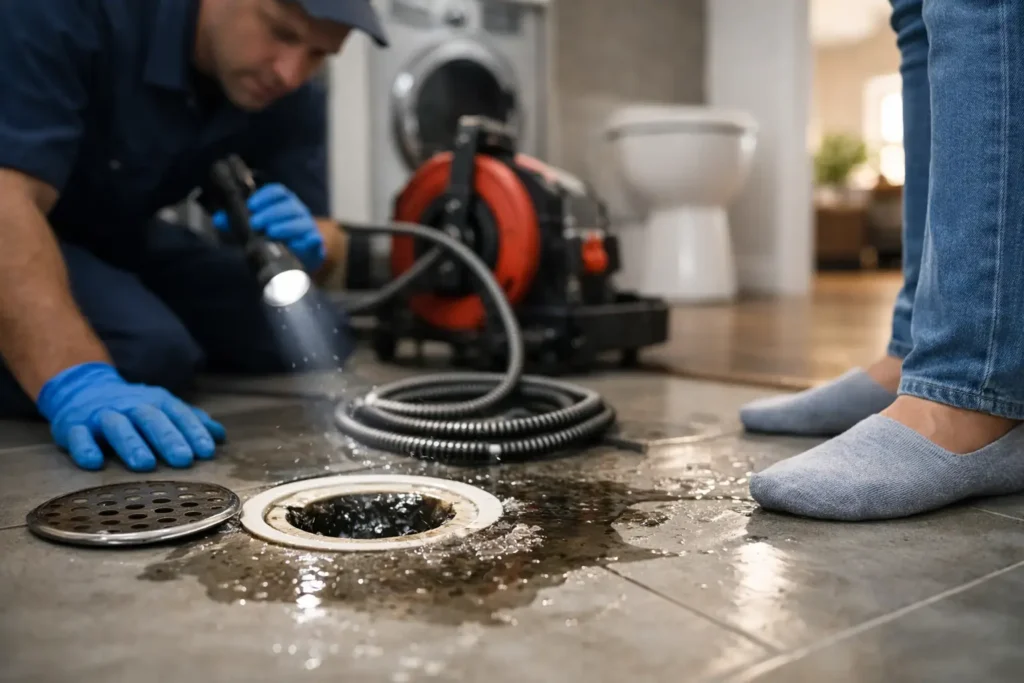
When a toilet gurgles after the shower drains or a basement floor drain starts smelling worse by the day, most property owners hope it is a simple clog. Sometimes it is. Sometimes it is the first warning that wastewater is not moving out the way it should. Knowing how to spot sewer backup early can help you act before the mess spreads, the odor gets stronger, and cleanup becomes a much larger job.
For homeowners in Columbus and nearby communities, this is not a problem to ignore and revisit later. Sewer issues tend to escalate fast, especially during heavy rain, high household water use, or when a main line blockage starts restricting flow more seriously.
How to spot sewer backup before it gets obvious
A sewer backup rarely starts with wastewater pouring across the floor. More often, it begins with smaller warning signs that seem unrelated at first. You might notice one drain slowing down, then hear bubbling from a toilet in another bathroom. You may catch a strong sewer odor near a basement drain even though no fixture appears to be overflowing yet.
That pattern matters. A single slow sink can point to a local drain clog. Multiple plumbing fixtures acting up at the same time usually suggest a larger problem deeper in the system. If the lowest drains in the building are the first to show symptoms, that is another red flag. In many homes and commercial spaces, that means the basement shower, basement toilet, or floor drain will show trouble before fixtures upstairs do.
The timing also matters. If plumbing problems get worse when you run a washing machine, flush a toilet, or empty a tub, wastewater may be struggling to pass through the main sewer line. The line is not fully blocked yet, but it may be headed in that direction.
Common signs of a sewer backup
The clearest sign is wastewater backing up into a low drain, tub, shower, or floor drain. But before that happens, there are usually several clues.
Multiple drains are slow at once
If one sink is draining slowly, the issue may be limited to that fixture. If a sink, tub, and toilet in different parts of the property all start draining poorly, the problem is more likely tied to the main sewer line. This is one of the most common ways to spot a developing backup before a major overflow starts.
Toilets gurgle or bubble
A toilet that gurgles when another fixture drains is not just being noisy. It can mean air is trapped in the system because wastewater is meeting resistance further down the line. If you hear bubbling after using the sink, shower, dishwasher, or washing machine, pay attention.
Water appears in the wrong place
This is one of the strongest warning signs. For example, flushing a first-floor toilet should not cause water to rise in a basement shower. Running the washing machine should not send water into a floor drain. When water shows up in a different fixture, especially at a lower level, that often points to a sewer line blockage.
Sewer odors get stronger indoors
A foul drain smell does not always mean a backup is happening, but a persistent sewage odor should never be brushed off. If the smell is strongest near floor drains, basement bathrooms, utility rooms, or lower-level plumbing, it may mean wastewater is sitting in the line or beginning to push back toward the property.
The lowest drain backs up first
Sewer backups follow gravity. When the main line cannot carry wastewater away, the lowest open drain is often where it appears first. In many Columbus-area homes, that means a basement floor drain or lower-level shower. In multifamily or commercial properties, it may show up in a lower restroom or utility area.
What causes sewer backup?
There is not one single cause, and that is where property owners can get tripped up. The symptoms may look similar whether the line is partially blocked by buildup, damaged by age, or overwhelmed by outside conditions.
A common cause is a blockage from grease, wipes, paper buildup, or other debris that should never have gone down the drain in the first place. In older lines, root intrusion is also a frequent issue. Tree roots can enter small openings in the pipe and continue expanding until they catch waste and restrict flow.
In some cases, the line may have a sag, crack, collapse, or offset section that keeps wastewater from moving normally. Heavy rain can also play a role, especially if a system is already vulnerable. When municipal systems are strained or groundwater conditions are high, backup risk can increase.
For property managers and owners of older buildings, age and usage history matter. A line that has handled years of grease, paper, or recurring drain issues may not fail all at once. It often gives warning signs first.
When it is probably not just a basic clog
A lot of people wait because they assume a plunger or drain cleaner will take care of it. That can be a costly assumption.
If the issue affects more than one fixture, keeps coming back, or appears at the lowest drains in the property, think beyond a simple clog. Chemical drain products are also a poor bet here. They may not solve a main line issue, and they can complicate service if a technician later needs to inspect or clear the system safely.
It also depends on the fixture. A kitchen sink that drains slowly by itself may point to a localized problem. A basement floor drain that backs up when an upstairs bathtub empties is a much stronger signal of a sewer line issue.
What to do if you notice the signs
The safest first move is to stop using water as much as possible. Every toilet flush, shower, dishwasher cycle, or laundry load can add more wastewater to a line that is already struggling. If a backup is developing, continued use can turn a warning sign into a cleanup problem.
Next, keep people and pets away from any affected area. Wastewater is not clean water, and contact should be limited. If water has already come up through a drain, avoid trying to handle the mess without proper service and cleanup planning.
Then arrange for professional diagnosis. A proper inspection can determine whether the problem is a blockage, root intrusion, line damage, or another issue entirely. That matters because the right fix depends on the actual condition of the line, not just the visible symptom.
For urgent situations in Columbus, Transit & Flow focuses on clear communication, up-front pricing, and customer approval before work begins, which helps take some of the uncertainty out of a stressful plumbing call.
How professionals confirm a sewer backup issue
The goal is not just to get water moving again for the next few days. It is to identify why the problem happened and whether it is likely to return.
A technician may start by evaluating where the symptoms are showing up and how the plumbing is behaving under use. From there, drain clearing or sewer inspection equipment may be used to locate the restriction or damage. In some cases, the fix is straightforward. In others, the line condition, access, and extent of the problem will determine the next recommendation.
That is why flat-rate pricing and clear approval steps matter. Sewer problems can vary widely from one property to the next, and a careful diagnosis helps avoid guesswork.
How to reduce the risk going forward
Not every sewer backup is preventable, but some are. If you have had recurring slow drains, occasional gurgling toilets, or past main line issues, it is worth taking those signs seriously before another heavy-use weekend or storm pushes the system further.
Be careful about what goes down drains and toilets. Grease, wipes, hygiene products, paper towels, and other non-flushable materials are common contributors to blockages. If your property has mature trees and an older sewer line, periodic inspection may also make sense, especially if backup symptoms have shown up before.
For multi-unit properties and commercial spaces, communication matters too. Tenants, staff, or maintenance teams should know that repeated drain problems are not just a nuisance. Early reporting can make the difference between a service call and a major cleanup.
Sewer backup usually does not arrive without warning. It starts with changes in how your plumbing sounds, drains, and smells. If something feels off, trust that signal and act early. A quick response can protect your property, reduce downtime, and make the next step much simpler.
