
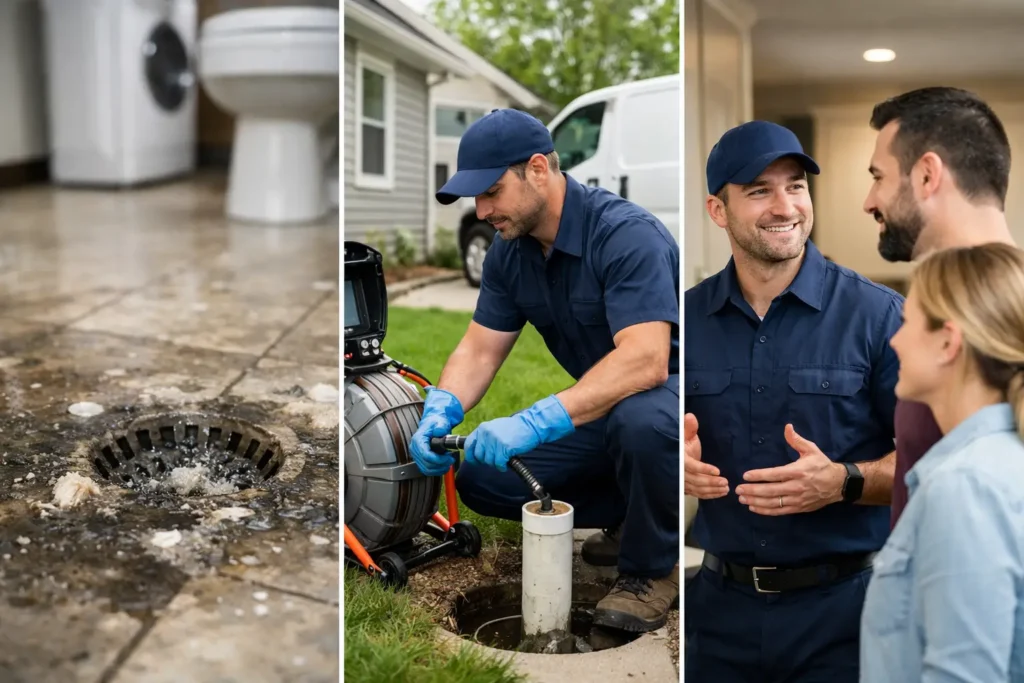
A sewer backup can turn from an unpleasant smell into a serious home emergency in minutes. When you need sewer backup help Columbus homeowners can rely on, the first priority is protecting people, limiting additional water use, and getting a clear diagnosis before the damage spreads.
Sewage or wastewater coming up through a basement floor drain, shower, toilet, or laundry drain is not a normal clog. It may point to a blockage in the main sewer line, a damaged pipe, tree root intrusion, or a problem farther down the line. The source matters because the right repair depends on where the backup began.
What to Do When a Sewer Backs Up
Start by stopping all water use inside the home. Do not flush toilets, run the dishwasher, take a shower, or start a load of laundry. Every gallon sent into the plumbing system can add to the backup if the main line cannot drain properly.
Keep children and pets away from affected rooms. Wastewater can contain contaminants, and floors may be slippery. Avoid trying to clean standing sewage without proper protective equipment. If the backup is near electrical outlets, appliances, or your electrical panel, stay clear of that area and contact an appropriate professional for guidance.
Do not pour drain chemicals into a backed-up fixture. These products rarely solve a main sewer obstruction and can leave hazardous chemicals behind for anyone working on the line. A plunger may help with an isolated toilet clog, but repeated backups in multiple fixtures usually require a sewer inspection rather than more force.
If wastewater is actively rising and you can safely access the home’s main water shutoff, turning off the water can reduce additional flow from household plumbing. This will not necessarily stop water entering from outside the home or from a municipal sewer issue, but it can help limit what your own fixtures add to the problem.
Signs You Need Sewer Backup Help in Columbus
A single slow sink may be a localized drain issue. Several fixtures draining slowly at once is more concerning, especially when flushing a toilet causes water to rise in a tub or shower. Basement floor drains are often the first place a main sewer problem becomes visible.
Other warning signs include gurgling from toilets or drains, sewage odors near drains, water pooling around a basement floor drain, and recurring clogs that return after temporary clearing. These symptoms do not always mean the pipe has failed, but they should not be ignored. Waiting can allow a partial blockage to become a full backup at the worst possible time.
Columbus-area homes vary widely in age and plumbing layout. Older neighborhoods may have aging sewer materials, while mature trees can create root-related concerns in many parts of Central Ohio. Newer homes can still experience backups from wipes, grease buildup, heavy paper products, or foreign objects that do not belong in the drain.
Why Sewer Backups Happen
The cause of a sewer backup is not always visible from inside the house. A professional evaluation is designed to identify the condition of the line and recommend the appropriate next step, rather than treating every backup as the same kind of clog.
Common causes include:
- Grease, wipes, paper towels, hygiene products, and other materials that restrict flow in the sewer line
- Tree roots entering small openings or joints in an underground pipe
- Pipe cracks, offsets, corrosion, or sections that have shifted over time
- Heavy rain or an overloaded public sewer system in some situations
- A blockage in the home’s main sewer line or a problem with a sump or drainage setup
The repair can range from clearing a blockage to further investigation of a damaged line. That is why a camera inspection can be useful after a recurring or severe backup. It gives the technician and homeowner a better view of what is happening inside the pipe, where the concern is located, and whether clearing the line is likely to be a lasting solution.
What a Professional Sewer Visit Should Look Like
When your home has a sewer problem, uncertainty adds stress. You should know what the technician found, what options are available, and what work is recommended before repairs begin.
A typical visit starts with questions about the symptoms: which fixtures are affected, when the backup started, whether it has happened before, and whether heavy rain or recent drain issues may be connected. The technician can then assess accessible drains and sewer cleanouts, determine whether the problem appears local or involves the main line, and recommend appropriate diagnostic or clearing work.
Some sewer issues can be addressed during an emergency visit. Others need follow-up work, additional equipment, or scheduling based on the condition of the pipe and access to the property. Honest recommendations should account for the actual condition found, not just the quickest temporary fix.
For Columbus homeowners, Transit & Flow provides 24/7 emergency plumbing response with clear communication, flat-rate pricing, and customer approval before work begins. Available appointment timing, repair scope, and final pricing depend on the findings, access, materials, and job conditions, but the goal is always to replace guesswork with a practical plan.
Cleaning Up After a Backup
Once the immediate plumbing issue is under control, the affected area may need careful cleanup and restoration. Porous materials such as carpet, padding, cardboard, insulation, and some drywall can be difficult to safely salvage after contact with sewage. Document visible damage with photos before removing items, particularly if you plan to contact your insurance provider.
Keep records of the service visit, diagnosis, and any recommended repairs. If there is a question about whether the backup originated in the home’s private sewer lateral or a public sewer line, those details can help when speaking with the city, a utility provider, or an insurer.
Avoid reopening the area for normal use until it has been properly cleaned and dried. A sewer line that is flowing again is good news, but the cleanup phase still matters for your home and your family.
Reducing the Risk of Future Backups
No prevention step can eliminate every sewer issue, especially when aging pipes or severe weather are involved. However, a few habits can reduce avoidable drain stress. Keep grease, coffee grounds, wipes, paper towels, and hygiene products out of toilets and drains. Even products labeled flushable can create problems once they meet roots, grease, or a narrowing pipe.
Pay attention to early warning signs instead of repeatedly treating them with store-bought chemicals. If you have a history of backups, recurring slow drains, or large trees near the sewer route, planned sewer maintenance or a camera inspection may be more useful than waiting for another emergency.
For homes with a basement, make sure the floor drain area remains accessible and that everyone in the household knows where the main water shutoff is located. These small preparations can make the first few minutes of a plumbing emergency more manageable.
A sewer backup is disruptive, but you do not have to make repair decisions in a panic. Stop water use, protect the affected area, and get a clear explanation of the cause and options. Prompt action can help protect your home from a smaller problem becoming a much larger cleanup.
