
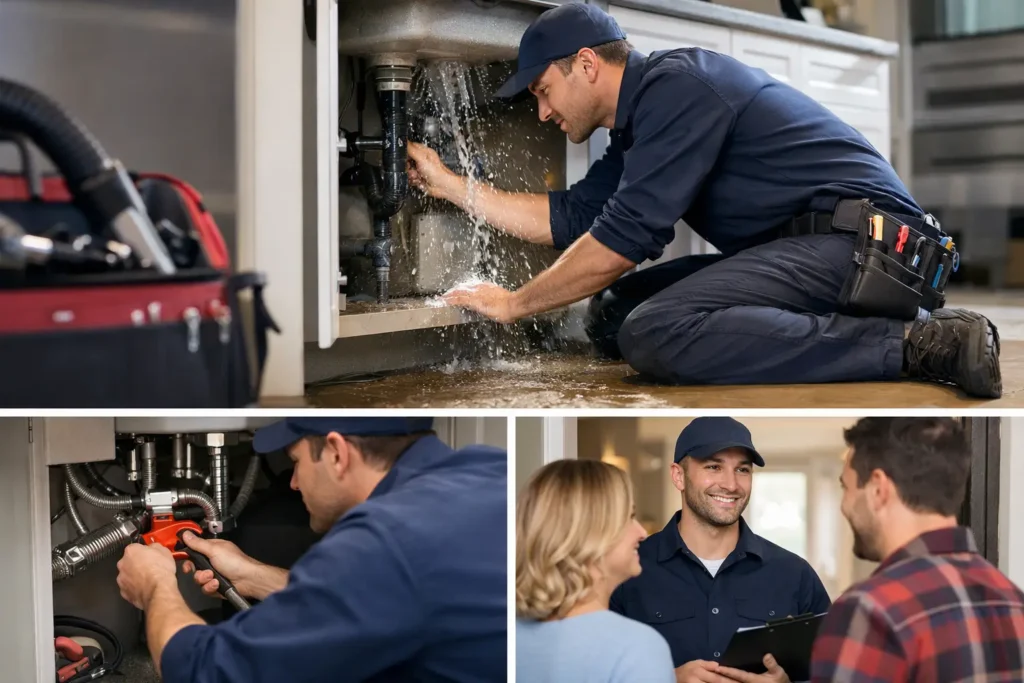
A plumbing emergency rarely waits for a convenient time. Water may be spreading across a basement floor, a toilet may be backing up before guests arrive, or a water heater may stop producing hot water when your household needs it most. This guide to emergency plumbing service explains what deserves an immediate call, what you can safely do while waiting, and what a clear repair process should look like.
What Counts as a Plumbing Emergency?
The clearest test is simple: call for emergency plumbing service when water, wastewater, or a failed plumbing fixture could cause immediate property damage, create an unsafe condition, or leave your home without an essential service.
A burst pipe, active ceiling leak, overflowing toilet that will not stop, sewer backup, and major water heater leak are common emergencies. A sump pump that fails while water is entering the basement can also require urgent attention, especially during heavy Columbus rain.
Some problems need prompt service but may not require an after-hours response. A slow drain, dripping faucet, running toilet, or one sink that drains slowly can often be scheduled for a regular service visit if there is no leak or backup. The decision depends on the severity of the issue, whether you can safely isolate it, and how quickly conditions are changing.
A small leak can become a major one. If you are uncertain, describe what you see when you call: where the water is coming from, whether it is clean or dirty, how long it has been happening, and whether you have been able to stop the flow. That information helps the service team guide the next step.
What to Do Before Emergency Plumbing Service Arrives
Your first job is to limit damage without taking risks. Do not start removing pipes, taking apart a water heater, or using chemicals to force open a drain. Those steps can make the repair harder and create a safety concern.
If water is actively flowing, locate the nearest shutoff valve. Toilets and sinks commonly have a small valve on the supply line nearby. For a larger leak, the home’s main water shutoff may be needed. It is often located near the water meter, where the main line enters the house, or in a utility area. Turn it off only if you can reach it safely.
Move towels, rugs, electronics, paper goods, and valuables away from the affected area. Use buckets or pans to catch a manageable drip. If water is near outlets, appliances, or electrical panels, stay clear of the area and avoid standing in water. When a sewer line backs up, keep people and pets away from the wastewater and do not run faucets, flush toilets, use the dishwasher, or start laundry.
For a suspected water heater issue, look for visible leaking around the unit and avoid touching hot pipes or controls if the area is wet. If you smell gas, leave the area and follow your gas provider’s emergency instructions. A plumbing technician can assess water-related concerns, but gas odors require immediate caution.
What to Tell the Emergency Plumber
A fast, accurate response starts with useful details. You do not need plumbing knowledge. A straightforward description is enough: “Water is spraying from a pipe above the laundry room,” or “Every toilet and shower is backing up when we run the sink.”
Share the location of the problem, when it began, whether the water has been shut off, and whether the issue affects one fixture or several. Mention recent work, such as a new appliance installation, a drain clog, a frozen pipe, or heavy rainfall. Photos can be useful when requested, but do not delay your call to take them.
Ask about the expected arrival window and what to do before the technician arrives. You should also understand how pricing will be handled. Emergency repairs can vary based on access, damage, parts, and the source of the problem. A dependable provider explains the findings, presents repair options and flat-rate pricing where applicable, and gets your approval before work begins.
What a Clear Emergency Repair Visit Looks Like
When water is involved, homeowners need more than a quick fix. They need to know what failed, what the repair addresses, and whether there is a risk of recurrence. The technician should begin by assessing the immediate issue, checking the affected area, and identifying the safest practical way to stop the damage.
Sometimes the repair is direct, such as replacing a failed shutoff valve, repairing a leaking pipe connection, clearing an accessible drain blockage, or restoring a toilet that will not stop running. Other situations require more investigation. A backup may originate farther down the drain or sewer line. Water around a water heater could be caused by a connection, a relief valve, or the unit itself.
The right repair depends on the actual condition of the system. A quick repair may be appropriate when the problem is isolated and the surrounding plumbing is in good condition. Replacement may make more sense when a fixture or water heater has repeated failures, significant wear, or a repair that would only delay the next problem. Clear recommendations should explain that trade-off without pressure.
Transit & Flow provides 24/7 emergency plumbing response for homeowners in Columbus and surrounding communities, with clear communication and customer approval before work begins. Availability, materials, access, and job conditions can affect scheduling and completion time, but an organized service process helps remove uncertainty when the situation is urgent.
Emergency Plumbing Problems That Should Not Wait
Burst pipes and active leaks
An active pipe leak can damage drywall, flooring, insulation, and belongings quickly. Shut off water if possible, contain what you can, and call for help. Even a leak that seems small may be coming from a pressurized line behind a wall or ceiling.
Sewer backups and multiple clogged drains
When wastewater comes up through a toilet, tub, shower, or floor drain, stop using water throughout the home. Multiple slow or backed-up fixtures often point to a larger drain or sewer issue rather than a single clogged sink. This is not a situation to handle with a plunger alone or chemical drain cleaner.
Overflowing toilets
If a toilet is overflowing, remove the tank lid and carefully close the flapper if that stops the flow, or turn off the toilet’s nearby supply valve. If wastewater is still rising or other fixtures are backing up too, avoid flushing and request emergency service.
Sump pump failure during wet conditions
A sump pump is easy to overlook until it is needed. If the pit is filling, the pump is not operating, or water is entering the basement, act quickly. Keeping the area clear and reporting what the pump is doing or not doing gives the technician a useful starting point.
How to Reduce the Chances of the Next Emergency
Not every plumbing emergency is preventable, but routine attention makes surprises less likely. Know where your main water shutoff is before you need it. Test sump pump operation periodically, especially ahead of rainy seasons. Address recurring drain clogs rather than repeatedly treating the symptom, and have aging water heaters evaluated when performance changes or moisture appears around the unit.
In winter, protect exposed pipes from freezing conditions and pay attention to reduced water flow, unusual noises, or damp spots on walls and ceilings. These early signs are easier to investigate before they become an after-hours problem.
For homeowners, property managers, and HOA decision-makers, keeping basic records also helps. Note the date of previous repairs, the location of shutoff valves, and recurring drain or leak concerns. That information can speed up diagnosis when a problem returns.
Choosing an Emergency Plumbing Provider
When the situation is stressful, the goal is not to compare every option while water is spreading. Look for a provider that offers a clear response process, explains the problem in plain language, and provides pricing information before repairs begin. You should feel comfortable asking what caused the problem, what the recommended repair includes, and whether there are alternatives.
Speed matters, but workmanship and communication matter too. The best emergency response is one that controls the immediate damage while giving you a practical path forward for the repair.
Keep your main water shutoff location handy and save an emergency plumbing contact before you need one. A calm first response and a clear service plan can make a difficult plumbing problem far more manageable.
