
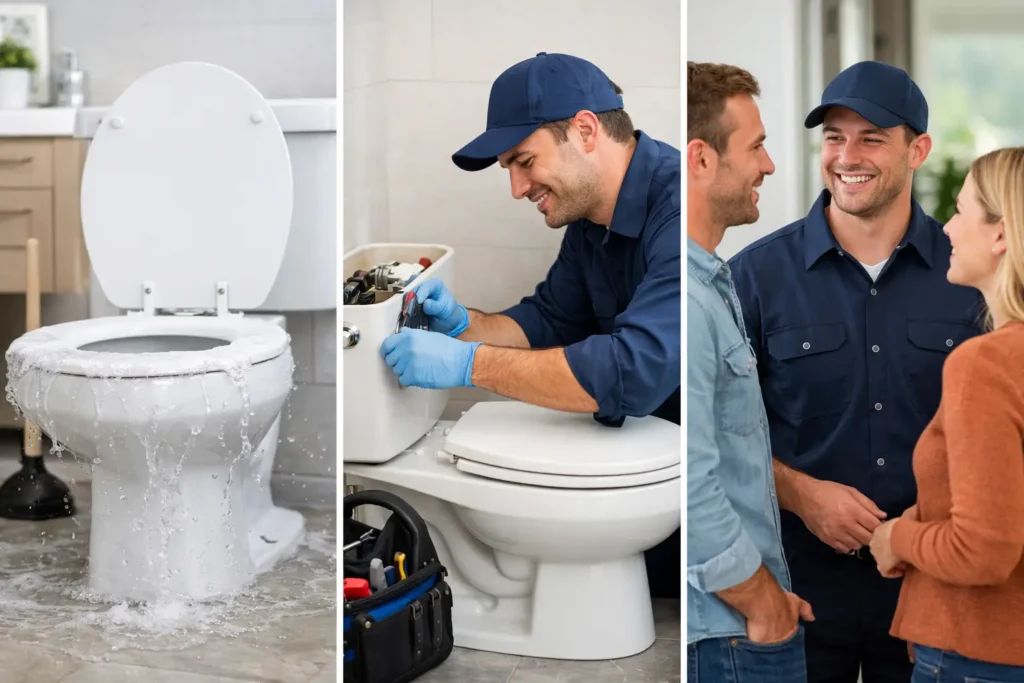
A toilet that will not flush, keeps running, or leaks around the base can turn a normal morning into a stressful repair decision. A professional toilet repair service helps Columbus homeowners identify the real cause, control water damage risk, and make a clear decision about repair or replacement before a small issue grows.
Some toilet problems are inconvenient but contained. Others can waste hundreds of gallons of water, damage flooring, or point to a drain line problem that needs prompt attention. Knowing the difference helps you act quickly without guessing at the fix.
Signs You Need a Toilet Repair Service
The most obvious sign is water where it should not be. A puddle near the toilet, moisture on the floor, water dripping from the tank, or a leak from the supply connection all deserve attention. Even a slow leak can damage subflooring over time, especially in an upstairs bathroom where water can travel into the ceiling below.
A toilet that runs long after flushing is another common issue. You may hear a faint refill sound every few minutes or notice the toilet starting to refill on its own. The cause may be a worn internal seal, a fill component that is not shutting off properly, or an adjustment issue inside the tank. The sound is easy to ignore, but the water use adds up.
Weak flushing, frequent clogs, gurgling, or water that rises too high in the bowl also call for a closer look. A single clog may be a simple obstruction. Repeated clogs can indicate a toilet issue, an improperly performing flush, or a developing blockage farther down the drain line. The right repair depends on where the restriction is located.
Call for help promptly if the toilet overflows, sewage comes back into the bowl or tub, or multiple drains in the home are draining slowly. Those symptoms can indicate a larger drain or sewer concern, not just a toilet repair.
What Causes Common Toilet Problems?
Toilets are straightforward fixtures, but several components must work together correctly. A running toilet often involves parts inside the tank that have worn down with normal use. A toilet that rocks or leaks at the base may have a failing seal, loose mounting hardware, or flooring movement. A weak flush can be caused by low tank water, mineral buildup, worn components, or a blockage.
Age matters, too. Older toilets may use more water and have parts that are harder to match or no longer worth replacing. That does not automatically mean replacement is the right answer. If the fixture is otherwise in good condition and the issue is limited to a serviceable component, repair can be the practical choice.
The location and pattern of the problem matter more than the symptom alone. For example, a toilet that only clogs after certain uses may have an obstruction in the fixture. A toilet that gurgles when the washing machine drains may point to a shared drain issue. A proper diagnosis keeps a repair focused and helps avoid paying for work that does not solve the underlying problem.
Leaks at the Base Need Prompt Attention
Water around the toilet base is sometimes caused by condensation or a spill, but it should never be dismissed without checking. If the water appears after flushing, the seal beneath the toilet may be compromised. Continued use can allow water to reach the flooring below.
If you see active water spreading across the bathroom floor, turn off the toilet’s nearby water supply valve if you can do so safely, avoid flushing again, and arrange service. Keeping people out of the wet area can help prevent slips and limit further damage while you wait.
A Constantly Running Toilet Is Not Just Noise
A toilet that never stops refilling can waste a surprising amount of water. Sometimes the problem is intermittent, making it harder to catch. You might only notice an occasional hiss late at night or see an unexpected increase on a water bill.
A technician can inspect the tank components, test the refill operation, and recommend the appropriate repair. Clear explanations are especially useful here because a minor internal repair and a larger fixture issue can sound similar to a homeowner but have very different solutions.
Repair or Replacement: How to Decide
The best choice depends on the toilet’s condition, the nature of the failure, and your long-term plans for the bathroom. Repair is often sensible when the toilet is stable, the porcelain is intact, and the issue involves a replaceable part or connection. It can restore normal operation without changing the look of the room.
Replacement may make more sense if the toilet is cracked, repeatedly leaks from multiple areas, clogs despite appropriate drain service, or has recurring issues after prior repairs. Homeowners renovating a bathroom may also choose replacement to improve comfort, water efficiency, or appearance.
There is a trade-off. A lower-cost repair can be the right immediate answer, but repeated service visits to an aging fixture may eventually cost more than a planned replacement. On the other hand, replacing a toilet before the diagnosis is clear can leave an underlying drain problem unresolved. The most useful recommendation is one based on what the inspection finds, not a one-size-fits-all answer.
What to Expect From a Professional Toilet Repair Visit
A dependable service visit should begin with a clear review of the symptom: when it started, whether it happens with every flush, and whether other fixtures are affected. The technician should inspect the toilet, connections, tank operation, and relevant drain performance to narrow down the cause.
Once the issue is identified, you should receive a straightforward explanation of the recommended work. For a repair that requires approval, the scope and price should be reviewed before work begins. Final pricing can depend on site conditions, needed parts, and the condition discovered during inspection, which is why an on-site assessment matters.
After the repair, the toilet should be tested for normal flushing, refill operation, and visible leaks. A clean work area and clear guidance on what was repaired give you confidence about using the fixture again.
For homeowners in Columbus and nearby Central Ohio communities, Transit & Flow provides organized toilet diagnostics, repair, and replacement support with clear communication and customer approval before work begins. Same-day availability may be available depending on scheduling, access, and the work required.
When a Toilet Problem Is an Emergency
Not every toilet repair needs emergency response, but certain conditions should not wait. Active overflowing that cannot be controlled, sewage backup, a major leak spreading into finished areas, or a bathroom that is unusable in a home with only one toilet can require urgent attention.
If the toilet is overflowing, do not keep flushing to see if it clears. Stop using the fixture, contain water only if it is safe to do so, and keep children and pets away from contaminated water. If other fixtures are backing up or draining poorly, avoid using water throughout the home until the issue can be evaluated.
A running toilet without visible leakage is typically less urgent, but it is still worth scheduling soon. The same goes for a slow leak at the base or an increasingly unreliable flush. Early service is usually easier on the home and less disruptive to your schedule.
Simple Habits That Help Prevent Repeat Issues
Toilets are designed for toilet paper and normal use, not for wipes, paper towels, cotton products, or other materials that do not break down quickly. Even products labeled as flushable can contribute to drain problems in some homes. Keeping a covered waste bin nearby is a simple way to reduce accidental flushing of the wrong items.
Pay attention to changes rather than waiting for a full failure. A new wobble, recurring clog, slow refill, or faint water sound is useful information. Addressing it before a leak or backup develops gives you more control over timing and repair options.
When a toilet starts acting differently, the goal is not to diagnose every part from the outside. It is to protect your home, stop using the fixture when conditions call for it, and get a clear recommendation that makes the next step easy to understand.
