
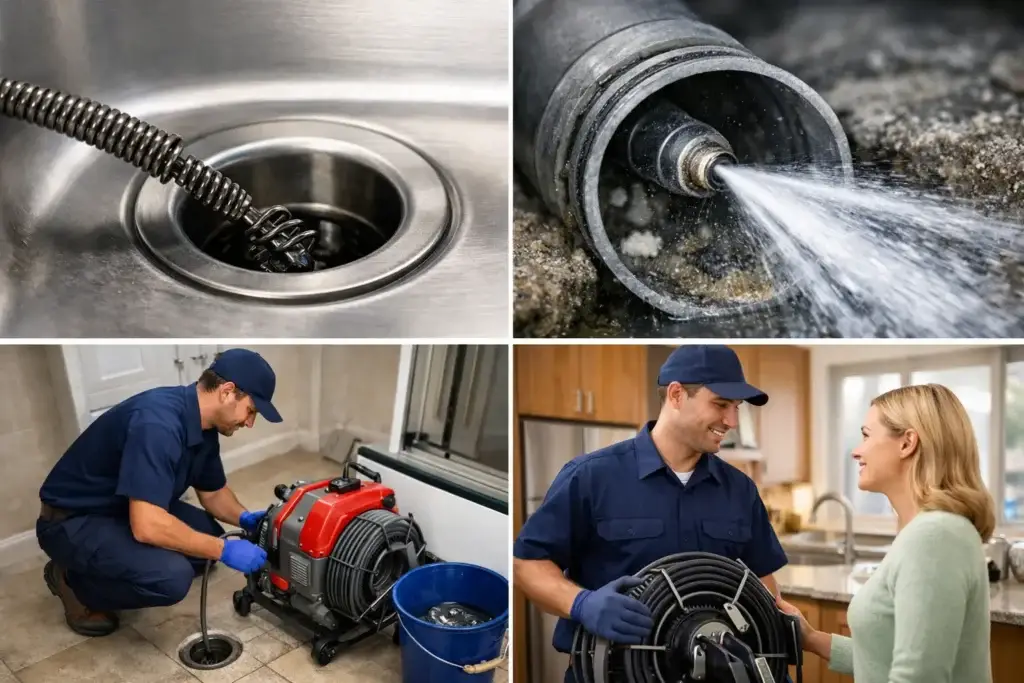
A slow kitchen sink may need a simple cable cleaning. A recurring basement drain backup may point to grease, scale, or roots farther down the line. That is why the choice between drain snaking or jetting matters: both can clear a blockage, but they work differently and fit different drain conditions.
The right answer is not automatically the stronger-looking option. It depends on where the clog is, what is causing it, the condition of the pipe, and whether the problem keeps coming back. A professional drain inspection helps avoid treating the symptom while leaving the buildup behind.
Drain Snaking or Jetting: The Main Difference
Drain snaking uses a flexible cable with a cutting or retrieval head. The cable travels through the drain and breaks apart, cuts through, or pulls back the material causing the blockage. It is a focused method that works well when there is a specific obstruction in the line.
Hydro jetting uses pressurized water delivered through a specialized hose and nozzle. Rather than simply opening a path through the clog, the water can scour buildup from the inner walls of the pipe. This makes jetting especially useful for heavy grease, sludge, mineral scale, and widespread debris in a sewer or drain line.
Neither option is a one-size-fits-all fix. Snaking is often the practical choice for an isolated clog. Jetting may offer a more thorough cleaning when the pipe is structurally sound and the buildup extends beyond one spot.
When Drain Snaking Is the Better Choice
A drain snake is commonly used for localized clogs in sinks, tubs, showers, toilets, and branch lines. Hair, soap residue, paper products, and small objects can create a blockage that a cable can reach and clear effectively.
Snaking can also be a sensible first step when a drain has recently stopped flowing but there is no history of repeat backups. If the technician finds one obstruction and the drain runs normally afterward, a more extensive cleaning method may not be necessary.
This approach is often appropriate when the goal is to restore flow without putting added force through an older or questionable pipe. It is still important to understand the cause, though. If a cable opens the drain but the issue returns within weeks or months, there may be a larger buildup pattern or a pipe condition that needs further evaluation.
What Snaking Can and Cannot Do
A cable can cut through a clog and create a clear channel for water. That is valuable when the immediate problem is a blockage. However, it does not always remove grease film, scale, or residue coating the rest of the pipe wall.
Think of it as reopening a blocked hallway. It gets traffic moving again, but it may not clean every surface along the route. For a drain with recurring buildup, that distinction can affect how long the repair lasts.
When Hydro Jetting Makes More Sense
Hydro jetting is generally considered when there is substantial buildup throughout a line or when a drain repeatedly clogs after basic cleaning. Kitchen lines are a common example. Grease, food residue, and soap can collect over time, narrowing the inside of the pipe even when water still drains slowly.
Jetting may also be useful for sewer lines affected by sludge, root intrusion, or accumulated debris. The high-pressure water is designed to break up material and move it out of the system, providing a more complete cleaning than a cable alone in the right circumstances.
For homeowners dealing with backups that keep returning, this can be the difference between another temporary opening and a longer-lasting reset of the line. But more pressure is not automatically better. The line should be evaluated before jetting, particularly in older homes or where pipe damage is suspected.
Why Pipe Condition Comes First
A damaged, collapsed, severely corroded, or improperly connected pipe needs a different solution than a pipe that is simply dirty. Jetting a line without understanding its condition can be the wrong call if the pipe already has structural weaknesses.
A camera inspection can show whether the problem is grease buildup, roots, a sagging section, cracks, or another issue. That information helps the technician recommend the least invasive method that reasonably addresses the problem. It also gives you a clearer basis for approving the work.
Signs You May Need More Than a Basic Drain Cleaning
One slow drain does not always mean a major sewer issue. However, certain patterns deserve prompt attention. Multiple fixtures draining slowly at once, water backing up into a tub or shower when another fixture runs, sewage odors, or repeated clogs in the same area can indicate a blockage farther down the system.
In Central Ohio, mature trees and older plumbing systems can add another layer to sewer line concerns. Roots naturally seek moisture and can enter through small openings or weakened joints. A cable may cut through roots and restore flow, while jetting may help clear remaining root material and debris. If the roots continue to return, the pipe itself may need to be assessed rather than repeatedly cleaned.
Do not rely on chemical drain cleaners to solve a persistent backup. These products can be harsh on certain pipes, may not reach the true obstruction, and can create a safety concern when a technician later needs to work on the line. If water is backing up or a drain is fully blocked, stop using the affected fixtures and arrange a professional evaluation.
How a Professional Chooses the Right Method
A good recommendation starts with questions, not assumptions. When did the problem begin? Which fixtures are affected? Has the drain been cleaned before? Is the issue isolated or recurring? Those details help narrow down the likely location and cause.
From there, the technician may test fixtures, inspect accessible drain components, and recommend camera work when the line needs a closer look. The goal is to match the method to the evidence. A simple clog should not be treated like a full-line cleaning project, and a recurring sewer backup should not be brushed off as a routine sink clog.
At Transit & Flow, the process is built around clear communication and customer approval before work begins. You should understand whether snaking, jetting, inspection, or another repair is being recommended, why it fits the condition found, and what the next step may be if the line shows damage.
What Affects the Cost of Snaking or Jetting?
Drain-cleaning pricing depends on the location of the clog, access to the line, the type of fixture or pipe involved, how far the blockage is from the opening, and whether inspection or additional work is needed. A straightforward sink clog is different from a main sewer line that requires camera evaluation and heavy cleaning.
Jetting can involve more setup and equipment than standard snaking, but it may provide greater value when widespread buildup is the real problem. The lowest initial service option is not always the most cost-effective if the same line clogs again soon after. On the other hand, paying for jetting when a single localized obstruction can be cleared with a cable may not be necessary.
The practical approach is to review the findings and ask what the recommended method is expected to address. Flat-rate pricing and approval before work begins help keep that decision clear, especially when a drain problem appears without warning.
Protecting Drains After They Are Cleared
After professional cleaning, a few routine habits can help reduce future clogs. Keep cooking grease out of kitchen drains, use strainers where hair is a concern, and avoid flushing wipes or other products not meant for the toilet. These small steps do not prevent every problem, especially in aging sewer lines, but they reduce the everyday debris that causes many backups.
If a drain starts slowing again soon after service, do not wait for a complete backup. Early evaluation gives you more options and can help identify whether the line needs a targeted cable cleaning, hydro jetting, or a closer inspection. The best drain solution is the one that fits the pipe, addresses the actual cause, and gives you a clear plan for what comes next.
