
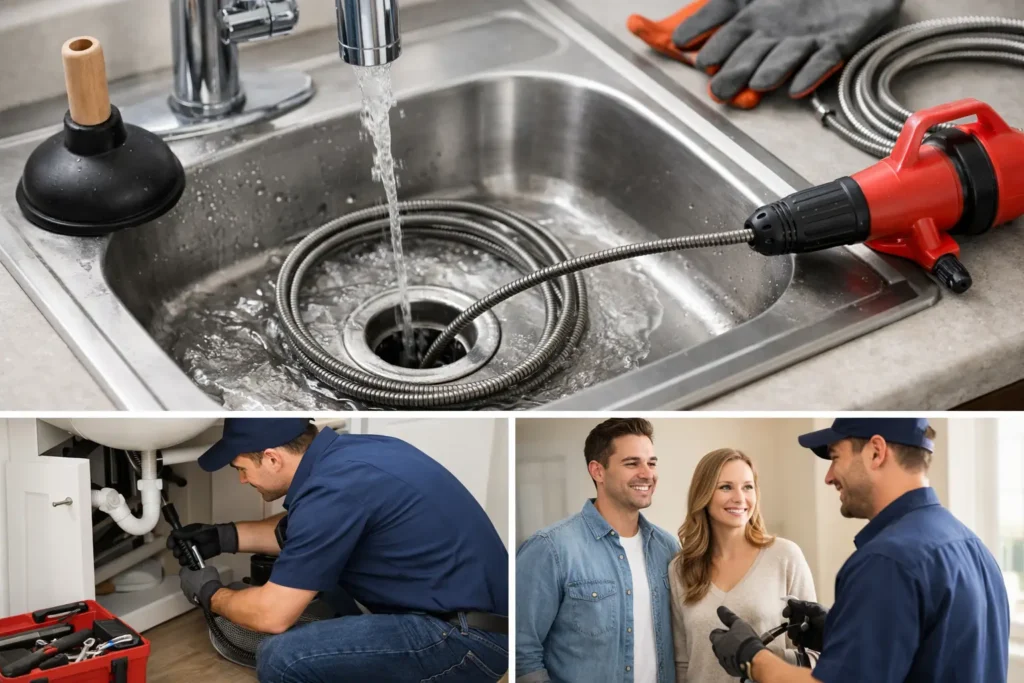
A slow kitchen sink rarely stays a slow kitchen sink. It can become standing water before dinner, a dishwasher that will not drain, or a smell that keeps returning no matter how much you clean. This homeowner guide to drain cleaning explains what you can safely handle, what to avoid, and when a recurring clog needs a professional diagnosis.
The goal is not to force every blockage through the pipe. It is to protect your plumbing, restore normal drainage, and avoid turning a manageable problem into a backup or pipe repair.
Start by Identifying the Type of Drain Problem
The location and timing of a clog tell you a lot. One slow bathroom sink is often a local issue near the drain opening, commonly hair, soap residue, or toothpaste buildup. A kitchen sink that slows after cooking may have grease and food debris in the line. A tub that drains slowly is usually dealing with hair and soap scum.
When several fixtures are slow at once, the situation is different. If the toilet gurgles when the washing machine drains, water appears in a tub after flushing, or sinks on more than one level are backing up, the restriction may be farther down the drain or sewer line. That is a good reason to stop repeated DIY attempts and arrange an inspection.
Pay attention to whether the problem is new or recurring. A first-time, minor clog may respond to simple cleaning. A drain that needs attention every few weeks has an underlying cause that should be identified rather than repeatedly treated.
A Homeowner Guide to Drain Cleaning: Safe First Steps
For a single, slow fixture with no sewage backup, begin with the least aggressive option. Remove the stopper or drain cover if it is easy to access, then pull out visible hair, debris, or soap buildup. Wear gloves and place the material in the trash rather than washing it farther into the pipe.
A plunger can be effective for many sink, tub, and toilet clogs. Use the correct style of plunger for the fixture, create a good seal, and use controlled pressure. For a double-basin kitchen sink, seal the second drain opening before plunging. If you are working on a bathroom sink, covering the overflow opening with a damp cloth can help direct pressure into the drain.
For a sink with a removable trap beneath it, cleaning the trap may help when you are comfortable doing so and can safely shut off the water at the fixture. Put a bucket underneath, loosen the connections carefully, and check for debris. If the fittings are corroded, difficult to move, or begin leaking afterward, stop and call for service rather than forcing the repair.
Hot tap water can help move light soap residue in some bathroom drains. In kitchen drains, however, do not rely on hot water to solve grease buildup. Grease may temporarily soften, then cool farther along in the pipe and create a larger blockage.
What Not to Put Down the Drain
Drain cleaning starts with what you keep out of the plumbing. Garbage disposals are useful for small food scraps, but they are not built to process every leftover from a meal. Grease, oils, coffee grounds, eggshells, fibrous vegetables, pasta, rice, and large quantities of food can contribute to clogs.
Bathroom drains need similar attention. Hair is the most common issue, especially in tubs and showers. A simple hair catcher can reduce buildup significantly. Avoid flushing wipes, paper towels, cotton products, dental floss, or hygiene products, even when packaging suggests they are flushable. Toilets are designed for toilet paper and human waste.
For homes with children, keep small items away from open drains and toilets. Toys, wipes, and excessive paper are common reasons for sudden toilet clogs.
Why Chemical Drain Cleaners Can Make Things Worse
Store-bought chemical drain cleaners may seem like the quickest answer, but they have real drawbacks. Strong chemicals can sit in a partial blockage without clearing it, create fumes, damage some pipe materials or seals, and make later service more hazardous for the person working on the drain.
Never mix drain products or combine them with bleach, ammonia, or other cleaners. If you have already used a chemical product and the clog remains, tell the technician before work begins. That information helps them take appropriate precautions.
Foaming or enzyme-based maintenance products are sometimes marketed as gentler alternatives, but they are not a solution for a serious blockage, roots in a sewer line, or a damaged pipe. They may have a limited role in routine maintenance, depending on the product and your plumbing, but they should not replace an evaluation when drainage problems keep returning.
Signs You Need Professional Drain Cleaning
A professional drain cleaning visit is appropriate when basic, safe steps do not restore normal drainage or when the problem involves more than one fixture. The right method depends on where the blockage is located and what is causing it. A technician may use specialized equipment to clear the line and, when conditions call for it, inspect the pipe to look for buildup, root intrusion, bellies, cracks, or other concerns.
Call for help promptly if you notice any of the following:
- Water or sewage backing up into a tub, shower, sink, or floor drain
- Multiple drains slowing down, gurgling, or producing odors at the same time
- A toilet that overflows or will not clear after reasonable plunging
- Water collecting around a floor drain or near a basement fixture
- A clog that returns soon after it seems to be cleared
- Drain problems after heavy rain, especially in a basement
These symptoms do not always mean a sewer-line failure, but they do mean the issue is likely beyond a simple fixture clog. Early service can help limit cleanup, water damage, and disruption in the home.
Drain Cleaning Is Different From Repairing the Cause
Clearing a blockage and correcting the reason it formed are not always the same job. For example, a kitchen drain may clear but continue collecting grease because of household habits. A shower drain may need periodic cleaning if several people use it and no hair catcher is installed. In those cases, prevention can make a meaningful difference.
Other recurring clogs have causes that maintenance alone cannot fix. Older pipes may have scale buildup or worn interior surfaces that catch debris. Underground lines can be affected by roots or shifting soil. A pipe can also have a low section where waste and water do not flow as intended. Cleaning may restore service, but a camera inspection or repair recommendation may be needed if the same symptoms return.
A trustworthy recommendation should explain what was found, what work is needed now, and what can reasonably wait. You should know the scope and price before work begins, not after the fact.
Preventing Clogs Without Overdoing It
Most homes do not need constant drain treatments. A few consistent habits are more useful: use strainers in sinks and showers, throw grease in a container instead of the sink, run cold water with the garbage disposal, and address slow drainage before it becomes standing water.
For busy households, a periodic visual check can catch problems early. Clean hair from shower covers, inspect sink stoppers, and look under exposed sink plumbing for moisture or small leaks. If you have a basement, occasionally check floor drains and the area around them, particularly before storms or when using large amounts of water.
If your home has a history of drain or sewer issues, planned maintenance may be more practical than waiting for an emergency. The right timing depends on the home, the age of the plumbing, nearby trees, and whether problems have occurred before.
When the Problem Cannot Wait
If sewage is entering the home, stop using water fixtures whenever possible. Do not run the dishwasher, washing machine, or additional showers while the drain system is backing up. Keep children and pets away from affected water, and avoid attempting to clear a severe backup with chemicals or improvised tools.
Homeowners in Columbus and surrounding Central Ohio communities can contact Transit & Flow for drain and sewer concerns, including urgent situations. Clear communication matters when a drain issue is stressful: the technician should assess the conditions, explain the practical options, provide up-front pricing for approved work, and help you decide on the next step.
A clean, freely draining pipe is easy to overlook until it is not. Address the early warning signs, use simple prevention habits, and bring in professional help when the symptoms point to something deeper than a routine clog.
