
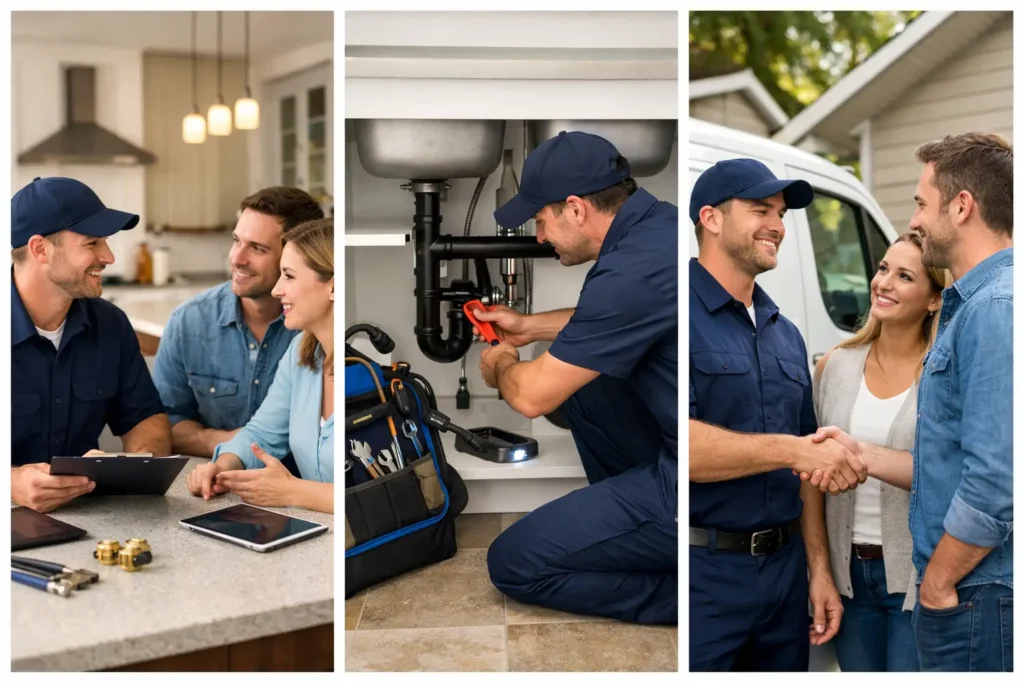
A plumbing problem gets expensive fast when the first call turns into guesswork. If you are trying to choose the best questions for plumbing contractor conversations, the goal is simple – get clear answers before work starts, not surprises after the invoice arrives.
For most homeowners, the hardest part is not knowing what to ask. You may know your drain is backing up, your water heater quit, or a leak is getting worse, but that does not mean you should already know how service pricing, repair options, or scheduling should work. A good contractor should make that process easier. The right questions help you spot who communicates clearly, who explains options well, and who is organized enough to handle the job professionally.
Best Questions for Plumbing Contractor Calls
Start with the questions that tell you how the visit will work. Before anyone comes out, ask what happens next. Will they inspect the issue first and explain what they find before work begins? Will you approve the repair before any charges move forward? That matters because plumbing problems often look smaller or larger once the technician can actually inspect the system.
You should also ask how pricing is handled. A direct company should be able to explain whether they use flat-rate pricing, whether there is a diagnostic charge, and when you will see the final cost. If a company cannot explain that process clearly, it is harder to feel confident about the rest of the visit.
Scheduling questions matter more than many people realize. Ask whether same-day appointments may be available and what could affect timing, such as technician availability, access to the home, materials, or the condition of the system once inspected. Fast response is important, especially for active leaks, no hot water, sewer issues, and drain backups, but clear expectations are just as important.
Questions That Reveal How a Contractor Communicates
A lot of plumbing work is not just about tools. It is about whether the company communicates in a way that makes sense when you are under stress. Ask how they explain repair recommendations. Will they walk you through the problem in plain language? Will they give you more than one option when that makes sense, such as repair versus replacement?
This is where you can learn a lot about their approach. Some plumbing issues have one obvious fix. Others involve trade-offs. A repair may cost less today but may not be the best long-term move if the fixture is older or failing in multiple places. A replacement may be the more practical choice, but only if the contractor explains why, what it solves, and what changes it involves.
You should also ask who will be your point of contact if plans change. Homeowners usually do not mind waiting for an answer nearly as much as they mind not knowing what is happening. Clear communication about arrival windows, findings, approval, and next steps often says more about the service experience than the repair itself.
Ask About the Diagnosis, Not Just the Fix
One of the best questions for a plumbing contractor is, “What do you think is causing this issue?” That sounds basic, but it separates surface-level answers from real diagnosis.
A clogged kitchen sink, for example, could be a simple blockage near the drain or part of a larger line issue. A leaking water heater might need a repair, or it may be showing signs that replacement is the smarter option. A toilet that keeps running could be a small internal part, but repeated toilet issues can also point to pressure or drain concerns. You want a company that looks at the full picture rather than just the symptom in front of them.
Then ask what happens if the diagnosis changes after inspection or during the repair. Plumbing work sometimes uncovers hidden damage, older materials, access limitations, or related wear. A trustworthy contractor should be open about that possibility and explain how updated recommendations and pricing are handled before additional work moves forward.
Questions About Pricing and Approval
Most people are not looking for the lowest number. They are looking for clarity. Ask when you will receive pricing, what is included, and whether work starts only after your approval. That approval step is a big part of a smooth customer experience because it keeps the decision in your hands.
It is also smart to ask whether there are financing options for larger repairs or replacements. That may not matter for a minor drain clearing, but it can matter a lot for water heater replacement, sewer work, or other higher-cost jobs. The point is not to assume you will need financing. The point is to understand your options before a stressful repair gets more stressful.
Ask about visible starting prices if that is something the company offers, but remember that actual pricing depends on the specific issue, access, materials, and what the inspection finds. Any final number should be based on the condition of your home and approved by you before work begins.
Questions About Timing and What to Expect On Site
A smart question to ask is, “What will this visit look like from arrival to completion?” That gives you a practical picture of the service process.
You want to know whether the technician will inspect first, whether they need access to certain areas, how long diagnosis may take, and whether repair can happen during the same visit if materials and conditions allow. That is especially helpful if you need to coordinate work around family schedules, pets, tenants, or older plumbing access points.
Ask what could delay completion. That does not mean the company is disorganized. In fact, clear answers here usually show the opposite. Plumbing work may depend on parts availability, the complexity found during inspection, the age of the system, or whether additional approvals are needed. A contractor who speaks honestly about timing is often easier to work with than one who promises too much too early.
Questions Specific to Bigger Plumbing Problems
If you are dealing with a more serious issue, your questions should get more specific. For a sewer concern, ask how they confirm the source of the problem and what repair paths might be possible based on what they find. For a sump pump issue, ask what they check beyond the pump itself, including discharge conditions and signs of backup risk. For water heater problems, ask whether repair is practical or whether age and condition make replacement worth considering.
The key is to ask for options in context. A useful answer is not just, “You need this fixed.” A useful answer is, “Here is what is happening, here is the recommended solution, here is why, and here is what to expect next.”
That kind of explanation helps you compare companies more fairly. One contractor may suggest a short-term repair. Another may suggest replacement. Neither is automatically wrong. It depends on the condition of the system, your budget, the age of the equipment, and whether you want the lowest immediate cost or the most reliable long-term outcome.
How to Tell if the Answers Are Good
Good answers are clear, specific, and calm. They do not rush you, and they do not bury you in jargon. You should leave the conversation knowing how pricing works, what the likely next step is, and when you will be asked for approval.
Be careful with vague responses. If someone cannot explain how they diagnose problems, how changes are communicated, or how costs are approved, that uncertainty tends to continue once the job begins. On the other hand, organized service usually sounds organized from the first phone call.
In Columbus-area homes, that matters because plumbing systems vary widely. An older home in Clintonville or German Village may present different access or material conditions than a newer home in Dublin or Pickerington. A contractor does not need to overcomplicate that. They just need to acknowledge that the home, the system, and the actual cause of the issue all affect the right repair path.
The Questions That Protect You Most
If you only remember a few questions, make them these: What do you think is causing the issue? What are my options? How is pricing handled? Do I approve the work before it starts? What could change the timeline or scope once you inspect it?
Those questions protect your budget, your schedule, and your confidence. They also make it easier to choose a company that values clear communication and practical recommendations. That is the kind of service homeowners usually remember – not just that the plumbing was fixed, but that the process felt straightforward from start to finish.
When you ask better questions, you are not being difficult. You are making sure the repair starts with clarity, and that is usually the first sign the job is headed in the right direction.
Ready to put these questions to work? Explore our Columbus plumbing services and see why homeowners across central Ohio choose Transit & Flow.
