
A single slow drain can be frustrating. When several drains slow down at once, toilets start acting strangely, or wastewater appears where it should not, the issue may be deeper than a routine clog. Knowing the best signs your sewer line needs help can help you protect your home from a messy, expensive backup and make a confident decision about when to call for service.
Your sewer line carries wastewater from your home’s plumbing to the public sewer connection or septic system. Because it is largely out of sight, problems can build quietly until a drain backs up, a floor drain overflows, or a strong odor moves indoors. Here is what Columbus homeowners should watch for.
10 Best Signs Your Sewer Line Needs Help
1. Multiple drains are slow at the same time
A slow bathroom sink by itself may be caused by hair, soap residue, or buildup near that fixture. But if the kitchen sink, shower, toilet, and laundry drain are all moving slowly, the restriction may be in the main sewer line.
Pay attention to whether the problem affects plumbing fixtures on different floors or in different parts of the house. A main line issue typically affects more than one drain because all of those fixtures eventually connect to the same outgoing pipe.
2. Your toilet gurgles when water drains elsewhere
A toilet that bubbles or gurgles when you run the washing machine, empty a bathtub, or use a nearby sink is a common warning sign. Water moving through the plumbing may be forcing air back through the toilet because it cannot pass freely through the sewer line.
The same can happen in a tub or shower drain after you flush. Do not assume these sounds will resolve on their own, especially if they begin happening more often. They can be an early signal of a growing obstruction.
3. Water backs up into a tub, shower, or floor drain
This is one of the clearest signs of a sewer problem. If flushing a toilet causes dirty water to rise in the shower or bathtub, wastewater is likely meeting a blockage farther down the line and taking the lowest available path back into the home.
At this point, limit water use immediately. Avoid flushing, running the dishwasher, doing laundry, or taking showers until the line has been assessed. Continued use can turn a contained issue into a larger cleanup and restoration problem.
4. Sewage odors appear indoors or near the yard
Your plumbing system is designed to keep sewer gases outside. A persistent sewage smell in a bathroom, basement, utility area, or around an exterior drain deserves attention.
Sometimes an odor comes from a dry drain trap, particularly in a little-used basement bathroom or floor drain. Adding water may restore the trap seal. But if the smell continues, accompanies slow drains, or appears outside near the sewer route, it may point to a damaged, blocked, or leaking line.
5. You see wastewater around a basement floor drain
Basement floor drains are often the first place a main sewer backup becomes visible. Water or sewage appearing around the drain, even in small amounts, should be treated as urgent.
Do not try to wash the material back into the drain or continue using fixtures to test it. Keep people and pets away from the affected area, avoid contact with wastewater, and arrange for a plumbing professional to identify the source. The right next step depends on whether the problem is inside the home’s drain system, in the sewer lateral, or connected to an outside condition.
6. Your drains clog repeatedly after being cleared
A drain that clogs once can be ordinary household buildup. A drain that repeatedly clogs after plunging or cleaning may be part of a larger issue. If several fixtures keep returning to the same problem, the blockage may be farther down the pipe than a basic fixture-level cleanup can reach.
Repeated clogs can also happen when roots enter an older sewer line, when pipe sections shift, or when years of buildup narrow the path for wastewater. Clearing the immediate blockage may restore flow temporarily, but a camera inspection can provide a clearer view of what is causing the repeat problem.
7. There are unusually green or soggy areas in the yard
A sewer line leak below ground can add moisture and nutrients to one section of the lawn. You may notice a patch of grass that is greener, thicker, or faster-growing than the surrounding yard. Soft, wet ground during a dry stretch can be another clue.
Not every wet area is a sewer issue. Downspout drainage, irrigation leaks, and grading problems can create similar symptoms. Still, when the wet spot lines up with a sewer route and you also have indoor drain problems or odors, it is worth scheduling a professional evaluation.
8. You notice cracks, settlement, or new pest activity
Severe underground leaks can wash away soil over time. In some cases, homeowners notice a settling area near the foundation, an unexpected depression in the yard, or cracks that seem to worsen near the affected area.
Rodents and insects may also be drawn to broken sewer piping or damp soil. These signs do not confirm a sewer break by themselves, but they should not be ignored when paired with other plumbing changes. Early inspection can help clarify whether the cause is plumbing-related before more extensive property damage occurs.
9. The problem gets worse after heavy rain
Rain can expose an existing drainage or sewer issue, but the cause is not always the same. If your home has a backup only during or shortly after major storms, water may be entering where it should not, the public sewer may be under pressure, or a private line may already have limited capacity.
Make a note of what fixtures are affected and when the backup occurs. That information helps a technician narrow down the likely source. If wastewater is entering the home, reduce water use and request service promptly rather than waiting for the next storm to see if it happens again.
10. Your home has older pipes or mature trees near the sewer route
Older homes across Columbus and surrounding neighborhoods may have sewer lines made from materials that can crack, corrode, shift, or develop separated joints over time. Mature trees can add another factor. Roots naturally seek moisture and can enter small openings in a pipe, then expand and catch debris.
Tree roots do not mean a sewer line automatically needs replacement. In some situations, cleaning and ongoing maintenance may be appropriate. In others, a damaged section or recurring root intrusion may call for a repair or replacement recommendation. A visual inspection is the practical way to understand the condition of the line before approving work.
What to Do When You Suspect a Main Sewer Problem
The safest response is usually to stop adding water to the system. Pause laundry, dishwasher cycles, showers, and unnecessary flushing. If sewage has backed up, keep children and pets away from the area and do not attempt to clear the line with harsh chemical drain cleaners. Those products may not reach a main-line blockage effectively and can create additional hazards during service.
If you can do so safely, take a few photos of the backup or affected drain and note what happened immediately before it started. Did the toilet gurgle when the washer drained? Did water rise in the tub after flushing? Did the issue begin after a storm? Those details can make diagnosis more efficient.
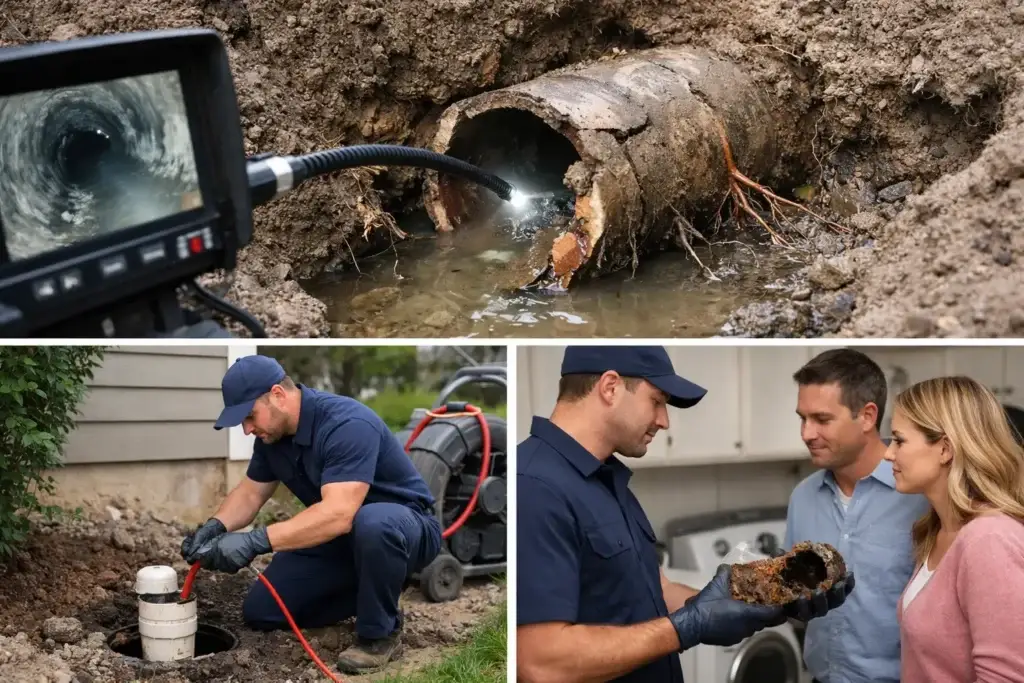
A professional sewer evaluation may include checking accessible drains, locating the cleanout, clearing a blockage when appropriate, and using a sewer camera to examine the pipe’s interior. The right solution may be drain cleaning, root removal, a targeted repair, or a larger line recommendation. It depends on the pipe material, the location and extent of damage, access conditions, and whether the issue is recurring.
Clear Answers Before Sewer Work Begins
Sewer problems create understandable urgency, but urgency should not mean uncertainty. Before approving repairs, ask what was found, where it is located, whether the line was visually inspected, and what options fit the condition of the pipe. You should also understand the expected scope of work and receive clear pricing before work begins.
For homeowners in Columbus and Central Ohio, Transit & Flow can help assess sewer and drain concerns with straightforward communication, practical recommendations, and customer approval before repairs move forward. Same-day availability may be available based on scheduling, access, and the needs of the job.
A sewer line issue rarely becomes easier by waiting through repeated backups or gurgling drains. Acting when the first patterns appear gives you more control over the next step and a better chance to address the problem before wastewater reaches your living space.
