
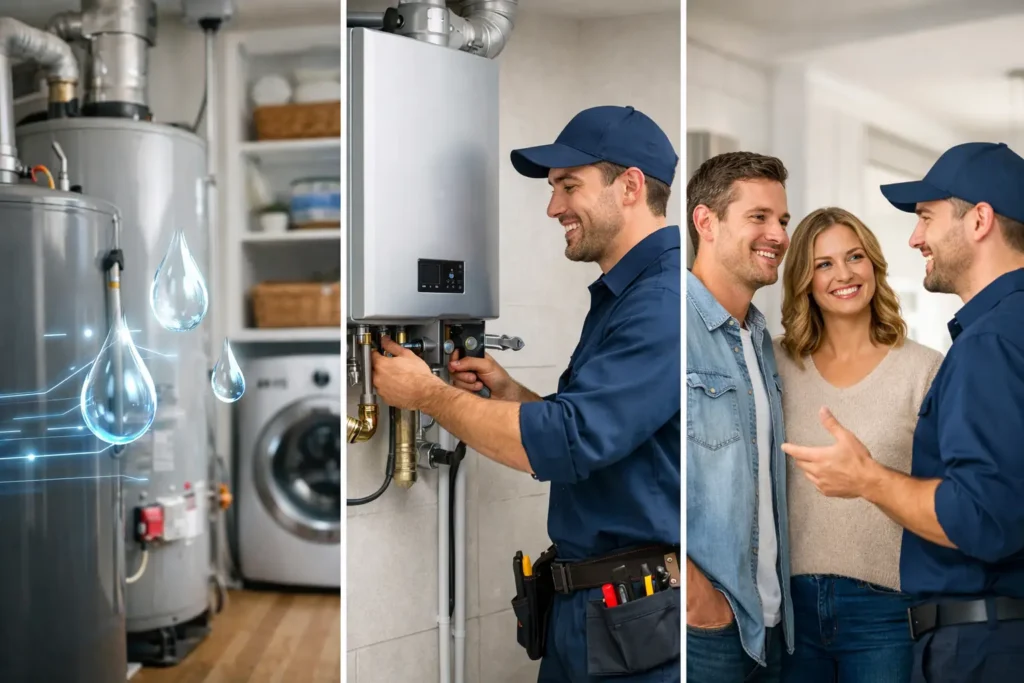
A water heater rarely fails at a convenient time. One day the shower runs cold, water appears around the tank, or a utility-room rumble becomes impossible to ignore. The future of water heater replacement is less about chasing the newest equipment and more about making a clear decision before an urgent failure limits your options.
For Columbus homeowners, that decision increasingly includes more than choosing the same size tank. Newer water heater options can reduce energy use, improve hot-water recovery, offer more control, and fit different household needs. But the right replacement still depends on your home, your hot-water habits, available space, fuel source, budget, and installation conditions.
Why Water Heater Replacement Is Changing
Traditional tank water heaters remain a practical choice for many homes. They are familiar, generally straightforward to replace, and available in gas and electric models. A properly sized conventional unit can provide dependable hot water for a household without requiring major changes to the home.
What is changing is the number of viable alternatives. Heat pump water heaters are becoming more common, while tankless systems continue to appeal to homeowners who want hot water on demand and a smaller equipment footprint. Improved controls, leak detection features, and efficiency standards are also changing what homeowners should expect from a replacement.
This does not mean every home should switch to the newest technology. A high-efficiency option can be a smart long-term investment, but it may require the right installation location, electrical capacity, drainage, ventilation, or plumbing adjustments. The best choice is the one that reliably meets your household’s needs without creating avoidable costs or complications.
The Future of Water Heater Replacement Includes More Choices
The first question is usually simple: tank or tankless? The answer is not always simple, because each option solves a different problem.
A standard storage-tank water heater keeps a set amount of hot water ready for use. It is often a good fit for households that want predictable performance and a familiar replacement process. Capacity matters. A tank that is too small can leave the last person in line with a cold shower, while an oversized unit can waste energy heating water that is never used.
Tankless water heaters heat water as it flows through the unit. They can provide a continuous supply when properly sized, which can be helpful for larger households or homes where multiple fixtures are used at once. However, tankless replacement may involve changes to gas supply, venting, electrical service, or water lines. The equipment cost and installation scope can be higher, so the expected benefits should be weighed against the actual needs of the home.
Heat pump water heaters are another major part of the conversation. Rather than creating all of their heat directly, they move heat from the surrounding air into the water. That can make them highly efficient, especially over years of regular use. They also need an appropriate location, enough surrounding air space, a place for condensate drainage, and consideration for the cooler, drier air they produce. A basement or utility area may work well, while a tight closet may not.
Hybrid heat pump models can switch operating modes based on demand. That flexibility can be useful for families with varying hot-water use, but it is still important to understand how the unit will perform in its actual location and during high-demand periods.
Smart Features Can Prevent a Bigger Problem
The next generation of water heaters is not only about how water is heated. It is also about identifying trouble earlier.
Some newer models include leak detection, automatic shutoff capabilities, maintenance reminders, and app-based monitoring. These features can provide an early warning when a small leak starts near the unit. That matters because water heater failures can damage flooring, walls, stored belongings, and finished areas below the equipment.
Smart features are helpful, but they are not a substitute for basic installation quality and regular attention. A homeowner should still know where the water shutoff is located, look for signs of corrosion or moisture, and respond quickly to unusual noises, rusty water, or inconsistent temperatures. If a water heater is installed in an area where a leak could cause damage, a drain pan, correctly routed drain line, and leak protection may deserve extra discussion.
Plan Around Your Household, Not Just Your Old Unit
Replacing a 40-gallon tank with another 40-gallon tank may be appropriate, but the old unit is not always the right baseline. Your household may have changed since it was installed. More people may live in the home, bathroom use may overlap in the morning, or a remodeled bathroom may have a larger tub that places greater demand on the system.
A proper recommendation starts with usage. How many people regularly use hot water? Do several showers run back to back? Is laundry often done while someone showers? Does the dishwasher run in the evening? These details help determine whether tank capacity, first-hour delivery, recovery rate, or tankless flow rate is the number that matters most.
The installation location also shapes the decision. A water heater in a garage, basement, crawl space, utility room, or finished area brings different practical concerns. Access for removal and installation, drain availability, venting, electrical service, and local code requirements can all affect the project. In older Columbus homes, these site details may be more important than the model name on the box.
Efficiency Has Value, but It Has a Price
Efficiency is a reasonable priority, especially when a water heater runs every day of the year. Still, homeowners should consider the full cost of ownership instead of focusing on one number.
A less expensive conventional replacement may make sense when the existing setup is compatible, hot-water needs are modest, and the goal is dependable service with minimal changes. A heat pump or tankless system may offer lower operating costs or performance benefits over time, but the upfront investment can be greater. The payback period depends on energy rates, household use, equipment selection, and the work needed to install it correctly.
Available rebates, tax incentives, and utility programs can also influence the equation, though eligibility and funding can change. Before relying on an incentive, confirm the current requirements and make sure the equipment and installation plan qualify.
The practical approach is to compare realistic options side by side. Ask what each system costs to install, what work is included, what ongoing maintenance it needs, and what trade-offs come with the equipment. A clear, flat-rate estimate should explain the scope before work begins, rather than leaving surprises for the end of the job.
Replacement Timing Will Matter More Than Ever
Waiting until a water heater fails can narrow the decision to whatever is available that day. In an emergency, restoring hot water is understandably the priority. Yet a planned replacement gives you time to consider size, efficiency, equipment location, financing, and any upgrades that would be difficult to decide on under pressure.
Many conventional tank water heaters begin showing age-related concerns around the latter part of their expected service life, although actual lifespan varies by water quality, maintenance history, installation conditions, and usage. Warning signs include water around the base, corrosion, repeated repairs, reduced hot-water supply, rumbling or popping sounds, and discolored hot water.
Do not assume every issue means replacement is necessary. A failed heating element, thermostat, pressure relief component, or valve may be repairable depending on the unit’s age and overall condition. On the other hand, a leaking tank generally calls for prompt replacement because the tank itself cannot be reliably repaired.
What to Expect From a Professional Replacement Visit
A good replacement process should feel organized. The technician should evaluate the existing equipment and installation area, discuss your household’s hot-water needs, and explain the reasonable options in plain language. You should understand whether the project involves only a direct replacement or additional work such as venting changes, electrical updates, drainage, piping adjustments, or code-related improvements.
At Transit & Flow, the goal is to give homeowners clear recommendations and up-front pricing before work begins. Final pricing and scheduling depend on the equipment selected, site conditions, access, materials, and technician availability, but customer approval should always come before the work moves forward.
The future will bring more water heater choices, not one universal answer. If your current unit is aging or showing warning signs, addressing it while it still operates can give you more control, better options, and a calmer path to reliable hot water.
Newer equipment is more efficient, but the right choice still depends on your home rather than the spec sheet. Transit & Flow reviews water heater replacement options with Columbus homeowners and installs what actually fits the space and demand. Call (614) 333-8092.
