
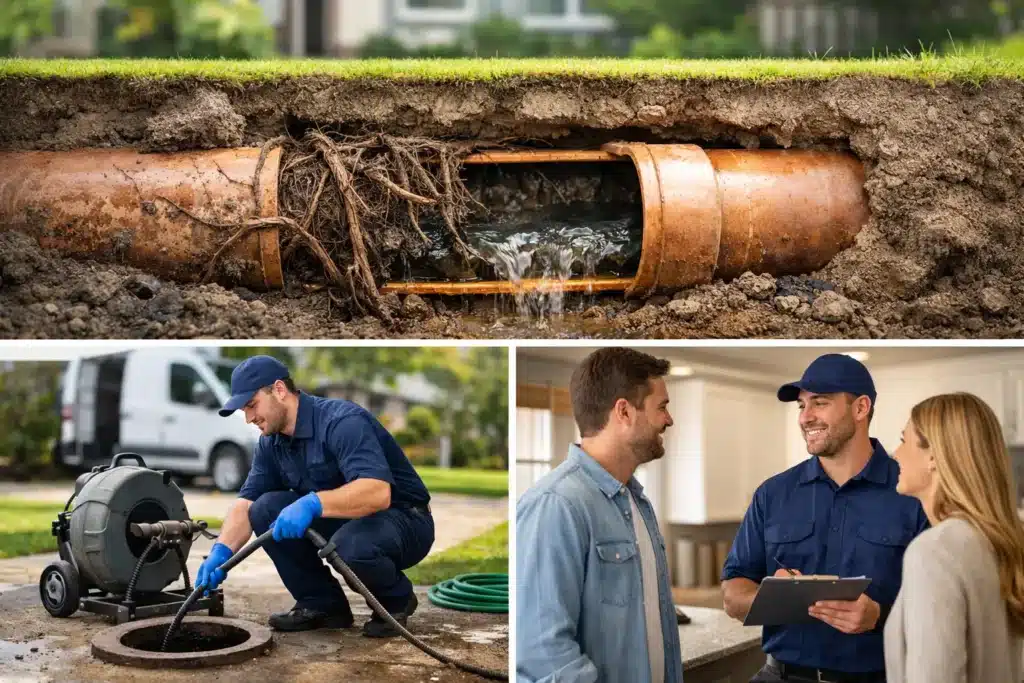
A slow drain by itself can feel manageable. A toilet that gurgles when the shower runs, or water backing up in the basement floor drain, is different. That is usually the point where sewer line service moves from something you can put off to something that needs prompt attention.
For homeowners, the hardest part is not always the repair itself. It is figuring out whether the problem is a simple clog, a drain issue inside the house, or a main sewer line problem that affects the whole system. The right response starts with a clear diagnosis, not guesswork.
What sewer line service actually covers
Sewer line service is the process of inspecting, clearing, repairing, or replacing the pipe that carries wastewater away from your home. That can include a blockage caused by buildup, a line damaged by age, a belly in the pipe that holds water, or root intrusion from nearby trees.
In practical terms, this service is about restoring normal flow and preventing wastewater from coming back into the home. It may begin with a camera inspection, continue with drain clearing, and in some cases lead to a repair or replacement recommendation. The best next step depends on what the technician finds, how severe the damage is, and whether the line has a one-time problem or a pattern of repeat failure.
Signs you may need sewer line service
Some sewer problems announce themselves quickly. Others build up slowly and are easy to dismiss until they become disruptive.
If more than one drain is acting up at the same time, that is a strong sign the problem is deeper in the system. A kitchen sink clog alone may stay localized, but when tubs, toilets, and lower-level drains all slow down together, the issue may be in the main line.
Recurring backups are another warning sign. If the same fixture clogs every few months, the root cause may not be at that fixture at all. Repeated clearing without a full inspection can turn into a cycle of temporary fixes.
You may also notice unpleasant sewer odors, especially near basement drains or around the yard. In some cases, those odors come from a dry trap or a minor vent issue. In other cases, they point to a damaged or blocked sewer line. It depends on where the smell is strongest and whether it appears alongside drainage problems.
Patches of extra-green grass, soggy spots in the yard, or unexplained settling can also indicate an underground sewer issue. Those signs do not always mean full line failure, but they should not be ignored.
Why sewer line problems happen
Age is one of the biggest factors. Many homes in and around Columbus have older underground piping, and older materials do not last forever. Joints can shift, pipe walls can deteriorate, and small defects can turn into major obstructions over time.
Tree roots are another common cause. Roots naturally seek moisture, and even a small crack or loose joint can attract them. Once roots enter the line, they continue to expand and catch debris. The result is a restriction that often gets worse with each passing month.
Grease, wipes, paper buildup, and other debris can contribute too. Even products labeled as flushable can create real problems in residential sewer systems. A line may function for a while with partial buildup, then suddenly stop moving wastewater efficiently.
Ground movement is part of the equation as well. Seasonal changes, soil settlement, and nearby construction can all affect underground piping. That does not mean every movement causes damage, but it is one reason sewer line issues can develop even when nothing obvious has changed inside the house.
The difference between clearing and repairing
This is where a lot of homeowners need straightforward guidance. Not every sewer problem needs excavation. Not every backup can be solved with simple clearing either.
If the line is blocked by soft buildup, paper, or early-stage roots, clearing may restore normal function. A camera inspection after clearing can confirm whether the pipe is structurally sound or whether the blockage is likely to return.
If the camera shows a cracked pipe, a separated joint, a collapse, or a sag that traps waste, clearing alone may not be enough. The drain may work better for a short time, but the underlying issue remains. In that case, repair or replacement may be the more practical long-term decision.
The trade-off usually comes down to short-term relief versus long-term reliability. A lower-cost clearing can make sense if the line is otherwise in decent shape. If the pipe is badly damaged, repeated service calls often cost more over time than addressing the real problem once.
What to expect during a sewer line service visit
A good sewer call should feel organized, not rushed. The first step is understanding the symptoms – what is backing up, how often it happens, whether the issue affects one area or the whole home, and whether there have been previous repairs.
From there, the technician may inspect accessible cleanouts, test drainage patterns, and recommend a camera inspection if the symptoms suggest a main line issue. The camera is especially helpful because it replaces assumptions with visible evidence. You can see whether the problem is buildup, roots, offset pipe sections, or more serious damage.
Once the issue is identified, the next step should be clearly explained. That means discussing the options, outlining what the work involves, and reviewing pricing before anything moves forward. For homeowners dealing with a stressful backup, that kind of communication matters as much as the technical repair.
Transit & Flow approaches this process the way many customers prefer – with clear communication, visible starting prices, and customer approval before work begins.
When to act right away
Some sewer issues can wait a day or two for scheduling. Others should be treated as urgent.
If sewage is backing up into tubs, showers, toilets, or basement drains, it is time to call promptly. The same goes for situations where multiple fixtures stop draining at once, especially if wastewater appears at the lowest drain in the home. These are signs that the main line may be obstructed and the problem can spread quickly with normal water use.
A strong sewer smell combined with wet areas indoors also deserves fast attention. Even if the source is not confirmed yet, it is better to get a proper inspection than to keep using the plumbing and hope it improves.
In many cases, same-day availability is possible, but timing still depends on technician scheduling, access to the line, site conditions, and what the diagnosis shows.
Sewer line service in older Columbus homes
In older neighborhoods, sewer line concerns are often tied to aging infrastructure and mature trees. Homes in established parts of Columbus may have original underground lines that have been in place for decades. That does not automatically mean replacement is needed, but it does mean recurring backups should be taken seriously.
A house can look perfectly maintained above ground and still have a sewer line that is nearing the end of its useful life. This is one reason camera inspections are valuable. They help homeowners make decisions based on the actual condition of the pipe rather than the age of the house alone.
For newer homes, the pattern can be different. Problems may stem from installation issues, shifting ground, or localized blockages instead of old materials. Again, it depends on the symptoms and what the inspection shows.
How to avoid repeat sewer problems
Prevention is not complicated, but it does require consistency. Be careful about what goes down drains and toilets. Grease, wipes, paper towels, hygiene products, and food waste all increase the chance of line buildup.
If your home has had root intrusion before, periodic inspection may make sense. If you have experienced more than one main line backup, it is worth asking whether the issue was fully resolved or simply reopened. Those are two very different outcomes.
It also helps to pay attention to early changes in drainage. Slow fixtures, gurgling sounds, and occasional odors are easier to deal with before they become a full backup. Waiting may seem practical in the moment, but sewer issues usually get more disruptive, not less.
Choosing a service company for sewer work
Homeowners usually want the same things from sewer service that they want from any serious home repair – quick response, clear answers, and no confusion about pricing or next steps.
That means choosing a company that explains the problem in plain language, shows what was found when possible, and makes recommendations that fit the condition of the line. Sewer work is rarely something people plan for, so the process should reduce uncertainty, not add to it.
The right team will not pressure you into the biggest job by default. Sometimes a clearing is enough. Sometimes a repair is the reasonable middle ground. Sometimes replacement is the best path. Honest recommendations matter because the right answer depends on the actual condition of the sewer line, not a one-size-fits-all script.
If your drains are sending mixed signals, trust the pattern, not just the worst fixture. Sewer line service is usually most effective when the problem is identified early, explained clearly, and handled with a plan you can approve with confidence.
