
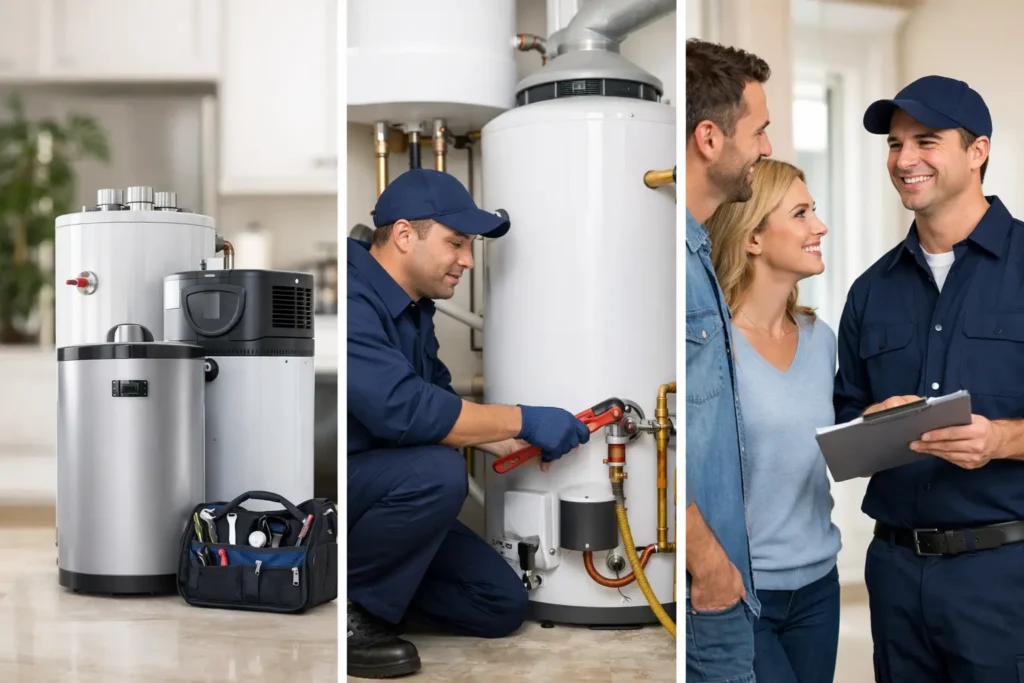
A shower that turns cold halfway through the morning routine usually gets your attention fast. If you’re trying to figure out how to choose water heater options without wasting money or ending up with the wrong size, the best place to start is with your household’s actual hot water habits – not just the price tag on the unit.
A water heater is one of those home systems that stays out of sight until it stops doing its job. When it’s time to replace one, most homeowners want clear answers: What size do I need? Should I go tank or tankless? Will a more efficient model really save enough to matter? Those are the right questions, and the honest answer to many of them is that it depends on your home, your usage, and how long you plan to stay there.
How to choose water heater size and type
The biggest mistake homeowners make is choosing too quickly based on what they had before. Your existing unit may have been oversized, undersized, or simply the only model that fit at the time. A better approach is to look at how many people live in the home, when hot water gets used most heavily, and whether your current system keeps up during those peak times.
If your household regularly runs showers, laundry, and dishwashing back to back, capacity matters more than advertised efficiency. If only one or two people live in the home and hot water demand is modest, a smaller unit may be a better fit and cost less to operate.
Start with peak demand, not just household size
Household size is helpful, but peak demand tells the real story. A family of four with staggered schedules may need less hot water at one time than a household of three where everyone showers before 8 a.m. If your current water heater runs out too soon, that is a sizing issue worth paying attention to.
For traditional tank water heaters, capacity is measured in gallons, but recovery rate also matters. A 50-gallon tank that reheats quickly may perform better for your routine than a larger tank with slower recovery. For tankless systems, the focus shifts to flow rate – how much hot water the unit can provide at once.
Tank vs. tankless
A standard tank water heater stores heated water and is often the simplest replacement when you need dependable service without major changes. It is usually less expensive up front and works well for many homes.
A tankless water heater heats water on demand, which can improve efficiency and free up space. It can be a strong option if you want longer-term energy savings or never want to worry about using up a tank. The trade-off is higher installation cost and the need to make sure the unit is sized correctly for simultaneous hot water use.
Neither option is automatically better. Tank models are practical and proven. Tankless models can be efficient and convenient. The right choice depends on your budget, your home’s setup, and your expectations.
Fuel source matters more than many homeowners expect
One of the most important parts of how to choose water heater equipment is matching the system to the fuel source your home already uses. That usually means gas or electric.
If your current water heater is natural gas and you are replacing it with another gas model, installation may be more straightforward. If you are considering switching from electric to gas or the other way around, the project may involve venting, electrical upgrades, gas line considerations, or other changes that affect the overall cost and timeline.
Gas water heaters often recover faster, which can be helpful for larger households. Electric models can have a lower upfront equipment cost and may be easier to install in some homes. The better fit comes down to local utility costs, the condition of your existing connections, and how much hot water your home needs during busy times.
Efficiency is important, but it should not be your only goal
Most homeowners want a water heater that costs less to run. That makes sense. Still, efficiency only helps if the unit also delivers enough hot water and fits your home without driving installation costs too high.
A high-efficiency model can lower monthly utility use, but savings vary based on your household habits. If your hot water use is low, it may take longer to recover the added upfront investment. If your household uses a lot of hot water every day, efficiency improvements may matter more over time.
This is where practical recommendations are important. The cheapest unit is not always the best value, and the most efficient option is not always the smartest purchase. A solid choice balances purchase price, installation conditions, operating cost, and expected lifespan.
Look at the space where the heater will go
Before choosing a model, consider the installation area. Some homes have tight utility closets, low ceiling clearance, older venting arrangements, or access limitations that narrow the options.
This is especially common in older homes around Columbus, where replacement is not always a simple swap. A model that looks right on paper may not be ideal once the actual space, venting path, drainage, or electrical setup is reviewed. That is one reason professional inspection matters before finalizing equipment.
If you’re interested in tankless to save space, that can be a real advantage. If you’re replacing a leaking tank and need a quick, dependable solution, a similar tank-style model may be the fastest path with fewer modifications.
Think about maintenance and lifespan
Water heaters are not install-and-forget systems forever. Some homeowners prefer a straightforward tank unit because the maintenance expectations are familiar and replacement costs tend to be more predictable. Others prefer tankless systems because of their longer potential lifespan, especially if they plan to stay in the home for years.
The trade-off is that tankless systems still need proper maintenance to perform well. Hard water conditions can also affect long-term performance depending on the equipment and local water quality. If your goal is fewer surprises, ask not only how long a model may last, but what routine service it needs to stay reliable.
Budget for the full job, not just the appliance
When homeowners shop online, they often compare only equipment prices. That rarely gives the full picture. The actual replacement cost may depend on labor, code-related updates, valves, venting adjustments, drain pans, expansion tanks, disposal of the old unit, and whether any existing connections need attention.
That does not mean every installation becomes complicated. It means the smarter way to compare options is to look at the total project and make sure you understand what is included before approving the work.
Clear communication matters here. A lower sticker price can be misleading if it leaves out necessary upgrades or installation details. A dependable estimate should explain the recommendation, outline the scope, and give you confidence that the system fits your home.
When replacement makes more sense than repair
Sometimes homeowners start by asking how to choose water heater replacement options when the real question is whether replacement is the right move at all. If your current unit is relatively new and the issue is limited, repair may be reasonable. If the tank is aging, leaking, or failing repeatedly, replacement is usually the better long-term decision.
Frequent loss of hot water, rust-colored water, unusual noises, or visible corrosion can all point to a system nearing the end of its useful life. At that stage, putting more money into repairs may only delay the inevitable.
If you are weighing both paths, focus on reliability as much as cost. A repair that gets you through the season can be worthwhile. A repair that leaves you guessing when the next failure will happen often is not.
A simple way to narrow your options
If the choices feel overwhelming, bring it back to four questions. Do you want tank or tankless? Is your household’s peak demand light, moderate, or heavy? Are you keeping the same fuel source? Are you prioritizing lower upfront cost or longer-term efficiency?
Those answers usually narrow the field quickly. From there, the best next step is having the installation space and existing setup reviewed so the recommendation matches real conditions in the home. That is where an experienced local team can help you avoid common mistakes, especially if you need a replacement quickly and want up-front pricing before work begins.
Transit & Flow approaches water heater replacement the same way homeowners want to make the decision – clearly, practically, and with customer approval before any work moves forward.
The right water heater should fit your routine well enough that you stop thinking about it. If a replacement is on your radar, choose the option that gives you dependable hot water, clear expectations, and fewer headaches later.
Related Plumbing Services in Columbus, OH
- emergency plumber Columbus OH
- drain cleaning Columbus OH
- water heater repair Columbus OH
- sump pump service Columbus OH
- sewer line repair Columbus OH
- ProCare plumbing membership Columbus
Need help choosing the right unit for your home? Explore our water heater installation and replacement services and get expert guidance from Transit & Flow.
