
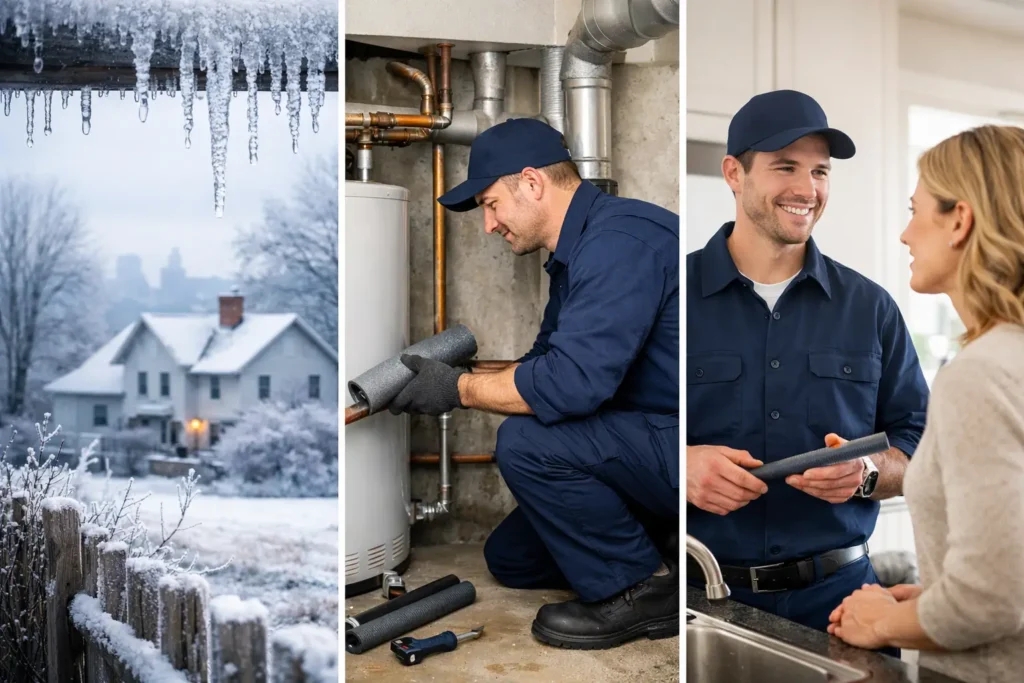
A frozen pipe can turn a normal winter morning into water damage, cleanup, and an urgent repair call. Knowing how to prevent frozen pipes before a Columbus cold snap arrives gives you time to protect the vulnerable areas of your home, instead of reacting after a pipe has already cracked.
Pipes do not freeze only during record-breaking cold. A few hours of below-freezing weather can be enough when a water line sits near an exterior wall, in an unheated crawl space, or inside a poorly insulated cabinet. The goal is straightforward: keep cold air away from pipes, maintain enough heat around them, and address small issues before temperatures drop.
How to Prevent Frozen Pipes in Your Home
Start by identifying the parts of your plumbing most exposed to cold. In Central Ohio homes, that often includes pipes in basements, crawl spaces, garages, utility rooms, attic areas, and cabinets along outside walls. Older homes may also have water lines running through wall cavities with less insulation than newer construction.
Walk through the home before winter and look for areas where cold outdoor air can enter. Gaps around pipe penetrations, foundation openings, dryer vents, windows, and exterior doors can make a nearby pipe much colder than the rest of the room. Sealing these openings helps protect plumbing while also improving comfort and energy efficiency.
Pipe insulation is another practical layer of protection. Foam pipe sleeves can help slow heat loss on accessible water lines, especially in unheated spaces. Insulation is helpful, but it does not replace indoor heat during a sustained freeze. If a pipe is exposed to freezing air, it may need both insulation and a warmer surrounding environment.
Keep the Heat Consistent
During freezing weather, keep your thermostat set to a steady temperature day and night. Turning the heat down dramatically overnight may save a small amount on energy use, but it can put pipes near exterior walls at risk. A consistent setting is particularly helpful when the forecast calls for several days below 32 degrees.
Open interior doors so warm air can circulate through the home. For kitchen or bathroom plumbing located in exterior-wall cabinets, open the cabinet doors during especially cold periods. This allows room air to reach the pipes behind the cabinet instead of trapping them in a cold, closed space.
Do not rely on a space heater as a primary solution for a cold plumbing area. They can create fire and electrical hazards when used improperly, and they may not provide reliable protection if they shut off or lose power. If a room is regularly too cold to protect its plumbing, it is worth having the heating and insulation conditions evaluated before winter.
Protect Outdoor Faucets and Supply Lines
Outdoor hose connections are a common starting point for winter pipe problems. Before the first hard freeze, disconnect garden hoses from exterior faucets. A hose left attached can hold water against the faucet and allow freezing to extend back into the plumbing line.
Drain and store hoses, then turn off the indoor shutoff valve for the outdoor faucet if your home has one. After shutting off that supply, open the exterior faucet to let remaining water drain out. If you are unsure which valve serves the outdoor line, do not force a valve that has not been used in years. A plumbing professional can inspect the setup and explain which valves should be operated.
Frost-free outdoor faucets provide more protection than standard hose bibs, but they still need attention. A frost-free faucet works correctly only when the hose is removed and the faucet can drain. Check for dripping faucets or signs of leaking at the exterior wall, since ongoing moisture can freeze and cause damage over time.
When Should You Let Faucets Drip?
Letting a faucet drip can help in certain situations, but it is not a whole-house winter plan. A small, steady trickle keeps water moving through a pipe that is known to be vulnerable, such as a kitchen sink line on an exterior wall. It can be useful during severe cold when that pipe has frozen before or when heat cannot reach the area well.
However, dripping every faucet wastes water and may not protect pipes located elsewhere. It also does not solve a problem caused by poor insulation, a cold crawl space, or a malfunctioning heating system. Use a drip as a temporary precaution for a known trouble spot while addressing the underlying cause.
If you choose to let a faucet run, use both the hot and cold sides when they are supplied by separate lines. Check the sink drain as well. A slow or clogged drain can create another problem if water is left running unattended.
Protect Pipes While You Are Away
Vacant homes and extended travel create added risk because no one is there to notice a furnace issue, a power outage, or an early leak. Never turn the heat off when leaving a home during winter. Keep the thermostat at a safe, consistent setting, typically no lower than 55 degrees, unless a plumbing professional recommends a different approach for your specific home.
Ask a trusted person to check the property after major cold weather or a power outage. They should look for indoor temperatures that feel unusually low, water stains, dripping sounds, or areas where water is pooling. Smart temperature sensors and leak alarms can provide extra notice, but they should support regular checks rather than replace them.
For a seasonal property or a home that will be vacant for a long period, winterizing the plumbing may be the better option. This process can involve shutting off the water supply and properly draining plumbing lines. The right approach depends on the home’s layout, heating plan, and how long it will be unoccupied. Improper draining can leave water behind in low points, so professional guidance is often the safer choice.
Do Not Ignore Early Warning Signs
Frozen pipes often give a warning before a rupture. Reduced water flow from one fixture, frost on an exposed pipe, unusual odors from a drain, or a room that stays much colder than the rest of the house should be addressed promptly. If only one faucet has little or no water while nearby fixtures work normally, the supply pipe to that fixture may be freezing.
Check the area for obvious cold air and safely warm the room by raising the thermostat and opening cabinet doors. Do not use an open flame, propane torch, or other direct high-heat source on plumbing. Rapid or uncontrolled heating can damage pipes and create a serious safety risk.
If a pipe has frozen and you cannot restore normal flow, arrange for service before the pipe thaws unpredictably. A frozen line may have already developed a crack that becomes visible only after the ice melts. A professional can assess the pipe, locate the cold exposure, and recommend a repair that addresses more than the immediate symptom.
Know What to Do if a Pipe Bursts
A burst pipe requires quick action. Shut off the main water supply if you can do so safely, then open a nearby faucet to relieve pressure. Move electronics, furniture, and valuables away from standing water, and avoid entering areas where water may be near electrical outlets or panels.
Call for emergency plumbing help as soon as possible. Take photos of visible damage for your records, but do not delay getting the water under control. For homeowners in Columbus and surrounding communities, Transit & Flow provides 24/7 emergency plumbing response, with clear communication and customer approval before work begins.
Make Winter Plumbing Checks Part of Home Maintenance
The best time to prevent a frozen pipe is before the forecast becomes urgent. Each fall, inspect outdoor faucets, disconnect hoses, confirm your heating system is operating reliably, and look over accessible plumbing in cold areas. If your home has a history of freezing pipes, recurring low water pressure, or an unheated space near plumbing lines, schedule an inspection before the next hard freeze.
A few focused checks can protect your home from one of winter’s most disruptive plumbing problems. When temperatures start falling, steady indoor heat and early attention to exposed pipes are far easier than dealing with the damage left behind by a burst line.
