
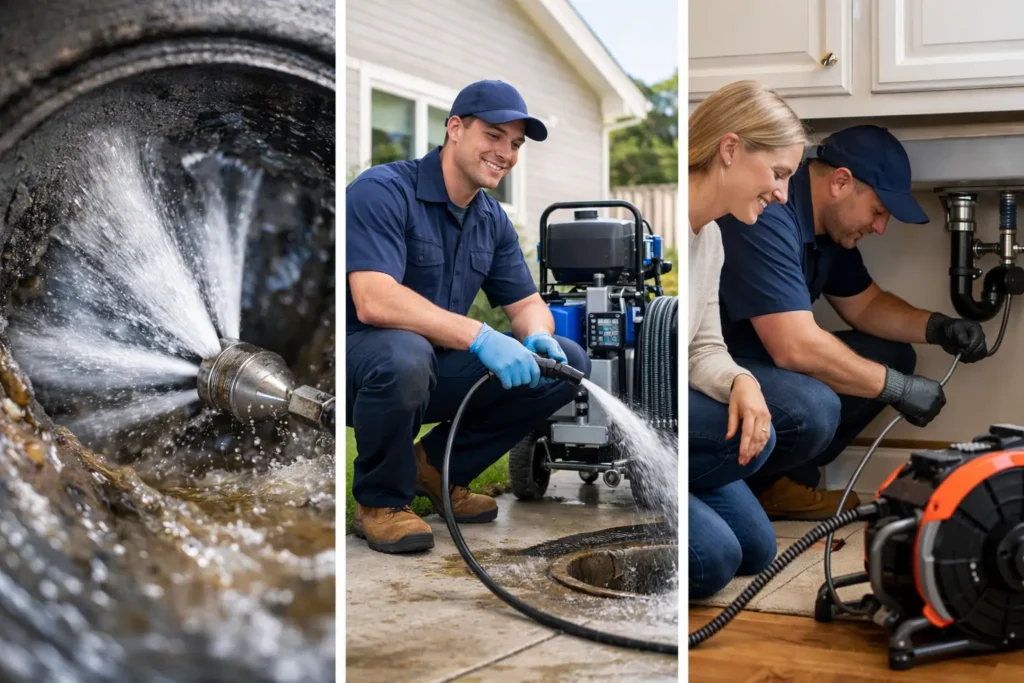
A drain can seem fine one day and turn into a messy problem the next. If you are comparing hydro jetting vs snaking, you are usually not looking for plumbing trivia – you want the clog cleared, the right method chosen, and no surprises once service begins.
The short answer is that both methods have a place. Snaking is often the right first step for a simple blockage. Hydro jetting is better when buildup is heavy, recurring, or spread along the pipe walls. The best choice depends on what is causing the backup, where it is located, and the condition of the pipe itself.
Hydro jetting vs snaking: the basic difference
Snaking uses a flexible cable fed through the drain to break through or pull apart a clog. It is designed to restore flow by creating a path through the blockage. If the problem is a localized obstruction like paper buildup, hair, or a small mass of grease, snaking can be fast and effective.
Hydro jetting uses highly pressurized water to scour the inside of the pipe. Instead of only punching a hole through the clog, it clears residue from the pipe walls and flushes debris out of the line. That makes it a stronger option when a drain keeps slowing down because the pipe is coated with grease, sludge, soap scum, or invasive roots.
This is where many homeowners get tripped up. They assume both services do the same job and one is just more expensive than the other. In reality, they solve different versions of the same problem.
When snaking is the better choice
Snaking is usually the practical choice when the clog is straightforward and the goal is to get water moving again quickly. A bathroom sink that is draining slowly because of hair near the trap is a good example. So is a toilet that has a blockage close to the fixture.
In many cases, snaking makes sense as an initial solution because it is targeted and less aggressive. If the issue appears isolated and there is no sign of long-term buildup throughout the line, a snake may clear the obstruction without needing anything more involved.
Snaking can also be the better option when the pipe condition is unknown. Older drain lines, especially in homes with aging plumbing, may need a camera inspection or a careful first step before using high-pressure water. Good service starts with matching the method to the pipe, not forcing one approach every time.
That said, snaking has limits. It often opens the line but does not fully clean it. If grease, scale, or sludge is lining the pipe, the drain may work better for now but clog again sooner than expected.
What snaking does well
Snaking is effective for isolated blockages, especially when the clog is close enough to access and remove or break apart. It is often a good fit for toilets, tubs, showers, and sink drains where the problem is not widespread.
It is also useful when the immediate priority is restoring function. If a drain has stopped working and the blockage is concentrated in one area, snaking may be the fastest path to relief.
Where snaking falls short
A snake typically clears a channel through the obstruction. It does not scrub the full inner surface of the pipe. That matters if the line has repeated backups caused by years of residue.
Think of it this way: if the clog is a ball in the pipe, snaking can break it up. If the pipe looks more like a straw coated from end to end, hydro jetting may be the better fix.
When hydro jetting is the better choice
Hydro jetting is usually the better option when clogs keep coming back, multiple drains are acting up, or there is evidence of heavy buildup deeper in the system. It is especially helpful in kitchen drain lines where grease has accumulated over time.
It can also be the right move when a sewer line has tree root intrusion. In some cases, a snake can punch through roots and restore flow temporarily. Hydro jetting can go further by washing out loosened material and clearing more of the line wall. That does not mean it permanently solves a damaged sewer pipe, but it can provide a more complete cleaning when the line is otherwise suitable for jetting.
The biggest advantage of hydro jetting is thoroughness. Instead of leaving residue behind, it cleans much more of the pipe interior. That often means better flow and fewer repeat service calls when buildup is the true cause of the problem.
Hydro jetting vs snaking for recurring clogs
If you have had the same drain cleared more than once, this is where hydro jetting vs snaking becomes a real decision instead of a simple service request. Repeated clogs usually point to one of two issues: the blockage was never fully removed, or there is an underlying pipe problem.
Hydro jetting often makes more sense when the repeat issue is buildup. Snaking may still be useful when the repeat issue is a specific item getting lodged in the line or a structural defect catching debris. A professional inspection helps separate those two scenarios.
This is why clear communication matters. A dependable plumber should explain whether the line needs a spot clearing, a full cleaning, or a camera inspection before any work is approved.
What about pipe safety?
This is one of the most common homeowner questions, and the honest answer is that it depends on the condition of the line. Hydro jetting is powerful, which is exactly why it works so well. But older, fragile, or already damaged pipes may need inspection before that method is used.
Snaking is not risk-free either. If a line is broken, offset, or badly deteriorated, any drain cleaning method should be approached carefully. The safest recommendation comes after evaluating the pipe material, age, symptoms, and access points.
For homeowners in older Columbus neighborhoods, that distinction matters. Some homes have drain or sewer lines that need a closer look before deciding on the right cleaning method. Choosing based only on speed can lead to a temporary fix or added repair costs later.
Which option costs more?
In general, hydro jetting is often the more involved service because it uses specialized equipment and usually addresses a bigger cleaning job. Snaking is often simpler and may be appropriate for smaller, isolated clogs.
But lower initial cost does not always mean better value. If a drain needs to be snaked every few months because the pipe walls are still coated with buildup, hydro jetting may save frustration over time. On the other hand, paying for jetting when a simple obstruction could have been handled with a snake is not the best use of your money either.
That is why flat-rate pricing and customer approval matter. Homeowners should understand what the technician found, what service is being recommended, and why that option fits the problem before work starts. Transit & Flow takes that practical approach because the goal is not just to clear a line today. It is to recommend the right next step for the home.
How a plumber decides between the two
A good recommendation usually comes down to four factors: the type of clog, how often it happens, where it is located, and the condition of the pipe. A single slow shower drain is different from a main line backup affecting multiple fixtures.
If the issue sounds isolated, snaking may be the first recommendation. If the line has recurring problems, widespread buildup, or root intrusion, hydro jetting may be the better long-term solution. If there are warning signs of damage, a camera inspection may come before either option.
That kind of step-by-step process gives homeowners something they actually need during a drain issue: clarity. You should know what the problem appears to be, what options make sense, and what the next move is before anyone starts the work.
The better choice depends on the problem
There is no universal winner in hydro jetting vs snaking. Snaking is often ideal for simple, localized clogs. Hydro jetting is often better for deeper cleaning, recurring backups, and pipe wall buildup. The right answer comes from matching the service to the condition of the drain, not from using the biggest tool available.
If your drains are slowing down, backing up, or clogging again after previous service, the most helpful next step is a professional assessment with a clear explanation of what is actually happening in the line. Once you know that, the right solution usually becomes much easier to choose.
