
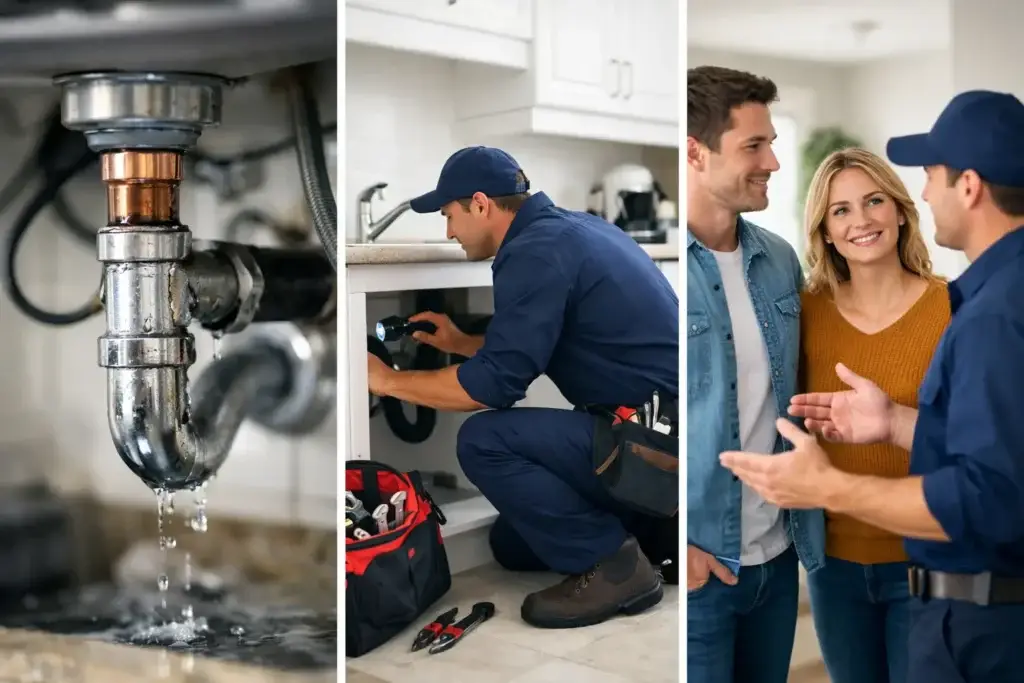
A small wet spot beneath a sink can turn into damaged flooring, swollen cabinets, or a much larger repair faster than most homeowners expect. When you need leak repair, the right first move is not guessing at the cause. It is limiting the water, protecting the area, and getting a clear diagnosis before the damage spreads.
Not every plumbing leak is an emergency, but every active leak deserves attention. Water can travel behind walls, beneath floors, and into ceilings long before it becomes obvious. For Columbus homeowners, prompt action is especially helpful when a leak appears during freezing weather, after heavy rain, or in an area that is difficult to access.
Start by Containing the Water
If water is actively flowing, turn off the nearest fixture shutoff valve if you can reach it safely. Sink and toilet shutoff valves are usually located below or behind the fixture. If the leak is coming from a pipe, water heater, ceiling, or an unknown location, the main water shutoff may be the better option.
Move rugs, boxes, electronics, and furniture away from the affected area. Place a bucket or towel under a controlled drip, but do not rely on that as a solution. Take a few photos of the visible water, staining, or damaged materials before cleanup if practical. They can help document what changed and give the technician useful context.
Avoid opening walls, cutting pipes, or using temporary sealants on pressurized plumbing. Those attempts can make a small problem harder to diagnose or create a larger leak when water pressure changes. If water is near electrical outlets, a breaker panel, or appliances, keep clear of the area and seek help promptly.
When Leak Repair Is an Emergency
A slow drip under a bathroom vanity may allow time for a scheduled visit. A burst pipe or water coming through a ceiling does not. The difference comes down to how quickly water is moving, where it is going, and whether it can be safely isolated.
Call for urgent help when you notice a sudden loss of water pressure, water pooling quickly, a pipe that has burst, a ceiling that is bulging or dripping, or water around a water heater. You should also act quickly if a leak begins after a freeze, if wastewater may be involved, or if you cannot identify a way to stop the flow.
If you can safely shut off the water, doing so can reduce damage while help is on the way. That does not mean the problem is resolved. The damaged section, failed connection, or underlying pressure issue still needs to be evaluated before water service is restored.
Common Signs You May Have a Hidden Leak
Not all leaks announce themselves with a puddle. Some develop slowly behind finished surfaces, under slab areas, or around appliances. The earlier these issues are found, the more options may be available for repair.
Watch for an unexplained increase in your water bill, the sound of water moving when fixtures are off, musty odors, peeling paint, warped trim, or a recurring damp spot on flooring or drywall. A water meter that continues to move after water use has stopped can also be a warning sign.
Warm spots on the floor, discoloration on a ceiling below a bathroom, or moisture around a water heater can point to different causes. The visible stain is not always directly below the source. Water follows framing, piping, and gravity, which is why a professional inspection matters before deciding what needs to be opened or replaced.
Leaks Often Start at Connections
Many household plumbing leaks occur where parts meet: supply lines under sinks, toilet connections, faucet components, shutoff valves, dishwasher lines, refrigerator water lines, and water heater fittings. These components experience normal wear, movement, and changes in water pressure over time.
A connection leak may look simple, but the best repair depends on the condition of the surrounding parts. Tightening a worn fitting may not solve a corroded valve or damaged supply line. A thorough diagnosis identifies the source and checks for related issues that could cause another leak soon after the first one is repaired.
What a Professional Leak Repair Visit Should Include
A dependable service visit begins with finding the source, not jumping straight to a repair. The technician should inspect the affected fixture or pipe, ask when the issue began, and look for signs of moisture damage beyond the immediate area. In some situations, access, materials, or the condition of older plumbing can affect the recommended approach.
After identifying the issue, you should receive a clear explanation of what was found, what repair options make sense, and what work is recommended now versus what can be monitored. Pricing should be reviewed before work begins, with your approval. This gives you room to make a decision without surprises.
At Transit & Flow, homeowners can expect straightforward communication, flat-rate pricing after the problem is assessed, and practical recommendations based on the condition of the plumbing. Same-day availability may be possible for many leak concerns, depending on scheduling, access, and the work required.
Repair or Replacement: It Depends on the Cause
A single failed gasket, loose fitting, or damaged supply line may only require a focused repair. If a pipe is corroded, repeatedly leaking, or part of an aging section with multiple weak points, replacement can be the more sensible long-term choice.
The location matters too. A visible leak beneath a sink is generally more straightforward to access than one inside a wall, ceiling, or foundation area. Older homes can also have materials or previous repairs that affect how the work is approached. The goal is not to replace more than necessary. It is to make a repair that addresses the actual problem and helps prevent repeated water damage.
How to Reduce the Risk of Future Leaks
Most leaks cannot be predicted perfectly, but regular attention can catch developing issues before they become urgent. Check beneath sinks and around toilets periodically, especially after plumbing work or when moving stored items. Look at water heater connections and the surrounding floor for moisture, rust, or staining.
Know where your main water shutoff is located and make sure responsible household members can identify it. If a shutoff valve is hard to turn, visibly corroded, or inaccessible, mention it during a plumbing visit. A working shutoff can make a major difference during an unexpected leak.
Be cautious with cabinets under sinks. Household cleaners, bins, and stored items can hide slow drips for months. Leave enough open space to spot moisture, and address condensation or dampness rather than assuming it is harmless. A simple inspection is far easier than replacing damaged cabinet materials later.
A Clear Next Step for a Plumbing Leak
If you have stopped the water and the area is stable, schedule an inspection before using the affected fixture again. If water is spreading, coming from a ceiling, or cannot be shut off, treat the situation as urgent and request emergency plumbing service.
The right leak repair starts with a clear diagnosis and an approved plan, not a rushed guess. Acting early can protect your home, reduce disruption, and give you a better chance of resolving the issue before a small leak becomes a major restoration project.
