
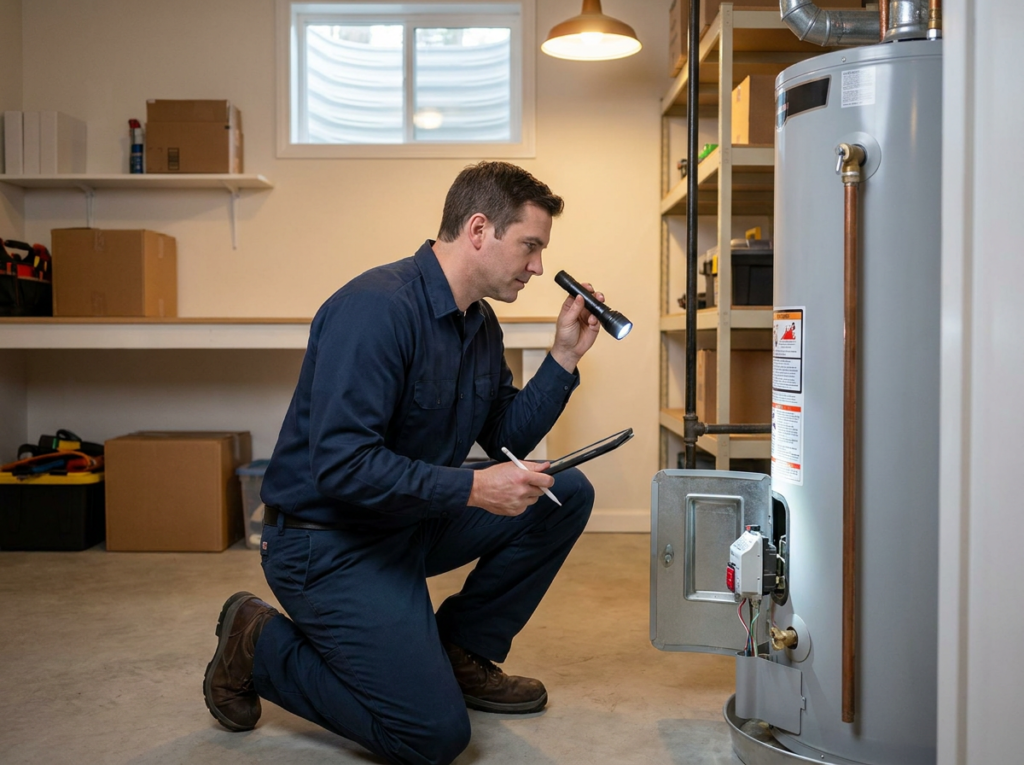
Water Heater Repair Columbus: Diagnosis & Cost Guide
Nothing starts your morning off worse than stepping into a cold shower. When your water heater stops working, every faucet in your Columbus home becomes a reminder that something’s wrong. Most water heater problems announce themselves clearly—lukewarm showers, puddles near the tank, or strange noises from the basement. The good news? Many issues have straightforward fixes once you understand what’s happening.
Quick Takeaways
- Most water heater repairs in Columbus cost between $150 and $600, depending on the problem and parts needed
- Sediment buildup is the most common issue in central Ohio due to our hard water, and it’s preventable with annual flushing
- Cold showers usually mean a failed heating element (electric) or pilot light issue (gas), both fixable in under two hours
- Leaks near the bottom of the tank often signal the end of the unit’s life, while valve leaks are simple repairs
- Strange popping or rumbling sounds mean sediment is trapped at the bottom, reducing efficiency and lifespan
Common Water Heater Problems and Their Causes
Water heaters fail for predictable reasons. The heating elements wear out from constant use. Sediment settles at the bottom of the tank and hardens. Valves corrode. Thermostats drift out of calibration. Columbus water is moderately hard, which accelerates mineral buildup inside tanks. Our cold winters mean your water heater works harder from December through February, heating incoming water from 40°F instead of 60°F. That extra strain shows up as early failure in units that haven’t been maintained.
Gas water heaters add another layer of complexity. The pilot light can blow out. The thermocouple that senses the flame can fail. The gas valve itself might stick. Electric models are simpler but still have two heating elements that burn out independently. When the upper element fails, you get barely warm water. When the lower element goes, you get hot water that runs out fast.
The anode rod inside your tank is designed to corrode so the tank doesn’t. Once it’s gone, rust starts. Most homeowners never think about this sacrificial rod until they see rust-colored water. By then, interior tank damage has begun. In older Columbus homes built before 1960, we often find original water heaters still running—but at risk of catastrophic failure.
Warning Signs Your Water Heater Needs Attention
Your water heater talks to you through symptoms. Water temperature that drops during a shower means your tank can’t keep up with demand or a heating element has failed. If you’re the third person showering and suddenly hit cold water, that’s normal capacity limits. If you’re the first person and get lukewarm water after five minutes, that’s a problem.
Discolored water, especially rusty brown or orange tints, signals corrosion somewhere in the system. Sometimes it’s the tank itself. Sometimes it’s old galvanized pipes in the home. Test by running hot water only—if it clears after a few minutes, the issue is likely in the heater. If it stays discolored, you might have pipe problems too.
Puddles around the base shouldn’t be ignored. Small amounts of condensation are normal when the basement temperature drops. Actual water pooling on the floor means a leak. Check the temperature and pressure relief valve first—it might be weeping because the pressure inside is too high. Check the drain valve at the bottom. If water is seeping from the tank body itself, replacement is usually the only option.
Noise is your early warning system. Popping, banging, or rumbling sounds come from sediment at the tank bottom. As water heats, it forces bubbles through the hardened mineral layer, creating those noises. A high-pitched whine or screech means water is being forced through a partially closed valve or mineral-restricted pipe. Our plumbing services in Columbus include sediment flushing that eliminates these sounds and extends tank life.
DIY Troubleshooting Steps You Can Try First
Before calling for water heater repair in Columbus, check a few simple things. For no hot water at all, verify the power supply. Electric water heaters connect to a dedicated circuit breaker—check if it tripped. Gas units need the pilot light burning. Most modern gas heaters have viewing windows. If the pilot is out, follow the relight instructions on the tank label. If it won’t stay lit after several attempts, the thermocouple likely needs replacement.
Check your thermostat setting. Someone might have accidentally turned it down. The standard safe setting is 120°F. Higher temperatures increase energy costs and scalding risk. Lower settings promote bacteria growth. If adjusting the thermostat and waiting two hours doesn’t fix lukewarm water, the problem is mechanical.
Test the pressure relief valve by lifting the lever. Water should discharge through the overflow pipe. If nothing happens, the valve is stuck and should be replaced. If water continues flowing after you release the lever, the valve isn’t seating properly. Either situation needs professional attention, but the test itself is safe.
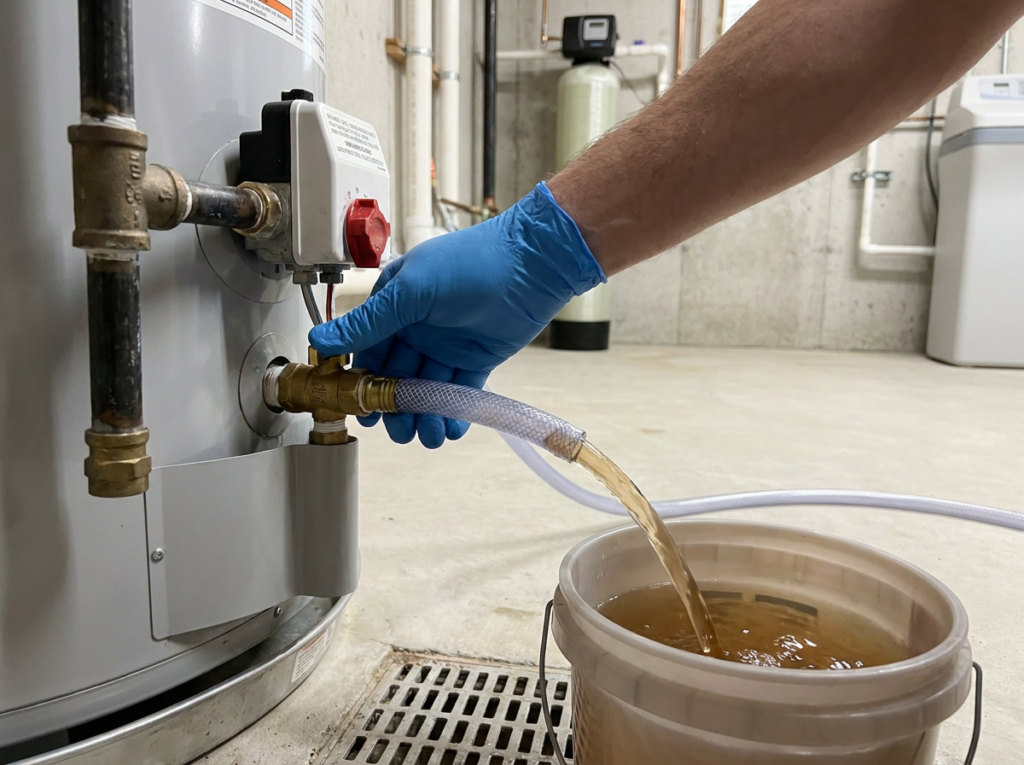
Drain a few gallons from the tank bottom using the drain valve. This clears some sediment and lets you see if the water runs rusty. If you haven’t drained your tank in years, expect the first gallon to look cloudy or brown. If it doesn’t clear after several gallons, sediment buildup is severe. For homeowners dealing with other plumbing issues, our guide on tree roots in sewer lines covers similar DIY investigation steps.
When to Call a Professional for Water Heater Repair
Some water heater issues require professional tools and knowledge. If you’ve checked the breaker and thermostat but still have no hot water, an electrician or plumber needs to test the heating elements and thermostats with a multimeter. These components fail closed or open, and there’s no visual way to tell.
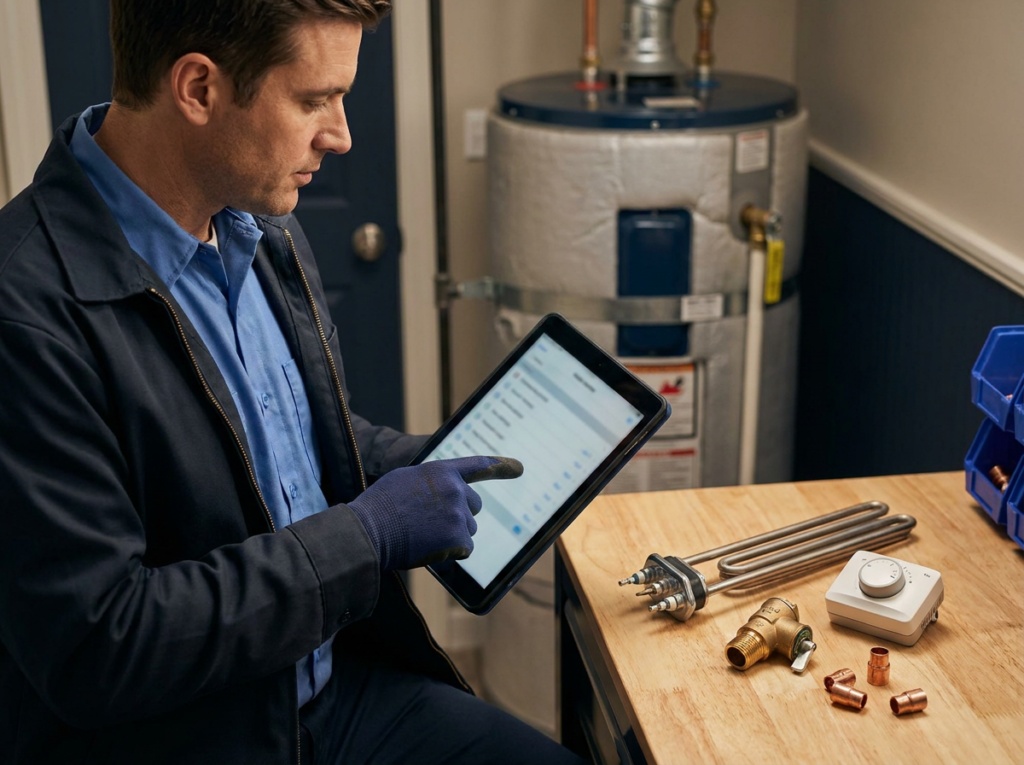
Gas water heater repairs always warrant professional help. Working with gas lines, pilot assemblies, and burners involves both safety protocols and specialized knowledge. A gas leak can fill your basement with explosive vapor. A malfunctioning gas valve can cause carbon monoxide problems. Don’t attempt gas repairs yourself.
Leaks from anywhere except the drain valve or pressure relief valve mean it’s time to call. Tank body leaks signal failure of the tank lining. There’s no patch or seal that fixes this. The tank must be replaced. Valve replacements are straightforward but require cutting water supply, draining the tank partially, and having the right parts on hand.
Water heaters in Columbus homes face hard water that shortens lifespans. If your unit is over twelve years old and showing multiple symptoms, repair might not make economic sense. A new energy-efficient model could pay for itself in lower utility bills within a few years. A plumber can assess remaining life and help you decide whether to repair or replace.
Water Heater Repair Costs in Columbus
Columbus water heater repair costs depend on what failed and when you need service. Simple fixes like thermostat replacement or flushing sediment typically run $150 to $250 including labor and parts. Heating element replacement on electric units costs $200 to $350 for one element, slightly more if both need changing. Thermocouple replacement on gas heaters runs $150 to $250.
Pressure relief valve replacement costs $150 to $300 depending on valve type and access. Drain valve replacement is similar. If the plumber needs to drain and partially disassemble the unit to reach a component, expect labor charges to increase. After-hours emergency service adds $100 to $200 to any job.
Standard tank water heater installation in Columbus runs $1,749.99 to $2,499.99 for a 40 or 50-gallon unit, installed. That includes hauling away the old unit, basic code updates, and warranty. Tankless installation runs $4,299.99 to $6,999.99 installed, and those systems last longer and save energy. Check with AEP Ohio and Columbia Gas for rebates on high-efficiency models. Many Columbus homeowners see $200 to $400 yearly savings switching from standard to tankless.
Get written estimates before authorizing work. Reputable plumbers diagnose first, quote second. If someone quotes over the phone without seeing the unit, that’s a red flag. Most Columbus plumbing companies charge a service call fee that applies to the repair if you proceed, typically $75 to $125. Transit & Flow does not. Plumbing diagnosis is free on every service call.
Insurance and Warranty Coverage
Check your home warranty if you have one. Many cover water heater repairs with a service call copay. Manufacturer warranties typically cover parts for six to twelve years but not labor. If your water heater is less than ten years old, find the paperwork before calling. The warranty might reduce your cost significantly.
Homeowners insurance rarely covers mechanical breakdown from normal wear. It does cover sudden damage from water heater leaks if you catch it fast. Document any water damage from a failed unit with photos. File claims within your policy timeframe. central Ohio homes have seen increased basement flooding from water heater failures during polar vortex cold snaps when units run nonstop.
Preventing Water Heater Problems
Most water heater failures are preventable. Annual maintenance catches small issues before they become expensive emergencies. Flush your tank once a year to remove sediment. This takes thirty minutes and requires only a garden hose. Drain several gallons from the bottom, let the tank refill, then drain again. Repeat until the water runs clear.
Test the pressure relief valve annually by lifting the lever and letting water discharge briefly. This prevents the valve from seizing in the closed position. If it doesn’t release water or if it leaks afterward, replace it immediately. A stuck relief valve turns your water heater into a potential bomb if pressure builds unchecked.
Frequently Asked Questions
How long do water heaters typically last in Columbus?
Traditional tank water heaters last eight to twelve years in Columbus. Hard water and heavy winter use can shorten that span to seven or eight years without annual maintenance. Tankless models last fifteen to twenty years. Gas water heaters typically last slightly shorter than electric because combustion byproducts corrode components. Regular flushing, anode rod replacement, and proper thermostat settings help any water heater reach the upper end of its expected lifespan.
Why does my water heater make popping or banging noises?
Popping and banging come from sediment buildup at the tank bottom. Columbus water deposits calcium and magnesium minerals that settle and harden over time. When water heats, it creates steam bubbles that break through the sediment layer violently. The noise doesn’t mean the tank is about to explode, but it does signal reduced efficiency and accelerated wear. Flushing the tank removes loose sediment. Hardened deposits may require a professional cleaning or indicate it’s time to replace the unit.
Can I repair my own water heater or do I need a plumber?
Simple maintenance like flushing sediment, testing the relief valve, and adjusting the thermostat are safe DIY tasks. Replacing a heating element on an electric water heater is manageable if you’re comfortable working with electricity and can shut off power at the breaker. Gas water heater repairs should always be left to professionals due to fire, explosion, and carbon monoxide risks. Any repair involving soldering, gas lines, or diagnosing complex electrical issues requires professional help.
What does water heater repair cost in Columbus?
Columbus water heater repairs typically cost $150 to $600 depending on the problem. Thermostat replacement runs $150 to $250. Heating element replacement costs $200 to $350. Gas valve or thermocouple work ranges from $200 to $400. Pressure relief valve replacement costs $150 to $300. Standard tank installation starts at $1,749.99 for a standard unit installed. Emergency after-hours service adds $100 to $200. Get written estimates from at least two companies before authorizing work over $300.
How often should I flush my water heater?
Flush your water heater annually at minimum. Columbus water contains enough minerals that many plumbers recommend flushing twice yearly if you notice sediment quickly reaccumulating. The process takes thirty minutes. Attach a garden hose to the drain valve, run it to a floor drain or outside, open the valve, and drain several gallons. Let the tank refill and drain again until water runs clear. This simple maintenance extends tank life by years and improves efficiency. Schedule flushing in spring and fall for best results.
If you’re dealing with lukewarm showers, strange tank noises, or that suspicious puddle in the basement, you don’t have to figure it out alone. Water heater problems rarely fix themselves, and small issues become expensive emergencies when ignored. Transit & Flow provides honest assessments and transparent pricing for water heater repair in Columbus—we’ll tell you whether your unit needs a simple fix or if replacement makes better economic sense. Call Transit & Flow or contact our team for a no-pressure evaluation. We’ll diagnose the problem, explain your options clearly, and get your hot water flowing again.
