
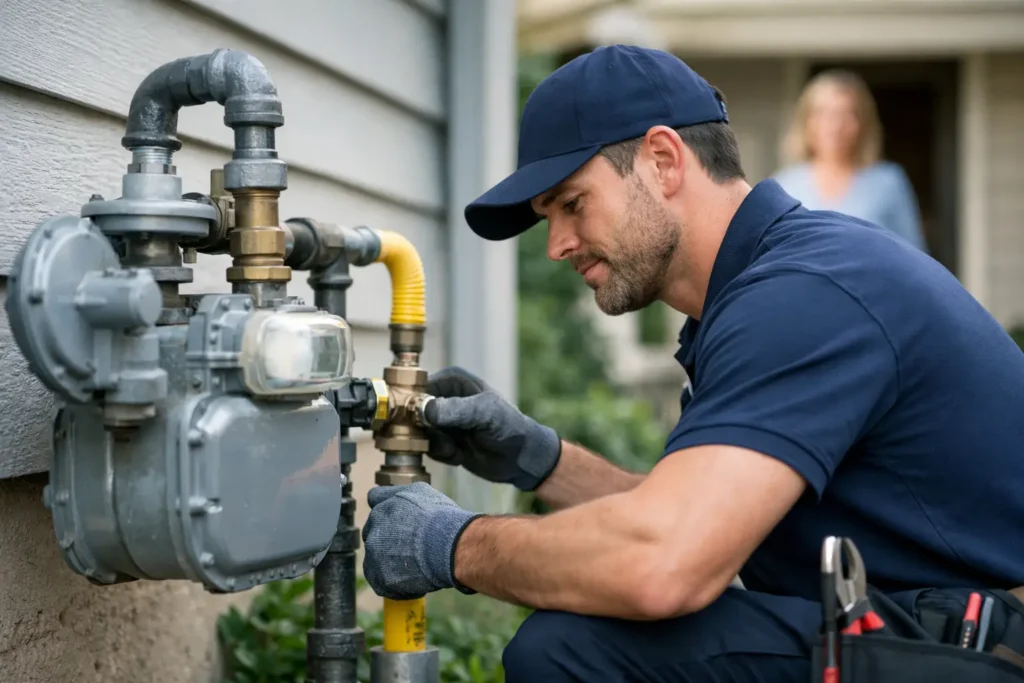
That faint gas smell near a stove, furnace, or utility room is not a problem to put off until next week. When you need a gas line repair service, speed matters, but so does getting a clear diagnosis, straightforward communication, and repairs approved before work begins.
For homeowners and property managers in Columbus, gas line issues usually show up at the worst time – during a furnace problem, while replacing an appliance, or when a tenant reports an odor you cannot ignore. In those moments, the right next step is not guessing. It is calling for professional service that can inspect the line, identify the source of the problem, and explain what needs to happen before anyone moves forward.
What a gas line repair service actually handles
A gas line repair service is not just for major emergencies. It also covers smaller but serious issues that can affect safety, appliance performance, and property operations. That can include a damaged gas pipe, a leaking fitting, an aging connector, a shutoff valve issue, or a line that needs modification for a replacement appliance.
In residential settings, the problem may involve a range, water heater, fireplace, dryer, or furnace connection. In commercial or multi-unit properties, the situation can be more complex because several appliances or occupied spaces may be affected by one line issue. That is why a clear inspection process matters. You want to know where the problem starts, what it impacts, and whether repair or replacement makes more sense.
Some calls turn out to be localized repairs. Others reveal a larger issue such as corrosion, improper past work, or a line that no longer fits the demands of the equipment being used. The right recommendation depends on the age of the system, the accessibility of the piping, and the condition of nearby components.
Signs you should not ignore
The most obvious warning sign is the smell of gas. If you notice that sulfur-like odor, leave the area, avoid using switches or open flames, and follow emergency safety guidance before arranging service. After immediate safety steps are handled, a professional inspection is the next move.
Not every gas line problem starts with a strong odor, though. Sometimes the signs are easier to dismiss. You may hear a hissing sound near a connection, notice an appliance that is not operating correctly, or see that pilot lights will not stay lit. Property managers may hear from tenants about recurring appliance issues in one unit, only to find the root cause is not the appliance itself.
There are also situations where no active leak is obvious, but service is still necessary. If you are installing a new gas appliance, converting equipment, or updating older utility connections, the gas line should be evaluated to confirm it is in suitable condition and properly matched to the job. That is especially important in older Columbus-area properties where past repairs or additions may have been done over many years.
Why fast response matters, but so does process
Gas line issues create urgency, but urgency should not lead to confusion. A dependable service call should move quickly while still staying organized. That means showing up ready to inspect, communicating what was found in plain language, and explaining the next steps before any repair begins.
For many customers, the biggest frustration is not just the repair itself. It is not knowing what the technician is seeing, how serious the issue is, or what the cost process looks like. That is why flat-rate pricing and customer approval matter. You need a defined scope, a clear explanation, and the chance to approve work before repairs move forward.
There is also a practical side to timing. A gas issue may affect heat, hot water, cooking equipment, or tenant occupancy. The longer the problem sits, the more disruptive it becomes. Same-day availability can make a major difference, especially when a property cannot function normally until the line is evaluated.
What to expect during a gas line repair service visit
A professional visit usually starts with questions about what you noticed, when the issue began, and which equipment is affected. From there, the technician inspects the relevant gas line sections, fittings, shutoff points, and connected appliances to narrow down the source of the problem.
If the issue is confirmed, the next step should be a practical explanation. In most cases, customers do not need a technical lecture. They need to know whether the problem is isolated or broader, whether repair is possible, and what conditions could affect scheduling or completion. If materials, access, or code-related updates affect the scope, that should be explained clearly.
Some repairs are straightforward. Others depend on line location, wall or ceiling access, appliance compatibility, or the overall condition of the system. That is where honest recommendations matter. A quick patch is not always the right long-term answer, especially in commercial buildings or multi-unit properties where reliability matters just as much as speed.
Gas line repair service for homes and managed properties
Single-family homeowners usually want two things: a fast response and confidence that the repair is being handled correctly. They are often dealing with one affected appliance and trying to restore normal use without added stress. Clear communication goes a long way here, especially when the issue sounds alarming from the start.
Property managers, HOAs, and apartment operators often face a different challenge. They may need to coordinate access, manage tenant communication, and make decisions that balance urgency with budget and long-term maintenance planning. In those cases, a gas line repair service should not just fix the immediate problem. It should also help clarify whether similar issues may exist elsewhere on the property.
Commercial property owners and small businesses have their own pressure points. Downtime affects operations, and even a localized gas issue can interrupt equipment use or create occupancy concerns. A structured service process helps reduce disruption. It also helps decision-makers document what was found and what was approved.
Repair or replacement depends on the situation
Not every gas line problem should be repaired in the same way. A newer line with one damaged fitting may be a good repair candidate. An older section with corrosion, repeated issues, or questionable past modifications may justify replacement instead.
Accessibility also matters. If the damaged area is easy to reach, repair may be relatively direct. If the line runs behind finished walls, above ceilings, or through areas with limited access, the scope may change. That does not automatically mean the job becomes extensive, but it does mean the recommendation should be based on actual site conditions, not assumptions made over the phone.
The best service experience is one where the customer understands the trade-off. Repair may cost less upfront, while replacement may provide better long-term reliability. In some cases, a phased approach makes sense, especially for larger properties trying to address urgent needs first while planning broader updates later.
Why local service matters in Columbus
In Central Ohio, property types vary widely. A gas line issue in a newer suburban home is different from one in an older Columbus property or a multi-unit building with years of additions and repairs behind the walls. Local experience matters because service decisions often depend on the age of the structure, access conditions, and the practical realities of occupied properties.
Transit & Flow serves Columbus-area customers who need a clear path from problem to solution. That means responsive scheduling, visible starting prices, clear approval before work begins, and recommendations based on what the technician actually finds on site.
When a gas line concern comes up, customers do not want vague answers or drawn-out communication. They want to know who is coming, what the inspection will cover, and what happens next if a repair is needed.
Choosing a gas line repair service with confidence
If you are comparing service providers, look for communication as much as capability. A good gas line repair service should be able to explain the issue plainly, outline the process, and set realistic expectations around timing and cost. If additional work may be needed based on access, materials, or system condition, that should be part of the conversation from the beginning.
It also helps to choose a company built for urgent and planned service alike. Some customers are calling with an immediate concern. Others are coordinating appliance changes, property improvements, or tenant turnover. In both cases, organized service makes the experience easier.
The right repair call should leave you with fewer unknowns, not more. When gas line issues affect your home or property, a calm, professional response can make a stressful situation feel manageable again.
