
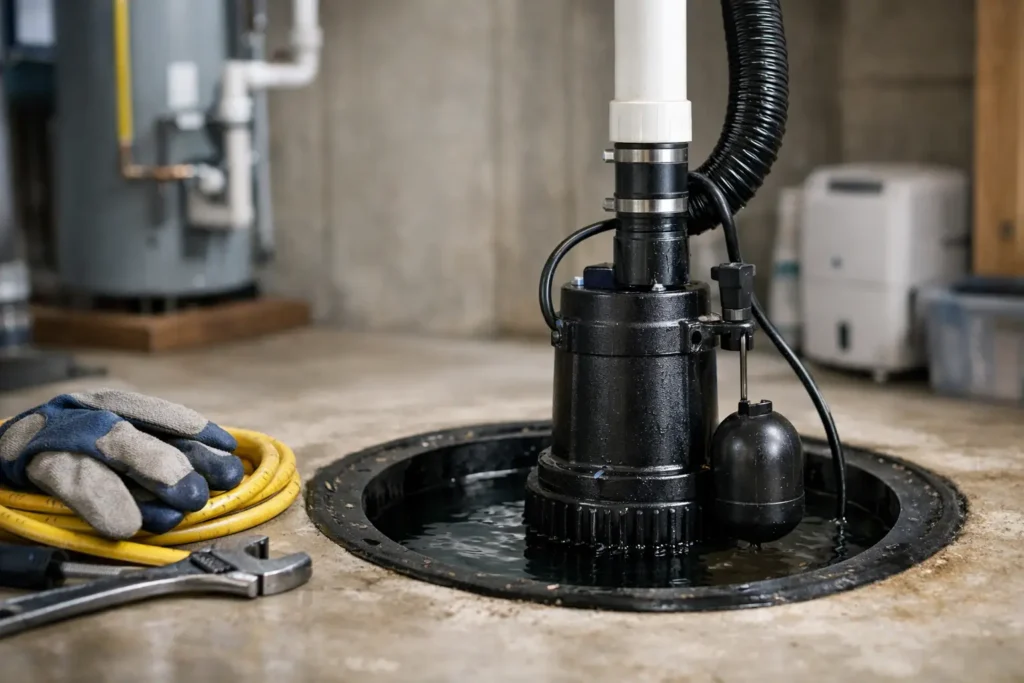
A sump pump usually gets ignored until the basement takes on water at the worst possible time – during a storm, overnight, or right before tenants arrive. In Columbus and surrounding areas, that kind of failure can turn a manageable plumbing issue into damaged flooring, ruined storage, and a stressful cleanup fast. If your property has a basement, crawl space, or any history of water intrusion, understanding how this system works is not optional.
What a sump pump actually does
A sump pump is designed to move water away from your property before it can collect and cause damage. Water gathers in a sump pit, typically located in the lowest part of a basement or crawl space. When the water reaches a certain level, the pump activates and discharges it outside through a drain line.
That sounds simple, and in many ways it is. The challenge is that the pump only matters when conditions are already working against you. Heavy rain, high groundwater, poor exterior drainage, or a sudden storm can all put extra demand on the system. When the pump is undersized, aging, clogged, or not cycling correctly, the problem often shows up all at once.
For homeowners, that usually means water where it should not be. For property managers and commercial owners, it can also mean tenant complaints, damaged materials, and interruption to normal operations.
Why sump pump problems are common in Central Ohio
In the Columbus area, sump pump issues are not rare. Basements are common, weather patterns can shift quickly, and spring rain can expose drainage weaknesses that stayed hidden through drier months. A system that seemed fine in January may struggle in April if the float switch sticks, the check valve fails, or the pump motor is nearing the end of its service life.
Age matters too. Many property owners inherit an existing pump and have no clear record of when it was installed, how often it has been tested, or whether it was sized properly for the building. That uncertainty becomes a problem when the system is expected to perform under pressure.
There is also a planning issue. Sump pumps are often out of sight, which means maintenance gets postponed. By the time someone notices unusual sounds, standing water in the pit, or dampness near the foundation, the system may already be unreliable.
Signs your sump pump needs attention
Some failures are sudden, but many give warning signs first. If the pump runs constantly, short cycles, hums without moving water, or fails to turn on when the pit fills, it needs inspection. The same is true if you notice rust, vibration, foul odors from the pit, or visible water around the pump area.
A pump that seems to work can still be at risk. Older units may activate too slowly or struggle to keep up during heavy rainfall. Discharge lines can clog or freeze. A failing check valve can let water flow back into the pit, forcing the pump to work harder than it should.
For multi-unit properties and commercial spaces, subtle warning signs matter even more. One weak sump pump can affect lower-level storage rooms, utility areas, finished spaces, and tenant-use areas before staff has time to respond.
Repair or replacement depends on the condition
Not every sump pump problem means full replacement. In some cases, the issue is isolated to the float switch, discharge piping, power supply, or a blocked line. A focused repair may restore reliable operation if the rest of the system is still in good condition.
Replacement starts to make more sense when the pump is older, repeatedly failing, showing motor wear, or no longer matches the needs of the property. If water volume has increased over time or the building has been remodeled with more finished lower-level space, a basic older unit may no longer provide enough protection.
This is where honest recommendations matter. The right answer depends on the age of the equipment, the cause of the issue, access to the system, and how much risk the property can tolerate. A homeowner with an unfinished utility basement may make a different decision than an apartment operator protecting occupied lower-level units.
Backup protection matters more than most people think
A sump pump is only useful when it has power and can keep up with water conditions. That creates an obvious vulnerability during severe weather. Storms that bring in groundwater can also knock out electricity, which is one reason backup systems are worth discussing.
A battery backup can help maintain protection during an outage or when the primary pump fails. It is not the right fit for every property, but for homes with repeated water issues or buildings where basement flooding creates major disruption, the added layer of protection can be worthwhile.
The key is evaluating the actual risk. If the basement only holds mechanical equipment and occasional storage, the urgency may be different. If the lower level is finished, occupied, or used for critical equipment, backup planning becomes much more practical.
Sump pump service is not just for emergencies
Most people call for sump pump service after they see water. That is understandable, but it is not ideal. Inspection and maintenance before storm season often gives property owners more options, less stress, and a better chance of avoiding water damage altogether.
A proper service visit typically looks at how the pump cycles, whether the float responds correctly, the condition of the pit, discharge line performance, and signs of wear that could lead to failure. If a replacement is needed, it is usually easier to schedule and plan before the system quits during heavy rain.
This is especially useful for property managers, HOAs, and commercial owners with multiple units or buildings to oversee. Preventive attention is not just about equipment life. It helps reduce surprise calls, cleanup costs, and tenant disruption.
What to expect when you have a sump pump checked
Most customers do not need an engineering lesson. They need a clear explanation of what is wrong, what can be done, and what the next step will cost before work begins. That is the standard a good service visit should meet.
A technician should inspect the visible condition of the system, test its operation when appropriate, and explain whether the issue points to repair, replacement, or further diagnostics. If replacement is recommended, the reasoning should be practical and easy to understand. If repair is possible, that option should be explained clearly too.
For customers in Columbus, speed and communication matter just as much as the technical fix. Water issues rarely happen on a convenient schedule. That is why many property owners look for same-day availability when possible, flat-rate pricing, and customer approval before any work moves forward. Transit & Flow approaches sump pump service with that same focus on clear communication and dependable next steps.
Choosing the right sump pump for the property
There is no one-size-fits-all answer. The right sump pump depends on the size of the space, the amount of groundwater pressure, the layout of the discharge path, and how much risk is tied to a failure. A single-family home with occasional water concerns may need something very different from a multi-unit building with a history of storm-related seepage.
Capacity matters, but bigger is not automatically better. An oversized pump can cycle too aggressively in some conditions, while an undersized one may not keep up. Build quality, switch reliability, and whether a backup is needed all matter too.
This is where a practical recommendation helps more than a sales pitch. Property owners usually want the same thing – a system that fits the building, solves the problem, and does not create new issues later.
When to call for service
If your sump pump is making unusual noise, running non-stop, failing to activate, or if you have seen any water near the pit or foundation, it is time to have it checked. If you recently bought a property and do not know the age or condition of the system, that is also a good reason to schedule an inspection.
Waiting may seem reasonable if the pump is still working some of the time, but partial function is not the same as dependable protection. Sump pump problems tend to become urgent when weather conditions are already bad, and that is the hardest time to discover the system was not ready.
A reliable sump pump is not flashy, and it does not need to be. It just needs to work when your property depends on it most.
