
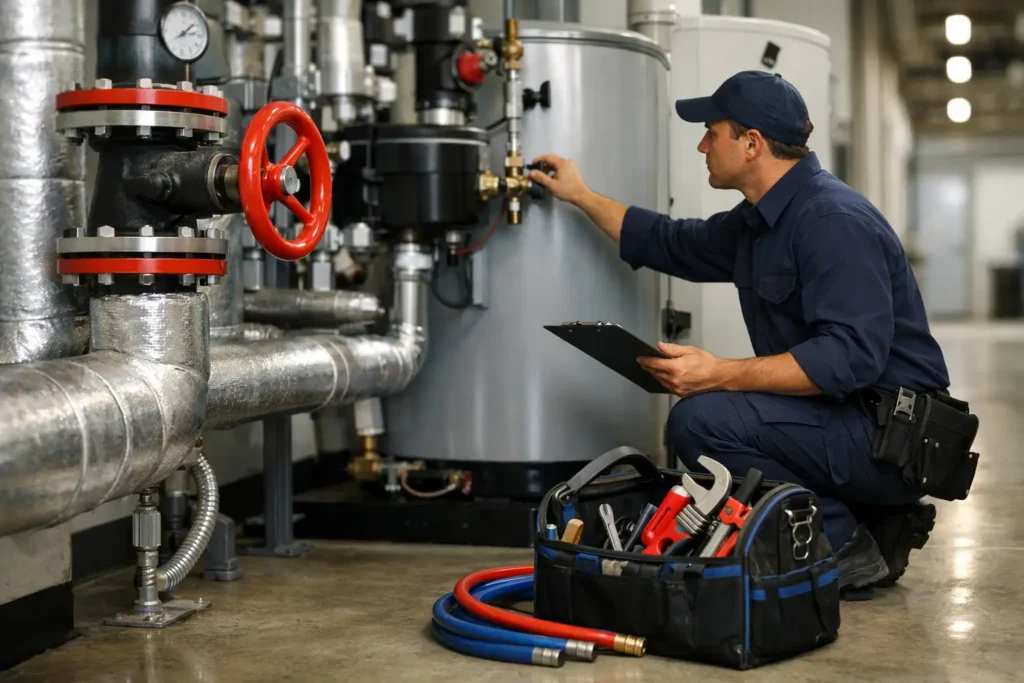
For multi-unit and managed properties, Transit & Flow coordinates service requests through properly licensed contractors where required by Ohio law.
A backed-up restroom before opening, a leaking water line behind a wall, or a water heater that fails during peak hours can throw off an entire day of business. That is why a property plumbing maintenance plan is less about checking a box and more about protecting operations, tenants, staff, and budgets.
For many Columbus-area property owners and managers, plumbing problems are not just repair issues. They are tenant complaints, lost time, cleanup costs, and questions about what could have been caught earlier. A good plan brings structure to all of that. It gives you a clear schedule, a practical inspection process, and a better way to make repair decisions before a small issue turns into an expensive one.
What a property plumbing maintenance plan should actually do
A maintenance plan should help you stay ahead of preventable problems. That sounds simple, but not every property needs the same level of service. A small office with one breakroom and two restrooms has very different needs than a mixed-use building, restaurant space, apartment complex, or multi-tenant property.
At a minimum, a property plumbing maintenance plan should create visibility. You should know which systems are aging, which fixtures are seeing heavy use, and where recurring trouble spots are showing up. If the same drain is clogging every few months or a utility sink keeps backing up, that is not just bad luck. It usually points to a bigger maintenance need.
It should also support better budgeting. Planned maintenance does not eliminate repair costs, but it often reduces the surprise factor. When inspections are consistent, property owners have more time to approve repairs, compare options, and schedule work around occupancy or business hours.
Why reactive plumbing costs more over time
A lot of managed properties operate in repair mode. If a toilet is running, someone calls. If a drain is blocked, someone calls. If there is a ceiling stain, someone calls. That approach feels efficient in the moment because you only pay attention when something breaks.
The problem is that reactive service usually shows up at the worst time. It often involves water damage, business disruption, emergency scheduling, tenant frustration, or repeat visits because the root issue was never addressed. A line that could have been cleaned proactively may end up backing up during a busy shift. A small leak that looked manageable can damage flooring, drywall, or equipment.
That does not mean every building needs constant service. It means the cost of doing nothing is often higher than it appears on paper. A maintenance plan gives you a more controlled way to deal with wear and tear.
The systems that deserve the closest attention
Property plumbing systems are broader than most people think. It is not just pipes and toilets. Depending on the property, your plan may need to account for water heaters, drain lines, sewer lines, sump systems, utility sinks, shutoff valves, hose bibbs, restroom fixtures, and tenant-specific plumbing equipment.
Restrooms usually get the most attention because that is where usage is visible and complaints arrive quickly. But some of the most expensive issues start out of sight. Hidden supply leaks, aging shutoffs, slow drains in lower-use areas, or early signs of sewer trouble can go unnoticed until the problem spreads.
Water heaters are another common blind spot. In a managed property setting, performance issues can affect staff areas, kitchens, tenant comfort, cleaning routines, and daily operations. Maintenance should include checking for signs of wear, corrosion, or inconsistent operation before you are dealing with no hot water at all.
Drain and sewer health also matter more than many owners realize. If a property has older piping, mature trees nearby, grease-producing tenants, or a history of backups, those lines should not be ignored until an emergency forces the issue.
How often should service happen?
This is where a lot of plans either help or miss the mark. The right schedule depends on the building, not a generic calendar.
Higher-traffic properties usually need more frequent attention. Restaurants, apartment buildings, medical offices, schools, retail spaces, and facilities with public restrooms tend to put more strain on plumbing systems. A quieter office building may need a simpler maintenance cadence.
Property age matters too. Older buildings often benefit from more frequent inspections because shutoffs, connections, and drain lines are more likely to show wear. If a property has a history of leaks, backups, or fixture failures, that should also push the schedule toward more proactive service.
In practice, many managed properties do well with recurring visits built around usage patterns and past issues. The right provider should be able to recommend a schedule based on actual site conditions instead of forcing every property into the same template.
What to expect during a maintenance visit
A useful maintenance visit should be organized and easy to understand. You should not need to translate technical language into next steps.
In most cases, the visit includes a review of visible plumbing components, fixture performance, shutoff access, leak indicators, drainage behavior, and equipment condition. If a building has had recurring issues, those areas should receive extra attention. The point is not to create a long report full of vague observations. The point is to identify what is working, what is wearing out, and what should be addressed now versus later.
Clear communication matters here. If a repair is recommended, you should know why it matters, how urgent it is, and whether it can be planned. Good service does not pressure you into unnecessary work. It gives you practical recommendations and lets you approve the next step with clear expectations.
A property plumbing maintenance plan is not one-size-fits-all
This is where many owners get frustrated. They sign up for a plan and later realize it does not reflect how the building actually operates.
A strong property plumbing maintenance plan should fit the property. A small storefront may need basic fixture and drain monitoring. A multi-unit property may need closer tracking on common-area plumbing, water heaters, and recurring service calls. A building with tenant improvements, older piping, or known sewer concerns may need a more watchful approach.
There are trade-offs. More frequent maintenance can mean higher ongoing service costs, but less frequent attention may increase the risk of emergency repairs and disruption. The right balance depends on the cost of downtime, the age of the system, and how much unpredictability you are willing to accept.
What property managers and owners should look for in a provider
The maintenance plan itself matters, but so does the company behind it. Property owners and managers usually need more than a quick inspection. They need dependable scheduling, straightforward communication, and a process that makes approvals easier.
Look for a provider that explains findings clearly, documents issues in a useful way, and respects your need to plan around tenants, staff, and access. Pricing should be up-front and discussed before work begins, especially when maintenance leads to repair recommendations. That transparency matters when you are managing a budget and trying to avoid surprises.
It also helps to work with a team that understands urgency without turning every issue into a crisis. Some problems can wait for a planned repair window. Others cannot. The difference should be explained plainly.
For Columbus property owners, that local responsiveness matters. Weather swings, aging infrastructure, freeze-related risks, and the needs of mixed-use and multi-unit properties all affect how plumbing systems perform across the year. Transit & Flow coordinates maintenance scheduling and service requests for property owners and managers who need that practical, organized approach, with work requiring state or local licensing performed by properly licensed contractors where required by Ohio law.
Signs your property needs a plan now
Some buildings practically announce that they need structured maintenance. Frequent drain clogs, recurring leaks, slow restroom fixtures, tenant complaints, inconsistent hot water, or rising water bills are all warning signs. So is a history of emergency calls without a clear record of what was fixed and what still needs attention.
Sometimes the biggest red flag is simply not knowing the condition of the system. If no one has taken a serious look at the plumbing in a long time, there is a good chance small issues are being missed.
A maintenance plan will not prevent every plumbing problem. Property systems still age, usage still changes, and unexpected failures can still happen. But a well-built plan gives you more control over what happens next. And when you are responsible for keeping a property running, control is what keeps a plumbing issue from becoming an operational one. To coordinate a maintenance plan for your property, call (614) 333-8092 or book online.
