
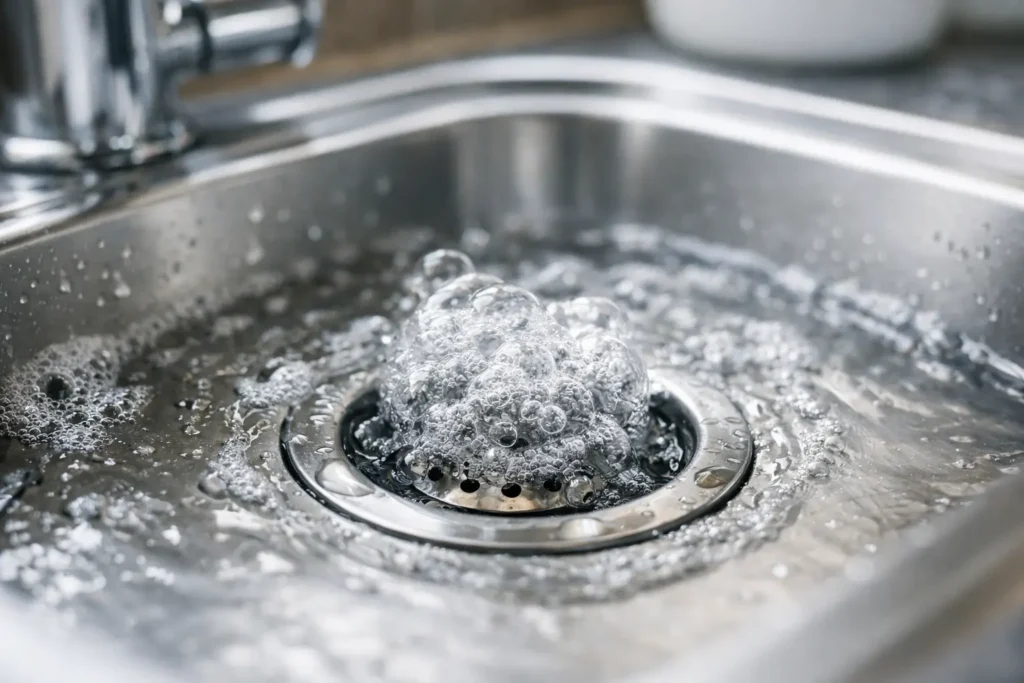
That hollow, bubbling sound from a sink, shower, or tub usually shows up right when you were hoping the problem would stay small. If you’re asking, why is my drain gurgling, the short answer is that air is getting trapped somewhere it should not be. The bigger question is whether you’re dealing with a simple drain issue or an early warning sign of a sewer problem.
A gurgling drain is not just annoying background noise. In many homes, it means water is struggling to move through the drain line the way it should. Sometimes the fix is straightforward. Sometimes the sound is your first clue that a blockage, vent problem, or sewer line issue is building behind the scenes.
Why is my drain gurgling in the first place?
Your plumbing system depends on two things working together – water flow and air flow. Wastewater needs a clear path out, and your plumbing vents need to let air move through the system so drains can flow smoothly. When either side gets disrupted, you can hear gurgling, bubbling, or sucking sounds.
The sound happens because air gets forced through water in the drain or pulled back through the trap. Think of it like the system trying to breathe through a partial obstruction. That can happen in one fixture, in a branch line serving part of the house, or farther down in the main sewer line.
Where the noise is coming from matters. A single gurgling bathroom sink points to a different issue than a toilet bubbling when the shower runs. If more than one drain is acting up, the problem is usually larger than a localized clog.
The most common causes of a gurgling drain
A partial clog in the drain line
This is one of the most common reasons for drain noise. Soap residue, grease, food waste, hair, and debris can narrow the pipe enough to slow water and trap air. Water may still go down, just not cleanly. That is often when homeowners hear the gurgle and assume the drain is still mostly fine.
The trouble is that partial clogs rarely stay partial for long. A drain that sounds odd today can turn into a slow drain or backup later.
A blocked plumbing vent
Your home has vent piping designed to balance pressure in the plumbing system. If that vent gets blocked by leaves, debris, nesting material, or other obstructions, air cannot move the way it should. When water drains, the system may pull air through nearby fixtures instead, creating that bubbling or glugging sound.
Vent issues can be tricky because the drain itself may not be fully clogged. The symptoms can feel inconsistent, especially during heavy use.
A deeper sewer line issue
If several drains are gurgling, especially on lower levels, the issue may be farther down the line. A blockage or restriction in the sewer line can cause air displacement throughout the system. Toilets may bubble. Tubs may gurgle when the washing machine drains. A basement drain may start giving off odors.
This is the point where waiting usually makes things worse. Main line problems can escalate into wastewater backup, and cleanup is never the simple part of the job.
Problems with the toilet connection
A gurgling toilet or a toilet that causes nearby drains to make noise can sometimes point to a clog near the toilet or in the branch line serving that bathroom. If flushing one fixture affects another, the system is telling you there is a flow restriction somewhere.
It depends on the home’s layout, but when fixtures start interacting in ways they normally do not, it is a sign to take the issue seriously.
When a gurgling drain is more urgent than it sounds
Not every noisy drain is an emergency, but some combinations of symptoms should move the problem higher on your list. If the drain is gurgling and draining slowly, if foul odors are showing up, or if water backs up in one fixture when another is used, there is a stronger chance you are dealing with a blockage that needs professional attention.
Multiple affected fixtures are another red flag. A kitchen sink acting up by itself is one thing. A shower, toilet, and sink all making noise around the same time usually points to a larger drainage issue.
For Columbus homeowners, the timing can matter too. Heavy rain, freeze-thaw cycles, and older infrastructure in some neighborhoods can add stress to drain and sewer systems. That does not automatically mean a major line failure, but local conditions can make small issues more likely to turn into bigger ones.
What you can safely check before calling
There are a few safe observations you can make without turning the problem into a bigger repair.
Start by noticing which fixtures are affected. Is it only one sink, or does the toilet react when the tub drains? Does the gurgling happen all the time or only during certain uses, like running the dishwasher or washing machine? Those details help narrow down whether the issue is local or more system-wide.
You can also check whether the drain is moving water slowly. A gurgling drain that still clears quickly may be in the early stages of a blockage. A drain that gurgles and leaves standing water is farther along.
What you should avoid is aggressive DIY work. Repeated chemical drain cleaner use can damage some piping and may not solve the actual cause. Pushing a clog deeper with the wrong tool can also complicate the repair. If there is any sign of sewage backup, stop using the affected fixtures and bring in a professional.
Why drain sounds should not be ignored
Plumbing systems usually give warnings before they fail completely. Gurgling is one of those warnings. It is the kind of symptom people live with for a few weeks because the drain still sort of works, until one busy morning when the problem stops being optional.
The cost and scope of repair often depend on how early the issue is caught. A routine drain cleaning is very different from dealing with standing wastewater in a tub, overflow around a floor drain, or a backed-up main line. Fast action does not always mean a major repair. Sometimes it means preventing one.
For property owners managing multiple bathrooms or occupied homes, this matters even more. What starts as a noise complaint can quickly become a scheduling problem, a sanitation issue, and a much larger disruption.
How a professional diagnoses why your drain is gurgling
A good service call should bring clarity, not more guesswork. When a technician evaluates a gurgling drain, the goal is to determine where the restriction or airflow issue is happening and how widespread it is.
That may involve testing fixture response, checking for signs of branch line blockage, evaluating whether venting appears to be part of the problem, and determining whether the symptoms point toward the main sewer line. In some cases, drain cleaning resolves the issue. In others, more diagnostic work is the right next step before any repair is approved.
This is also where clear communication matters. You should know what was found, what options make sense, and what work is recommended before anything moves forward. That is especially important when the symptoms could have more than one cause.
Why is my drain gurgling if it still drains?
This is a common question because many drains continue working for a while even with a developing problem. A pipe does not need to be fully blocked to make noise. A narrowing in the line can interrupt flow enough to create pressure changes and air pockets, long before a complete stoppage happens.
That is why waiting for a full backup is usually the wrong benchmark. If the sound is new, frequent, or spreading to other fixtures, the issue is already active.
When it is time to schedule service
If one drain gurgles once and never does it again, you may simply keep an eye on it. If the sound repeats, if drainage is slowing down, or if more than one fixture is involved, it is time to get the system checked.
The same goes for odors, bubbling in the toilet, water appearing in the wrong place, or any sign that wastewater is not moving out normally. Those are not watch-and-wait symptoms. They are signs your plumbing system needs attention before the situation gets messier and more expensive.
For homeowners in Columbus and nearby communities, a professional drain visit should be straightforward – clear communication, up-front explanation of what is being checked, and customer approval before work begins. That kind of process matters when you are trying to solve a problem quickly without adding more uncertainty.
A gurgling drain is your plumbing’s way of saying something is off. The helpful part is that it usually says it early. Catch it now, and you have a much better chance of dealing with a manageable repair instead of a much bigger disruption later.
