
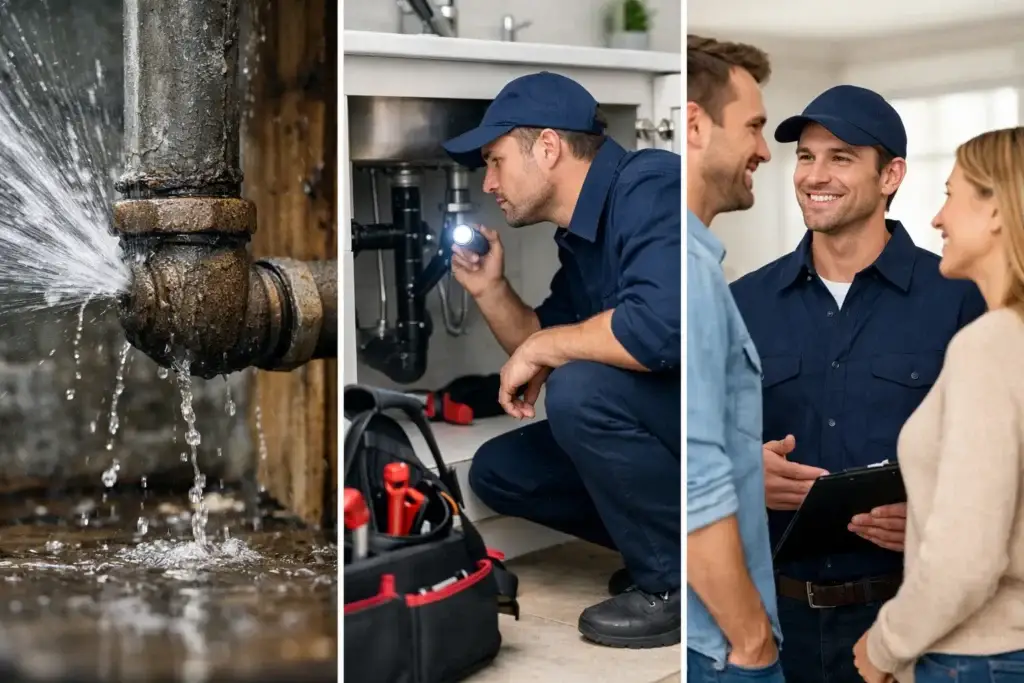
A pipe rarely fails at a convenient time. It may be during a Columbus cold snap, while you are away for the weekend, or after a quiet drip behind a wall has gone unnoticed. Knowing the most common burst pipe warning signs can help you respond before a small plumbing issue turns into damaged flooring, drywall, furniture, or personal belongings.
Some warning signs are obvious, such as water spraying from an exposed line. Others are subtle: a drop in water pressure, a new stain on the ceiling, or a water bill that makes no sense. The right response depends on what you see, but suspected active leaks should never wait.
8 burst pipe warning signs homeowners should not ignore
1. Sudden loss of water pressure
If the water pressure at several fixtures drops sharply without an obvious reason, water may be escaping from a supply line before it reaches your faucets. A partial break can reduce pressure gradually, while a larger rupture may leave faucets barely running at all.
First, rule out a simple fixture issue by checking more than one sink or shower. If the pressure change affects much of the house and you also notice damp areas, running-water sounds, or a rising water bill, treat it as a plumbing concern that needs prompt diagnosis.
2. Water stains, bubbling paint, or soft drywall
A burst or leaking pipe hidden in a wall, ceiling, or floor often announces itself through changes in the surfaces around it. Yellow-brown stains, peeling paint, bubbling drywall, warped baseboards, and soft spots can all indicate that water has been present for more than a few minutes.
The location can offer a clue, but it is not a reliable map of the damaged pipe. Water travels along framing, pipes, and ceilings before it becomes visible. A ceiling stain below an upstairs bathroom may involve that bathroom, but it could also come from another nearby water line.
3. Unexplained sounds of running water
Hearing water move through pipes while no appliance or fixture is in use is worth checking. A steady hiss, rushing sound behind a wall, or water movement in a quiet home can point to a pressurized line leaking out of sight.
Turn off faucets, avoid running the dishwasher or washing machine, and listen again. If the sound continues, locate the main water shutoff valve if you can do so safely and contact a plumbing professional. The longer a pressurized leak runs, the more water can enter the structure.
4. Wet floors, puddles, or damp carpet
A puddle near a sink, toilet, water heater, or exposed basement pipe may be caused by a loose connection rather than a burst pipe. It still deserves attention, because small leaks can worsen quickly and water can spread farther than expected.
Pay close attention to water that returns after you wipe it up. Damp carpet, wet flooring along a wall, or moisture around an appliance with no clear source can signal a hidden leak. Do not assume the visible wet spot is the only affected area.
5. Frost, condensation, or bulging on exposed pipes
During freezing weather, inspect pipes in unheated areas such as basements, crawl spaces, garages, and exterior walls. Frost on a pipe, unusual condensation, or a visible bulge can mean the line has frozen or is under stress.
A frozen pipe has not necessarily burst, but it needs timely attention. Avoid using an open flame, high-heat device, or other unsafe method to thaw it. If a pipe appears swollen, cracked, or frosted over and you are uncertain how to proceed, it is safer to have it assessed before temperatures rise and the line begins leaking.
6. Discolored, rusty, or cloudy tap water
Brownish, rusty, or cloudy water can have several causes, including work on the water system or sediment in a water heater. But when it appears suddenly after freezing temperatures, alongside poor pressure or visible moisture, it may indicate pipe damage or corrosion in a water line.
Do not rely on water color alone to diagnose a burst pipe. Instead, consider the full picture. A quick change in water appearance combined with new plumbing noises or water damage is a reason to schedule a professional inspection.
7. A water meter that keeps moving
Your water meter can help confirm whether water is being used when it should not be. With all faucets and water-using appliances off, check the meter’s leak indicator or note the reading. Wait a short period without using water, then check it again.
If the meter continues to register usage, there may be a leak somewhere on the property. This test cannot tell you where the problem is or how serious it is, but it can give you useful information when speaking with a technician. If water is actively showing inside the home, skip the testing and focus on stopping the flow.
8. An unexplained jump in your water bill
A higher bill does not always mean a burst pipe. Seasonal irrigation, guests, a running toilet, or a water-using appliance can all increase consumption. Still, a large increase without a clear explanation is one of the more common signs of a hidden plumbing leak.
Compare the bill with your normal usage and look for other changes around the home. If the increase is paired with damp areas, low pressure, or meter movement, act sooner rather than later. A hidden leak can waste a significant amount of water long before it becomes visible.
What to do if you suspect a pipe has burst
If water is spraying, pooling quickly, or coming through a ceiling, your first priority is limiting further damage. Shut off the home’s main water supply if you can safely reach the valve. In many homes, it is near the water meter, where the main line enters the house, or close to the water heater. If you do not know where it is, finding it now is a useful part of home preparedness.
Next, keep people away from standing water near electrical outlets, appliances, or breaker panels. If water is close to electrical equipment, do not enter the area or attempt to manage it yourself. Move valuables away from the affected area only when it is safe, and use towels or containers to contain minor water spread while help is on the way.
Take a few photos or a short video after the immediate hazard is controlled. This can help document the condition for your records. Then arrange a plumbing assessment as soon as possible. A technician can locate the failed section, explain the repair options, and identify whether freezing, corrosion, pressure, or another condition contributed to the problem.
For Columbus homeowners dealing with active water damage or a suspected burst line, Transit & Flow provides 24/7 emergency plumbing response. The goal is clear communication from the start: understand the problem, review the recommended work, and approve the plan before repairs begin. Final pricing and timing depend on the location of the pipe, access, materials, and conditions found during the visit.
Why pipes burst in Central Ohio homes
Freezing temperatures are a familiar risk in Central Ohio, particularly for pipes along exterior walls or in spaces without consistent heat. As water freezes, it expands and can create pressure inside the line. The break may occur at the frozen spot or farther along the pipe where pressure has built up.
Not every burst pipe is caused by winter weather. Older or corroded piping, repeated pressure changes, poor past repairs, and accidental damage can also lead to failure. That is why a repair should look beyond the visible break when circumstances suggest a larger issue.
Reduce the chance of a future pipe failure
A few practical habits can lower the risk. Keep interior temperatures steady during cold weather, especially when traveling. Open cabinet doors below sinks on exterior walls to allow warmer air to circulate, and address recurring drips or pressure problems before winter arrives.
It also helps to know the location of your main shutoff valve and make sure responsible household members can identify it. If your home has a history of freezing lines, leaks, or aging plumbing, a professional inspection can help prioritize repairs without guessing.
A burst pipe is stressful, but fast action makes a real difference. When something changes suddenly – pressure, water color, sounds, or moisture where it does not belong – trust the warning sign and get a clear answer before the damage grows.
