
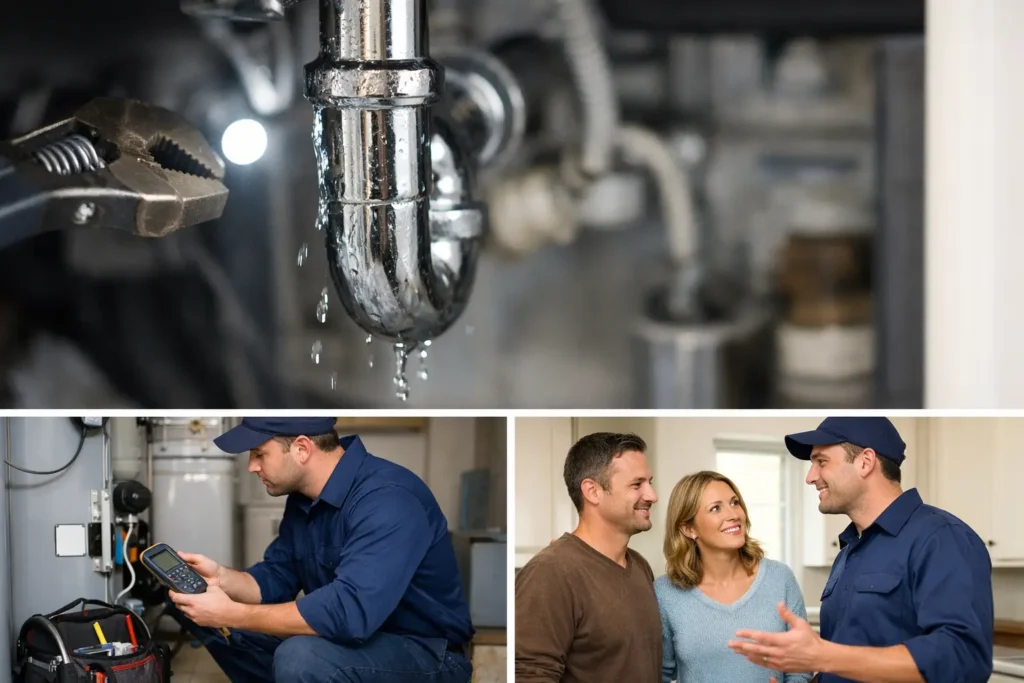
A drain that suddenly gurgles, a damp spot that keeps returning, or hot water that runs out too soon can turn a normal day into a stressful one. Plumbing diagnostics for homeowners starts with noticing the pattern, containing any immediate damage, and getting a clear explanation before approving repairs. The goal is not to guess at the problem or attempt a risky fix. It is to understand what is happening in your home and choose the right next step.
What Plumbing Diagnostics Actually Means
A plumbing diagnosis is more than identifying the fixture where you see water or hear a noise. The visible symptom may be close to the cause, but it is not always the cause itself. A slow kitchen drain could be a localized buildup, while several slow drains may point to a problem farther down the line. A water stain below a bathroom could come from a supply connection, a drain fitting, a toilet seal, or water escaping outside the shower.
A professional diagnosis begins with the facts: where the issue appears, when it started, whether it is getting worse, and which fixtures are affected. From there, the technician can inspect accessible components, test water flow and drainage, and recommend the appropriate next step. Depending on the symptom, that may include a drain evaluation, leak detection, water heater assessment, sewer inspection, or a repair at the fixture itself.
For homeowners, a good diagnostic visit should replace uncertainty with clear options. You should know what was found, what work is recommended, what can wait, and what requires prompt attention. The final price should be confirmed after the condition is inspected and before work begins.
7 Signs Your Home Needs a Plumbing Diagnosis
1. Water shows up where it should not
A recurring wet cabinet floor, a stain on a ceiling, peeling paint, or a musty smell can all indicate a leak. Even a small leak deserves attention because water can damage drywall, flooring, cabinetry, and framing over time.
Try to note whether the moisture appears after someone showers, flushes a toilet, runs the dishwasher, or uses a particular sink. That detail can help narrow the inspection, but do not assume the nearest fixture is automatically responsible.
2. More than one drain is slow or noisy
One slow sink may be a simple fixture-level issue. When a shower, toilet, and sink are all draining slowly, or when drains gurgle after another fixture is used, the concern may extend beyond one trap or drain opening.
This is especially worth addressing if the pattern is new or progressively worse. Waiting can turn a manageable drainage problem into an inconvenient backup, particularly in busy bathrooms or laundry areas.
3. Your water bill rises without a clear reason
A higher water bill can reflect seasonal use, guests, lawn watering, or a utility-rate change. But if your household routine has not changed, hidden water loss is one possibility. Running toilets, dripping fixtures, underground service-line leaks, and leaks behind walls can waste water without creating an obvious puddle.
Keep a copy of the bill and compare it with the same period last year if available. A technician can use that information alongside an on-site inspection to determine whether a plumbing issue is likely.
4. The water heater is acting differently
No hot water is an obvious reason to call. Less obvious warning signs include inconsistent temperatures, rusty-looking hot water, rumbling sounds, water near the tank, or hot water that does not last as long as it used to.
Some water heater problems are repairable, while others make replacement the more sensible long-term choice. Age, condition, the source of the problem, and the household’s hot-water demand all matter. A diagnosis should explain that trade-off plainly rather than pushing a one-size-fits-all answer.
5. A toilet rocks, leaks, or needs frequent attention
A toilet that shifts when used is not just annoying. Movement can affect the seal at the base and allow water to escape. Water around the base, persistent running, weak flushing, or repeated clogs also call for a closer look.
Avoid repeatedly forcing flushes or adding harsh chemical products in hopes of clearing a stubborn issue. If the bowl is rising or overflowing, stop using that fixture until it can be evaluated.
6. You smell sewer gas or notice sewage backup
A sewer odor inside the house is never something to ignore. Sometimes the cause is a dry drain trap in an infrequently used bathroom or floor drain. Other times, it can involve a damaged vent, drain, or sewer line.
Sewage coming up through a tub, shower, or floor drain is more urgent. Keep people and pets away from the affected area, avoid using plumbing fixtures that may add more water to the system, and arrange service as soon as possible.
7. Water pressure changes throughout the house
Low pressure at one faucet may be limited to that fixture. Low pressure at multiple fixtures, sudden drops in flow, or pressure that comes and goes can have several causes. Mineral buildup, a partially closed valve, a failing pressure-related component, or a supply issue are all possibilities.
The right repair depends on where the restriction or failure is occurring. That is why replacing a faucet or showerhead before identifying the source may not solve the problem.
What to Do Before a Technician Arrives
You do not need to take apart plumbing components to be helpful. A few simple observations can make the appointment more efficient and help the technician understand the issue faster.
Write down when the problem occurs and which fixtures are involved. Take photos of visible stains, water, or error messages if they are safe to capture. If you have noticed changes in your water bill or hot-water performance, have those details ready. Clear reasonable access to the affected sink, toilet, water heater, or drain area, and move valuables away from active leaks.
If water is actively flowing where it should not, use the fixture shutoff valve only if you know where it is and can operate it safely. For a major leak, shutting off the home’s main water supply may limit damage if you know the location of the valve. If you are unsure, focus on protecting people and belongings and call for emergency help rather than experimenting under pressure.
When It Is an Emergency
Some plumbing problems can wait for a scheduled appointment. Others need immediate attention because the risk of water damage, contamination, or loss of essential service is higher. Call for urgent help when you have a burst or actively leaking pipe, sewage backup, water near electrical equipment, no usable toilet in a home with only one bathroom, or a water heater leak that is spreading.
Columbus homes also face seasonal temperature swings that can put extra strain on exposed plumbing. A suspected frozen pipe, especially one that has stopped producing water or is visibly bulging, should be handled carefully. Do not use an open flame or high-heat equipment to thaw it. Prompt professional guidance can help reduce the chance of a rupture.
What a Clear Diagnostic Visit Should Include
The best service experience is organized from the first conversation. When you contact a plumbing company, explain the symptoms and whether water is actively leaking or backing up. This helps the team schedule appropriately and prepare for the type of issue involved.
At the home, the technician should inspect the relevant area, explain the likely cause in plain language, and discuss available repair options. Not every problem requires the most extensive repair, but a temporary fix is not always the best value either. For example, a single worn toilet component may be a straightforward repair, while repeated drain backups may justify a more complete evaluation before spending money on another temporary clearing.
Before repairs begin, ask what the work includes, what conditions could change the scope, and how the pricing is handled. Flat-rate pricing and customer approval before work starts can make a stressful decision easier to manage. At Transit & Flow, the focus is on clear communication and practical recommendations so Columbus-area homeowners can make informed decisions without unnecessary confusion.
Small Details That Help Prevent Bigger Repairs
Diagnostics are not only for emergencies. Addressing a slow drain, occasional toilet leak, or early water heater change can prevent more disruptive repairs later. Pay attention to recurring symptoms rather than treating them as isolated inconveniences.
A useful rule is simple: if a plumbing problem repeats, spreads to another fixture, causes visible moisture, or changes how your home functions, it is time for a professional assessment. A clear diagnosis gives you the information to act at the right time, protect your home, and move forward with confidence.
